
There are many different countries in Asia, and there are significant differences between them in terms of language, culture and ethnicity. There are also significant differences in economic standards, so it is important to be aware of the differences in salary and job conditions. Japan, as one of the countries in the Asian region, also has many differences from other Asian countries.
In this article, we will focus on differences in salary and job conditions in major Asian countries for those considering changing jobs overseas in Asia, and explain the information you need to know when searching for job information. If you want to work in Japan compared to other Asian countries, please use the job agency “G Talent”, which specializes in global companies.
Contents
- 1 Differences in salary between in Japan and other Asian countries
- 2 Differences in job conditions between in Japan and other Asian countries
- 2.1 Characteristics of job conditions in Japan
- 2.2 Characteristics of job conditions in China
- 2.3 Characteristics of job conditions in Singapore
- 2.4 Characteristics of job conditions in Hong Kong
- 2.5 Characteristics of job conditions in Thailand
- 2.6 Characteristics of job conditions in Malaysia
- 2.7 Characteristics of job conditions in Philippines
- 2.8 Characteristics of job conditions in Indonesia
- 2.9 Characteristics of job conditions in Vietnam
- 3 Foreigners need a visa to work in Asia
- 4 Benefits of changing jobs to a Japanese company other than salary
- 5 Be aware of the differences in salaries and job conditions in Asia and Japan when changing jobs!
Differences in salary between in Japan and other Asian countries

Even if we say “Asia” in general, there are big differences in economic standards, so salaries vary from country to country. In this article, let's take a look at the differences in salary between Japan and other Asian countries, focusing on jobs related to engineering.
| Country | Average salary (annual) |
|---|---|
| Japan | JPY approx. 4.92 million |
| Singapore | SD 59,510 (approx. 6.5 million yen) |
| Hong Kong | HKD 326,733 (approx. 6.1 million yen) |
| China | CNY 235,832 (approx. 4.64 million yen) |
| Thailand | THB 646,710 (approx. 2.53 million yen) |
| Malaysia | MYR 48,619 (approx. 1.5 million yen) |
| Philippines | PHP 469,557 (approx. 1.16 million yen) |
| Indonesia | RP 122,466,870 (approx. 1.07 million yen) |
| Vietnam | VND 15,484 (approx. 930,000 yen) |
The table above shows the average salary for engineers converted into Japanese yen. Due to differences in economic conditions and prices in each country, there are significant differences in salaries even for the same type of engineering job. In Singapore, there is a minimum monthly salary requirement for work visas, so the average salary is higher than in other Asian countries. The average salary for engineers in Japan is the third highest of the countries listed.
Reference: “Salary Data & Career Research Center”|payscale
Differences in job conditions between in Japan and other Asian countries
In addition to salary, there are various differences between job conditions in Japan and other Asian countries. Here, we will explain the differences between typical countries.
Characteristics of job conditions in Japan

Japan's position within Asia is that of a country where foreign companies from all over the world have bases. There are also many large and small Japanese companies, and a feature of Japan is that you can find jobs for foreigners in a variety of occupations. In addition to general office work, sales, consulting, and customer service in the service industry, such as hotels and restaurants, where English and Japanese translation and interpreting skills are required, jobs for foreigners in engineering-related fields, which are in short supply in Japan, are also increasing.
Depending on the company, there may be Japanese language training after you start work, or there may be people available to act as a bridge between Japanese and foreign staff, such as bridge SE. Even within Asia, Japan is a country where various foreigners can work easily.
Reference: 職種ガイド/NIPPON仕事.com
Characteristics of job conditions in China

Japanese companies have long been manufacturing in China, but in recent years, due to rising labor costs, many manufacturing bases have been moving to countries in Southeast Asia. The types of jobs that are currently attracting attention for foreign workers in China are those that require special skills, such as IT engineers. Jobs that require special skills are classified as A-rank jobs, and they have the characteristic of being easier to obtain work visas for.
In some cases, in addition to English language ability, high Chinese language ability is also required, but in other cases, such as production management, long work experience can be used as a substitute for language ability.
Reference: 外国人就業規制・在留許可、現地人の雇用/JETRO
Characteristics of job conditions in Singapore

Singapore is known as a base for Asia, and global companies from all over the world have expanded into the country. Many Japanese companies also have bases in Singapore, and there are many job openings for people with work experience in Japan. There is a minimum salary standard for those with work visas, so the average salary is high, but English ability at a high business level is required.
Reference: 研究・開発拠点として地位向上(シンガポール)/JETRO
Characteristics of job conditions in Hong Kong

Along with Singapore, Hong Kong is a city that attracts many foreign companies from around Asia. In addition to manufacturing and the service industry, trading companies and financial institutions, etc., foreign and Japanese companies have bases in various industries. Because Hong Kong was once a British colony, Cantonese and English are official languages. Therefore, if you can speak English, you will have the advantage of being able to live comfortably as well as work.
Reference: 香港に移住して働く人の仕事や生活は?現地グローバルキャリアアドバイザーに聞きました/doda
Characteristics of job conditions in Thailand

Thailand is a country where foreign and Japanese companies have been expanding into for a long time, even within the Asian region. Compared to other Asian countries, Thailand is considered to be a safe country, and there are many foreign companies with a long history in Thailand. There are various job opportunities, including manufacturing, IT engineering, consulting, and the service industry, as well as real estate and sales, and in some cases, Thai language skills are required in addition to English language skills. Because there are also many people in Thailand who are pro-Japanese, it is also a characteristic of working in Thailand that it is easy to live there.
The average salary in Thailand is about half that of Japan, but prices are also around 1/2 to 1/3 of Japan's, so you can live comfortably without any problems. However, prices in urban areas such as Bangkok, the capital, tend to be higher.
Reference: タイで働くって実際どう?メリットやデメリット、求人の見つけ方を解説/RENOSY Thailand
Characteristics of job conditions in Malaysia

In Malaysia, many conditions are attached to the issuance of work visas for foreigners with the aim of raising the skill levels of all occupations and job functions of the country's own citizens. For this reason, it is not easy for foreigners to work in Malaysia. However, as there are many Japanese manufacturers and Western-affiliated foreign companies operating in the country, there are a certain number of job openings. English is also one of the official languages in Malaysia, so you can work and live there using only English.
The average salary in Malaysia is about 1/3 of the average salary in Japan. However, as the cost of living is also about 1/3 of Japan's, you can live there with the same sense of living as in Japan.
Reference: 外国人就業規制・在留許可、現地人の雇用/JETRO
Characteristics of job conditions in Philippines

Japanese companies in the manufacturing industry, such as the automobile industry, have expanded into Manila, the capital of the Philippines. Another characteristic is that there are many IT-related, consulting, service, and sales jobs. Because English is one of the official languages of the Philippines, if you have English skills, you can live a normal life without any problems, as well as work.
The average salary in the Philippines is around 1.16 million yen per year when converted to Japanese yen, which is much lower than the average salary in Japan. However, prices are also around a quarter of those in Japan, so you can live without lowering your standard of living.
Reference: フィリピンに移住して働く人の仕事や生活は?現地グローバルキャリアアドバイザーに聞きました/doda
Characteristics of job conditions in Indonesia

Indonesia, which is rich in natural resources such as oil, natural gas, coal and copper, is home to many Japanese manufacturing and trading companies. For this reason, it is characterized by the large number of jobs available in sales for manufacturers. In particular, Indonesia is the largest car market in Asia, so car-related manufacturers account for 10% of all companies.
Indonesia also has resort areas such as Bali, so the tourism and food and beverage industries are also thriving, and there are many job openings in the tourism industry, such as guides for tourists. When working in Indonesia, you may need to speak Indonesian as well as English.
Reference: インドネシアで仕事をする方法【人気求人・給料相場・必要スキルを解説】/NNAグローバルナビ
Characteristics of job conditions in Vietnam

Since Vietnam has introduced a requirement to report to the government on foreign workers employed in jobs that cannot be filled by Vietnamese nationals, there is a tendency for work visas to be difficult to obtain for foreigners. However, as many Japanese companies in the manufacturing industry have bases in Ho Chi Minh City and Hanoi, there are many job openings for people with work experience in Japan. You can also find job openings for engineers and other technical staff, as well as jobs in the arts and humanities, such as management support.
Vietnam has the lowest average salary of the Asian countries we have introduced here. However, as in other Asian countries, prices are around 1/3 to 1/4 of those in Japan, so even if the salary is low, it is not a problem.
Reference: 外国人就業規制・在留許可、現地人の雇用/JETRO
Foreigners need a visa to work in Asia
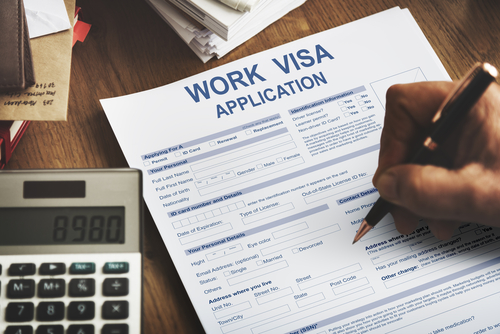
If you are a foreigner hoping to find a job or change jobs in Asia, you will need a work visa. After learning about the characteristics of job offers in each Asian country, you should also familiarize yourself with the criteria for issuing work visas. By learning about visas along with the characteristics, you can use this as a basis for deciding which country is right for you.
The criteria for obtaining a work visa differs depending on the type of job. In this article, we will compare the criteria for obtaining the most common work visas in various Asian countries. The most common work visa in Japan is the “Engineer/Specialist in Humanities/International Services” visa.
| Country | Criteria for obtaining a work visa |
|---|---|
| Japan |
|
| Singapore |
|
| Hong Kong |
|
| China |
|
| Thailand |
|
| Malaysia |
|
| Philippines |
|
| Indonesia |
|
| Vietnam |
|
In Thailand and the Philippines, there are no specific conditions for obtaining a work visa. In other countries, in order to obtain a work visa, you need to have a certain level of education or work experience. In countries such as Malaysia and Vietnam, where foreign employment is only permitted in jobs where there is a shortage of local workers, and in Singapore, where the criteria for obtaining a work visa for foreigners is becoming stricter, there is a strong trend towards difficulty in obtaining a work visa.
Reference: Country and Region Data Comparison Results / JETRO
Benefits of changing jobs to a Japanese company other than salary

There are many foreigners in Asia who want to find a job or change jobs in Japan. The countries of origin of foreigners who change jobs to Japanese companies vary, but it is thought that the relatively high number of people from Asia is due to the following benefits.
- There are few concerns about public safety and medical care
- Physical proximity to home country
- There is less stress associated with cultural differences
There are few concerns about public safety and medical care
Japan is one of the safest countries in the world. Furthermore, because Japan has a universal health insurance system, people working in Japan can join the public health insurance system regardless of their nationality. Because joining the public health insurance system is compulsory, another benefit is that you only have to pay 30% of the total cost at the medical facility reception desk.
Reference: 外国人患者の受入れのための医療機関向けマニュアル/厚生労働省
Physical proximity to home country

The biggest advantage for foreigners from Asia working in Japan is the proximity to their home country. When taking paid leave to go home for a while, the cost of plane tickets is lower than returning home from Europe or America, and the small time difference means less of a strain on the body.
Reference: 東南アジアへの海外就職が今アツい!なぜアジアが注目を集めるのか/INTERN KAIGAI
There is less stress associated with cultural differences

Although there are differences in culture and religion between Japan and people from Asia, there are also many similarities, such as the fact that the staple food is rice and that people are generally warm and friendly. For this reason, compared to foreigners from Europe and America, there is a high possibility that you will experience less culture shock and cultural differences. If you are working abroad for the first time, it can be said that Japan is a good choice because there are fewer cultural differences.
Reference: トラベルプランナー④/note
Be aware of the differences in salaries and job conditions in Asia and Japan when changing jobs!

When considering employment or changing jobs in an Asian country, it is recommended that you compare and consider the salaries, ease of obtaining work visas, and job conditions in each country. For IT engineers, Japan is a country where you can concentrate on building up your career because of its outstanding public safety.
If you are looking for a job in Japan with good conditions, we recommend "G Talent", which specializes in global companies. As it is a job-changing service that specializes in foreign IT engineers, it can introduce jobs that are also suitable for those working in Japan for the first time. It also provides visa and salary negotiation support, so please make use of it.