
In some cases, even if the job type and content are the same, there are differences in the treatment received in Asian countries and Japan. If you are a foreigner looking for a job or changing jobs in Japan, you may not be able to find a job that matches your desired conditions if you do not understand the differences.
In this article, we will explain the differences between jobs in Asian countries and Japan, focusing on the “treatment aspect”. We will also explain in detail the differences in salary and understanding of foreign workers, so please refer to it. If you are looking for a job with good working conditions in Japan, we recommend "G Talent", a job-placement agency specializing in global companies.
Contents
- 1 How much difference is there in working conditions between Asian countries and Japan for the same job?
- 2 Why there are differences in treatment between Asian countries and Japan, even for the same job
- 3 There are differences in treatment between Japanese and foreign-affiliated companies even within Japan
- 4 Understand the differences in treatment between Asian countries and Japan, and find a job with good treatment!
How much difference is there in working conditions between Asian countries and Japan for the same job?

There are cases where there are differences in working conditions between Asian countries and Japan, even for the same job. Let's take a closer look at what kind of differences there are in working conditions.
- Difference in minimum wage between Asian countries and Japan
- Difference in average salary by occupation between Asian countries and Japan
- Differences in average annual income between Asian countries and Japan
- Differences in welfare benefits between Asian countries and Japan
Differences in minimum wage between Asian countries and Japan
The minimum wage is the lowest amount of pay that must be paid. As the minimum wage determines the average salary, it is important to compare minimum wages when explaining differences in work conditions. The differences in minimum wage between Asian countries and Japan are as follows.
| Minimum wage (monthly salary) | Growth rate (2018-2022) | |
| Japan | Approximately 146,000 yen | 10% |
| China | Approximately 46,000 yen | 13% |
| Malaysia | Approximately 33,000 yen | 10% |
| Indonesia | Approximately 38,000 yen | 22% |
| Thailand | Approximately 28,000 yen | 6% |
| Philippines | Approximately 27,000 yen | 5% |
| Cambodia | Approximately 26,000 yen | 14% |
| Vietnam | Approximately 25,000 yen | 11% |
| Myanmar | Approximately 7,000 yen | 33% |
The minimum wage in Asian countries is on the rise in all countries. The possible reasons for this are “dissolving the dissatisfaction of the people” and “preventing the outflow of workers” with the aim of improving living standards. Although Myanmar has the lowest minimum wage, it is expected to increase further in the future, as the growth rate is 33%.
Although Japan's minimum wage is high compared to other Asian countries, it is not particularly high in terms of growth rate. As economic growth in Asian countries is expected to continue, there is a possibility that the way Japanese companies do business with Asian countries will change, depending on factors such as the relocation of production bases and the way human resources are utilized.
Reference: データブック国際労働比較2022/JILPT
Differences in average salary by occupation between Asian countries and Japan
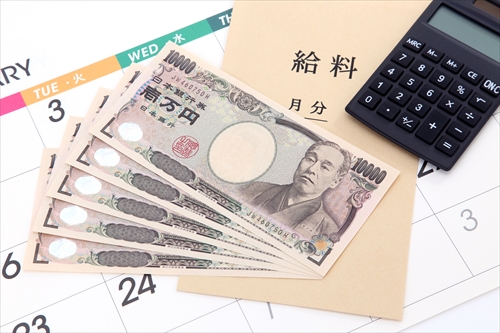
As with the minimum wage, there are also significant differences in average salary between Asian countries and Japan. In this article, we will look at the differences in salary by occupation. As salary is an important part of working conditions, we hope that this will be of use to foreigners who are planning to work in Japan or are undecided about which country to work in.
| Manufacturing (monthly salary) | Non-manufacturing (monthly salary) | |
| Japan | Approximately 3.8 million yen | Approximately 4.1 million yen |
| China | Approximately 80,000 yen | Approximately 1.65 million yen |
| Malaysia | Approximately 62,000 yen | Approximately 1.29 million yen |
| Indonesia | Approximately 55,000 yen | Approximately 72,000 yen |
| Thailand | Approximately 58,000 yen | Approximately 112,000 yen |
| Philippines | Approximately 35,000 yen | Approximately 73,000 yen |
| Cambodia | Approximately 31,000 yen | Approximately 66,000 yen |
| Vietnam | Approximately 36,000 yen | Approximately 96,000 yen |
| Myanmar | Approximately 17,000 yen | Approximately 54,000 yen |
When comparing Japan with other Asian countries, Japan still has a higher average salary. However, the average salary in other Asian countries is also on the rise, and there is a possibility that companies that have expanded overseas will withdraw from areas that have been developed as production bases for foreign companies.
Reference: 新型コロナ禍2年目のアジアの賃金・給与水準動向/JETRO
Difference in average annual income between Asian countries and Japan

The difference in average annual income between Asian countries and Japan is as follows.
| Average annual income | |
| Japan | Approximately 4.14 million yen |
| China | Approximately 1.91 million yen |
| Malaysia | Approximately 2.38 million yen |
| Indonesia | Approximately 380,000 yen |
| Thailand | Approximately 1,280,000 yen |
| Philippines | Approximately 450,000 yen |
| Cambodia | Approximately 170,000 yen |
| Vietnam | Approximately 460,000 yen |
| Myanmar | Approximately 130,000 yen |
As with average monthly income, Japan boasts the highest salary level in Asia. There is a difference of around 30 times compared to the average annual income of the lowest-ranking country, but because the growth rate differs between Asian countries, there is a high possibility that the difference will narrow in the next 10 years.
However, the above figures are merely averages and do not represent the salaries received by all citizens of each country. Although there are areas in Asian countries that are experiencing rapid economic growth, there is also a wide disparity in income between urban and suburban areas due to the widening gap between the rich and the poor.
To give an example, in China, there is a large disparity between the rich, middle class and low-income groups, and the average annual income of the rich is extremely high, starting at 25 million yen. Therefore, depending on your social class, the difference in annual income between Japan and China may not be that great.
Reference: ザ・サラリーアナリシス イン アジア/JAC
Differences in welfare benefits between Asian countries and Japan
When checking your benefits, it is important to look at the various welfare benefits on offer, not just your salary. In some Asian countries, welfare benefit systems similar to those in Japan have been introduced, and countries such as China, Thailand and Malaysia have social insurance, medical insurance and paid holidays as part of their welfare benefits.
However, in Japan there are no welfare benefits related to religion. In some Asian countries, there are cases where welfare benefits such as leave for pilgrimages or special bonuses are provided in accordance with the religion of the employee. Welfare benefits differ not only between countries, but also between companies. Even within the same country, welfare benefits differ between companies, so if you are considering finding a job or changing jobs in Japan, you should check the welfare benefits offered by each company.
Reference: インドネシアのユニークな「会社の福利厚生」と「欠勤や遅刻の理由」/SEKAI WOMAN
Why there are differences in treatment between Asian countries and Japan, even for the same job

As mentioned above, we have seen that there are differences in treatment between Asian countries and Japan, even for the same job. The following four points can be cited as reasons for the differences in treatment between Asian countries and Japan.
- Differences in prices
- Approach to work
- High investment appetite
Differences in prices
There are significant differences in salary, in particular, among the treatment of work in Asian countries and Japan. One of the reasons for the significant differences in salary between countries is that prices differ greatly from country to country. For example, in Japan, mineral water that costs around 100 yen per bottle is sold for around 20 yen in Thailand and Vietnam. Because the prices of goods differ greatly, there are significant differences in treatment, such as salary.
According to the “2023 Cost of Living Survey - City Ranking” published by Mercer, prices in Asian countries and Japan differ as follows.
| Ranking in Cost of Living Survey | |
| Japan (Tokyo) | 19th |
| China (Beijing) | 13th |
| China (Guangzhou) | 36th |
| Malaysia (Kuala Lumpur) | 180th |
| Indonesia (Jakarta) | 150th |
| Thailand (Bangkok) | 105th |
| Philippines (Manila) | 133rd |
| Cambodia (Phnom Penh) | 132nd |
| Vietnam (Hanoi) | 156th |
| Myanmar (Yangon) | 204th |
Reference: 2023年 世界生計費調査-都市ランキング /マーサ
Attitudes towards work

The attitudes towards work in Asian countries and Japan differ as follows. Because attitudes towards work differ from country to country, there are differences in the treatment offered by companies.
| Asian countries | Japan | |
| The meaning of working for a company | One source of income | Working for a long time and getting ahead |
| What is important when working | The high level of compensation | Good human relations and work content |
| Career | A career that allows you to make use of the knowledge you learned at university, etc. | Professional career advancement (Promotion to section manager, department manager, etc.) |
While in Japan, people tend to place more importance on the working environment, such as order and stability, than on compensation, in Asian countries, people tend to place more importance on compensation. For this reason, in Japan, there are many companies that offer not only good salaries but also good welfare and working conditions. If you are looking for work in Japan, you may be able to find a company with good conditions if you compare not only salaries but also other benefits.
Reference: アジアの「働く」を解析する/Global Career Survey
High investment motivation

When comparing young people in Asian countries with young people in Japan, those in Asian countries tend to be more willing to invest. In particular, the rate of ownership of stocks, investment trusts, etc. is over 50% for young people in Singapore, China and Malaysia. In Japan, the figure is less than 20%, so it can be said that investment motivation is lower than in other Asian countries. Japan is more cash-oriented than other countries, so perhaps salary and pay raises are more important.
Reference: 9か国のお金・資産の話~日本と海外の考え方の違いは?~/知るギャラリー
There are differences in treatment between Japanese and foreign-affiliated companies even within Japan

Even if you are doing the same job in Japan, there are differences in the treatment you receive at Japanese and foreign-affiliated companies. We will explain four specific differences in treatment, so please refer to them if you are considering finding a job or changing jobs at a Japanese company.
- Starting salaries are the same or higher at foreign-affiliated companies
- Average annual income is higher at foreign-affiliated companies
- Career advancement is more likely at foreign-affiliated companies
- The level of welfare benefits differs depending on the company
Starting salaries are the same or higher at foreign-affiliated companies
In the case of the same job, starting salaries at Japanese companies and foreign-affiliated companies are the same or in many cases slightly higher at foreign-affiliated companies. The average starting salary is as follows
- Japanese companies: 3-4 million yen
- Foreign-affiliated companies: 4 million yen or more
Although there are differences depending on the company and the type of work, foreign-affiliated companies tend to offer higher salaries. In the case of foreign-affiliated companies, incentives are included, and many companies do not have a retirement allowance system or a welfare program, so these are reflected in the salary.
Reference: 外資系企業の初任給はどれくらい?初任給が高いといわれている理由とは/Michael Page
Average annual income is higher at foreign-affiliated companies

Although the starting salary is about the same, the overall salary treatment is better at foreign-affiliated companies. The average annual salary at Japanese companies and foreign-affiliated companies is as follows.
- Japanese companies: approx. 4 million yen
- Foreign-affiliated companies: approximately 8 million yen
Foreign-affiliated companies do not have a seniority system, and salaries are given according to performance. Furthermore, some foreign-affiliated companies do not have a good welfare system or retirement benefits, so in some cases, these are included in the annual salary. It can be said that the merit of foreign-affiliated companies is that you can greatly increase your annual salary depending on your work ability.
Reference: 外資系企業の給料が高い理由は!?なぜ高いといわれるのか徹底調査!/転職鉄板ガイド
Career advancement is more likely at foreign-affiliated companies

If you want to advance your career within your job, it is easier to do so at a foreign-affiliated company. This is because, while many Japanese companies are based on seniority, many foreign-affiliated companies adopt a performance-based system, so you can advance your career regardless of your age or position if you have the ability to do the job.
Furthermore, foreign-affiliated companies also tend to have a high turnover rate and a high rate of mid-career hires. As a result, it is easy for a gap to appear in your work career, and if the conditions are right, you can fill the vacant career slot. If the seniority system doesn't suit you, you should also consider foreign-affiliated companies as an option.
Reference: 外資系企業の特徴とは?向いている人や転職方法について徹底解説/TENJee
The level of welfare benefits differs depending on the company

In Japan, there are two types of welfare benefits: “statutory welfare benefits” which are required by law, and “non-statutory welfare benefits” which companies can decide on their own. If a company is based in Japan, whether it is Japanese or foreign-affiliated, it must provide statutory welfare benefits.
Japanese companies tend to offer a wide range of non-statutory benefits. However, the quality and content of non-statutory benefits will vary depending on the size of the company, the type of work, and the nature of the work, so it is a good idea to check each company's benefits system before joining.
Reference: 法定福利と法定外福利の違いとは?/フリーウェイ給与計算
Understand the differences in treatment between Asian countries and Japan, and find a job with good treatment!

The treatment you receive, such as salary and welfare benefits, differs between Asian countries and Japan. If you are a foreigner working for a Japanese company, there is a high possibility that you will feel uncomfortable about the differences in treatment, so you should learn about Japan's unique treatment in advance.
Even in Japan, there are many foreign-affiliated companies that have different treatment and work values from those of Japanese companies, so we recommend that you also consider foreign-affiliated companies. If you would like to work at a foreign-affiliated company in Japan, please use "G Talent", a job-placement agency specializing in global companies. Our consultants, who have specialist knowledge, will support you in your job-change, and will also be able to help you with any queries you may have, such as “I can't find the job I want” or “I don't know which company is best”.