There are differences not only in the working environment and employment conditions, but also in the salary structure, between European and Japanese companies. For those of you who are looking for a global way of working, salary is one of the most important points to consider when choosing a company. By learning about the differences between European and Japanese companies, you will be able to make a smoother choice.
In this article, we will explain the differences in salary between European and Japanese companies. If you only have a vague idea of each company, you may end up regretting your decision after you have received an offer. If you are having trouble deciding whether to apply for a job at a European or Japanese company, please refer to this article. If you want to find a job with good salary conditions regardless of your nationality, please use the global recruitment agency "G Talent".
Contents
- 1 Differences in salary between European and Japanese companies: Which should I apply for?
- 2 Characteristics of European Companies Compared to Japanese Companies|Which is better for applying for jobs?
- 3 The differences between the merits of European and Japanese companies: Which should you apply for?
- 4 How to find a job in Japan with good conditions such as salary
- 5 Find out about the differences in salary between European and Japanese companies before you apply for a job!
Differences in salary between European and Japanese companies: Which should I apply for?
There are significant differences in salary between European and Japanese companies, as shown below.
[Differences in average salary between European countries and Japan (2020)]
| Country | Average annual salary (US dollars) |
|---|---|
| Iceland | 67,488 |
| Luxembourg | 65,854 |
| Switzerland | 64,824 |
| Netherlands | 58,828 |
| Denmark | 58,430 |
| Norway | 55,780 |
| Belgium | 54,327 |
| Germany | 53,745 |
| Austria | 53,132 |
| Ireland | 49,474 |
| United Kingdom | 47,147 |
| Sweden | 47,020 |
| Finland | 46,230 |
| France | 45,581 |
| Slovenia | 41,445 |
| Slovenia | 38,515 |
| Spain | 37,922 |
| Italy | 37,769 |
| Poland | 32,527 |
| Lithuania | 31,811 |
| Estonia | 30,720 |
| Czech Republic | 29,885 |
| Latvia | 29,876 |
| Portugal | 28,410 |
| Greece | 27,207 |
| Hungary | 25,409 |
| Slovakia | 23,619 |
The table above shows the difference in average annual income (in US dollars) between European countries that are members of the OECD and Japan. Of the European countries, Iceland has the highest average annual income, and it can be seen that people there receive salaries that are about double those of Japan.
On the other hand, the country with the lowest average annual salary is Slovakia, which is around $15,000 less than Japan. Even if we say “European companies” in general, the salary conditions vary from country to country in this way. However, there is a tendency for the average annual salary to be higher in many countries than in Japan.
Reference: 世界の最低賃金ランキング(2020年版) | 「平均年収」「最低年収」「最低時給」から解説/Digima
Compared to Europe, salaries in Japan are low
As mentioned above, salaries in Japan are lower than in European countries. The reason for the low average annual salary in Japan can be predicted to be closely related to the fact that salaries have not increased for around 20 years.
| Year | Salary (thousand yen) | Year-on-year change rate (%) |
|---|---|---|
| 2001 | 305.8 | 1.2 |
| 2002 | 302.6 | -1.0 |
| 2003 | 302.1 | -0.2 |
| 2004 | 301.6 | -0.2 |
| 2005 | 302.0 | 0.1 |
| 2006 | 301.8 | -0.1 |
| 2007 | 301.1 | -0.2 |
| 2008 | 299.1 | -0.7 |
| 2009 | 294.5 | -1.5 |
| 2010 | 296.2 | 0.6 |
| 2011 | 296.8 | 0.2 |
| 2012 | 297.7 | 0.3 |
| 2013 | 295.7 | -0.7 |
| 2014 | 299.6 | 1.3 |
| 2015 | 304.0 | 1.5 |
| 2016 | 304.0 | 0.0 |
| 2017 | 304.3 | 0.1 |
| 2018 | 306.2 | 0.6 |
| 2019 | 307.7 | 0.5 |
| 2020 | 307.7 | 0.6 |
| 2021 | 307.4 | -0.1 |
According to the “Overview of the 2021 Wage Structure Basic Survey” by the Ministry of Health, Labour and Welfare, we can see that from 2001 to 2021, salaries have only increased by 2,000 yen.
Japan's low labor productivity is also likely to be a major factor in the low salaries. Labor productivity is a figure that expresses the results that can be produced per employee or per hour. Companies with high labor productivity are able to pay higher salaries, but factors such as the delay in the introduction of IT and the small size of companies have kept Japan's labor productivity low.
Japanese labor productivity has remained almost the same for the past 20 years, and is ranked 22nd out of all OECD member countries. These factors are thought to be related to the low salaries in Japan.
Characteristics of European Companies Compared to Japanese Companies|Which is better for applying for jobs?

There are differences in working styles and working hours between Japanese companies and European companies. The following are five characteristics of European companies that differ from Japanese companies.
- Work-life balance
- Working hours
- Teamwork
- Percentage of female managers
- Performance-based pay
Work-life balance
In European companies, unlike Japanese companies, work-life balance is emphasized, and there is a strong tendency to be able to balance work and private life. According to a survey by an American software company, European countries such as Norway and Switzerland occupy the top places in the ranking of cities with the best work-life balance, showing that Europe is a developed country in terms of work-life balance.
For example, in Norway, around 90% of men take childcare leave, and women are more active in society than in Japan. In a survey of around 30,000 people in 31 European countries, 90% of people working in Norway said they were satisfied with their work-life balance, proving that there are systems in place that allow people to value both work and family life.
In Japan, work-life balance is not yet considered important, and we rank low among OECD (Organisation for Economic Co-operation and Development) member countries. Improving work-life balance is not only beneficial for workers, but also for companies in terms of “improving labor productivity” and “preventing staff turnover”, so there is a need to flexibly optimize the way we work.
Reference: 仕事と生活のバランスが最も優れた都市ランキング”の2022年版が発表/HYPEBEAST
Working hours

In Japan, there is a system in place regarding working hours that states that employees should not work more than 8 hours a day or 40 hours a week, but there is a tendency for employees to work long hours, with unpaid overtime being common.
On the other hand, European companies are different from Japanese companies in that the percentage of people working long hours is low, and the environment is set up so that employees can work comfortably. In Norway, Sweden and Finland, the percentage of people working long hours of over 48 hours a week is less than 10%, and in France, Luxembourg, the Netherlands, Germany and Estonia, the percentage of people working long hours is also low.
In Latvia, Sweden and Finland, many companies have introduced systems such as flexible start and finish times and compensatory leave systems, and there is a widespread attempt to achieve a good work-life balance for employees. Shorter working hours mean that there is more time to reflect on oneself and enrich one's private life. In Scandinavian countries and Switzerland, women spend at least 15 hours a week on childcare, and men spend at least 7 hours a week on childcare, so it can be said that the shorter the hours spent at work, the more time there is for childcare.
Reference: ■□ カエル! ジャパン通信 Vol.8 □■/「仕事と生活の調和」推進サイト
Teamwork

In European companies, the idea of individualism, which emphasizes the importance of the individual's ideas rather than working as a team, is prevalent. Since individual ability is valued, it is also called a meritocracy, and most people go home after their own work is done. It could be said that the absence of troublesome human relationships is a characteristic of European companies.
In Japanese companies, teamwork is emphasized, and it is thought that it is more important for the whole team to accomplish the task than for individuals to achieve great results. For this reason, it is not unusual to see people sharing the workload and working together. You may even see people working overtime together to get the job done.
Reference: 「長時間労働がない」ドイツと日本の致命的な差/東洋経済オンライン
Percentage of female managers

Unlike Japanese companies, European companies have a high percentage of female managers, and women are making progress in society. For example, in Norway, a country that is advanced in terms of work-life balance, 47.2% of workers are women, and the ratio of women on private company boards is around 25%.
In 2003, the ratio of women on private company boards in Norway was around 8.5%, but this rose to around 25% in 2007 due to the introduction of legal regulations. In Japan, the percentage of female managers has been on the rise in recent years, but as of 2018, it was 18.3% for assistant managers, 11.2% for managers, and 6.6% for department managers, which is not a figure that matches European companies.
Reference: 第2節 企業における女性の参画/男女共同参画局
Performance-based pay

In Europe, when you become a manager, you are expected to achieve results, and there are many cases where you have to work hard. Although many European companies have a low working hours and emphasize work-life balance, due to the spread of performance-based and ability-based systems, it seems that some people who become leaders end up working overtime to get the job done.
On the other hand, in Japan, not only leaders but all employees tend to work hard. Depending on the company, subordinates may end up working more overtime than their superiors, and it can be hard work.
Reference: 欧米には日本人の知らない二つの世界がある/Human Capital
The differences between the merits of European and Japanese companies: Which should you apply for?

European and Japanese companies have different characteristics, so there are also differences in their merits. From here, let's take a look at the merits of European and Japanese companies respectively.
Merits of working for European companies
European companies differ from Japanese companies in many ways, and the following merits can be gained in terms of salary and working style.
- Salaries are likely to be higher than at Japanese companies
- There is less overtime and it is easier to take holidays
- Personal ideas are respected
- There is a good working environment for women
Salaries at European companies are higher than at Japanese companies, and there is a significant difference in average annual income. In some countries, such as Spain and Italy, average annual income is lower than in Japan, but in countries such as Iceland and Luxembourg, it is possible to earn almost double the salary.
In many countries, working hours are restricted by law, so there is little overtime and it is easy to take holidays. In terms of work, individual ideas are respected rather than team ideas, so unlike in Japan, there is little need to worry about troublesome human relationships. In many European companies, there are also more female managers, so it is easy for women to work throughout their lives, which is another characteristic of European companies.
Reference: 海外のお給料事情を調査!世界の平均年収ランキング、日本は何位?/mymo
Merits of working for Japanese companies

The following are some of the merits of working for a Japanese company, which differs in various ways from European companies.
- Stable salary
- Hard to be laid off
- Well-developed environment for training new employees
- Work as a team
The average salary in Japanese companies is relatively low at $38,515 as of 2020, but many companies have a fixed salary or monthly salary system and also offer housing allowances and retirement benefits. Because it is difficult to be laid off and the longer you work, the more likely you are to be promoted and receive a pay rise, this is a big advantage for those who want to work for a long time at one company.
Unlike foreign companies overseas, which require employees to be able to hit the ground running, Japanese companies generally hire promising new graduates, so the environment for training new employees is well-established. Since the basic approach is to work as a team, you can take on challenging goals and tasks that would be difficult to do on your own.
There are various differences between the advantages of European companies and Japanese companies, and Japanese companies are suitable for those who want to work in a stable environment for a long period of time.
Reference: 日系・外資系企業の違いやメリット・デメリットとは/America-Intern.com
How to find a job in Japan with good conditions such as salary

We have seen that there are various differences in characteristics and advantages between European companies and Japanese companies. After you have identified the company that suits you, let's actually look for a job. The following five methods can be used to find a job with good conditions.
- Narrow down your desired conditions
- Perform self-analysis
- Broaden your job search
- Register with a job-change agent
- Make use of business SNS
Narrow down your desired conditions
There are various conditions for jobs, and it would be best if there were jobs that fulfilled all of your conditions, such as working hours, salary, number of days off, and distance from home. However, there are few jobs that fulfill all of your desired conditions, and if you are too picky about your conditions, it will be difficult to move on to the next step.
If you are considering changing jobs or finding a new job, first narrow down your desired conditions. If you are changing jobs, it is also recommended that you decide on the conditions that you cannot give up based on the reason you left your previous company.
Reference: 良い求人の探し方がわからない!転職先探しの方法と失敗しないコツ/ミライトーチ Media
Perform self-analysis
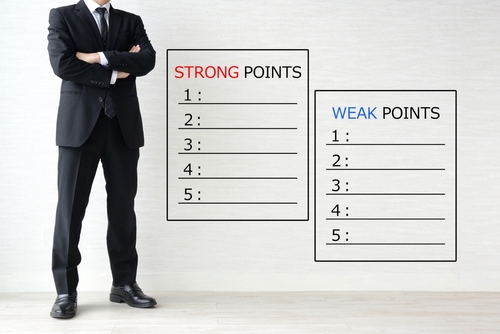
By conducting a self-analysis and identifying your areas of strength and experience, it will be easier to find a job with good conditions. The definition of a job with good conditions differs from person to person. By looking back on your career to date and thinking about when you felt happy, you can find a job with good conditions for you.
Reference: 良い仕事の見つけ方。自己分析や働きやすい条件、業界を知ろう/スタンバイplus
Broaden your job search

One of the keys to finding a good job is to broaden your job search and not be too fixated on a particular industry or job type. Depending on the job market, there may be few job openings in the industry or job type you are hoping for. However, depending on your career and experience to date, you may be able to play an active role in a field other than the one you are hoping for. For this reason, you should broaden your job search.
Reference: 失敗しない求人情報の探し方!転職活動のコツを紹介/じょぶる
Register with a job-change agent

The best way to find a job with good conditions is to make use of a job-change agent. A job-change agent is a job-search service where professional career advisors propose jobs that suit you. By making use of a job-change agent while carrying out the three points introduced above, you should be able to find a job with good conditions that suits you.
If you want to take on the challenge of working for a global company such as a European company, we recommend a job-placement agency that specializes in global recruitment. “G Talent” is a job-placement agency for high-career foreign engineers, and they can offer you a variety of good job opportunities. They also provide visa support and salary negotiations, so we recommend them especially for those who want to work in Japan, where they are not familiar with the local customs.
Make use of business SNS

In addition to recruitment agencies, you can also find jobs through direct recruiting, which involves communicating directly with the person in charge of hiring at the company. For direct recruiting, business-oriented social networking sites such as Linkedin and Wantedly are mainly used. Using business social networking sites has the advantage that you can not only communicate directly, but also find out new information about companies immediately.
Reference: ビジネスSNSを活用した転職の方法/LHH転職エージェント
Find out about the differences in salary between European and Japanese companies before you apply for a job!

There is a big difference in average salary between European and Japanese companies. If you want to earn a higher salary, do your research before you apply for a job. The foreign IT engineer specialist recruitment agency “G Talent” has a wide range of global companies, so it is also possible to focus your job search on European companies.