Career Development

12/17 Online IT Job Fair: Connect & Explore, No Camera Needed!

This online job fair is designed specifically for IT Engineers currently in Japan. If you meet the criteria below, this is an excellent opportunity for you to explore new possibilities!Participants Only! 10 Winners will be randomly selected to receive a ¥5,000 Amazon Gift Card!Who Should Attend?This event is for IT Engineers with at least two years of practical experience and Business-level Japanese proficiency.Event DetailsDate & Time: Wednesday, December 17th, 2025, from 6:00 p.m. to 7:45 p.m. JST (Subject to Change)Language: This event will be conducted entirely in Japanese.Flexibility: Feel free to join and leave at your preferred time – just like watching TV! The companies currently scheduled to participate are as follows:・Mico, Inc.・AUCNET INC.・AZAPA Co., LTD.・LabBase, Inc*Schedules and the number of companies are subject to change without notice.Click here to Register: Please use the same email address you registered with for GitTap.GitTap ProfileTo participate, you must have a completed profile registration on GitTap.----Ready to Explore Your Next Career Step?----If you're an IT Engineer in Japan looking for new opportunities, don't miss out! Please feel free to register if you're interested in this event. We look forward to seeing you there!Register Here!!

キャリア開発

【予算ゼロ】「来年のエンジニア採用」の準備、年内に終わらせませんか?完全成果報酬型プラットフォーム「GitTap」活用術

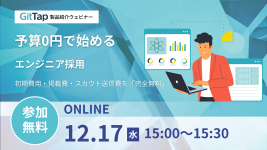
今年も残すところあとわずかとなりました。年末の業務に追われ、「来期の採用計画、まだ何も手が付けられていない…」と焦りを感じている採用担当者様も多いのではないでしょうか。特にエンジニア採用においては、「大手媒体は掲載費(掛け捨てリスト)が高い」「紹介エージェントは手数料が高騰している」といったコストの悩みが尽きません。そこで今回は、「予算を一切かけずに、年明けの採用スタートダッシュを決める」ための方法をご紹介します。「攻めの採用」をしたいが、リスクは負いたくない…ダイレクトリクルーティング(スカウト)は有効な手段ですが、以下のようなハードルで導入を躊躇していませんか?コストのリスク:掲載費を払っても、応募が来るかわからない。工数の負担:スカウト文面の作成や運用の手間がかかる。タイミング:12月は忙しく、新しい契約手続きや審査に時間を割けない。そんな企業の皆様にこそ知っていただきたいのが、GTalentの姉妹サービスである『GitTap(ギットタップ)』です。初期費用・掲載費用・スカウト費「完全無料」のGitTapとは?GitTapは、外国人エンジニアに強いデータベースを持つ新しい採用プラットフォームです。最大の特徴は、徹底してリスクを排除した料金体系にあります。初期費用・掲載費:0円スカウト送信費:0円費用発生は「採用決定時」のみつまり、採用が決まるまでコストは一切かかりません。予算消化が終わってしまった12月でも、リスクなく「来年に向けた求人枠の確保」ができます。お申し込みはこちらから【12/17(水)開催】30分でわかる製品説明会を実施します。このGitTapの仕組みと、具体的な活用方法を短時間でお伝えするウェビナーを開催します。忙しい12月ですので、所要時間はわずか30分。カメラOFFで「耳だけ参加」も可能です。開催概要日時:2025年12月17日(水)15:00~15:30形式:Zoomウェビナー(無料)対象:エンジニア採用を検討中の人事・採用担当者様【本ウェビナー限定】面倒な作業は全て丸投げOK!「便利そうだけど、求人票を新しく登録する時間がない…」そんなお声にお応えして、本ウェビナー参加者様限定で特別なサービスをご用意しました。特典:「求人票作成代行」サービス現在他社媒体で使用している求人票(PDFやURL)を弊社に送るだけで、GitTapへの転記・入稿作業を弊社スタッフが無料で代行いたします。お客様に面倒な入力は一切不要。年明けからすぐにスカウトが打てる状態を、弊社側で整えさせていただきます。お申し込みはこちらから「まずは枠だけ作っておく」という使い方も大歓迎です。来年の採用成功に向けた種まきとして、ぜひお気軽にご参加ください。皆様のご参加を心よりお待ちしております。 

日本語の記事

【採用担当・経営者向けガイド】外国籍ITエンジニアの定着は「採用」で決まる!早期離職の「隠れコスト」を解消する採用戦略x育成仕組

早期離職は「隠れコスト」です。貴社の課題は?外国籍ITエンジニアの採用・定着で、以下の課題に直面していませんか?せっかく採用しても数年以内に離職してしまう。早期離職による損失額(採用費+人件費)が経営課題になっている。日本語能力試験(JLPT)のレベルと、ビジネスコミュニケーション能力にギャップを感じる。この根本原因は、日本と海外の「キャリア観」の違いを無視した採用と、入社後の「言語・文化の壁」を取り除く教育機会の不足にあります。採用のプロと育成のプロが「定着」の仕組みを徹底解説!本ウェビナーは、海外人材採用のコンサルティング・株式会社セレッジと外国籍ITエンジニア採用のプロ・株式会社ビズメイツの人材紹介エージェントGTalentが共催。「採用戦略」と「育成仕組」という両輪で、早期離職の原因を断ち切る具体的な方法を解説する無料ガイドです。特にこのような方におすすめです:外国籍ITエンジニアの採用戦略そのものに課題を感じている経営者、人事責任者。育成の費用対効果をどう算出すべきか分からない方。入社後のオンボーディングや教育を現場任せにしてしまっている採用・育成担当者。お申し込みはこちらから開催概要オンライン開催:2026年1月21日(水)12:30~13:30アーカイブ配信:2026年1月28日(水)17:00~18:00形式:オンライン・無料ご参加で得られる3つの成果隠れコストの解消育成を怠った場合の「隠れコスト(離職による損失)」を定量的に理解できます。戦略の獲得定着から逆算する採用要件の作り方など、「海外の当たり前」を理解した採用戦略が分かります。即戦力化現場の負担を減らし、パフォーマンスを最大化する「ビジネス日本語」教育の活用法を知ることができます。お申し込みはこちらから登壇者紹介株式会社セレッジ CEO 菅野 直純氏半導体業界出身の知見と20年以上の海外人材事業経験を活かし、現在はアジア圏の「IT・理系高度人材」に特化した採用支援を展開。ハノイ工科大学顧問を務めるなど現地トップ大学との強固なパイプを持ち、エンジニアの母集団形成から定着までを支援しています。世界人材会議への登壇実績も多数有する、グローバルエンジニア採用のスペシャリストです。株式会社ビズメイツ GTalent責任者 大塚 義光氏知財人材業界やスタートアップでの事業開発を経て、現在はビズメイツ株式会社にて外国人材紹介事業を統括。IT・製造業を中心に、採用戦略の立案からキャリア支援までを一気通貫で手掛けています。自治体や教育機関と連携した制度設計にも強みを持ち、単なる人材紹介に留まらない、エンジニアが定着・活躍できる「多文化共生組織」の構築を推進しています。 

Career Development

11/26 Online IT Job Fair: Connect & Explore, No Camera Needed!

This online job fair is designed specifically for IT Engineers currently in Japan. If you meet the criteria below, this is an excellent opportunity for you to explore new possibilities!Who Should Attend?This event is for IT Engineers with at least two years of practical experience and Business-level Japanese proficiency.Event DetailsDate & Time: Wednesday, November 26th, 2025, from 6:00 p.m. to 7:45 p.m. JSTLanguage: This event will be conducted entirely in Japanese.Flexibility: Feel free to join and leave at your preferred time – just like watching TV!6:00 PM - 6:10 PM Opening6:10 PM - 6:25 PM ISF NET, Inc.6:25 PM - 6:40 PM ReNK CHANNEL Co., Ltd.6:40 PM - 6:45 PM Break6:45 PM - 7:00 PM Japaniace Co., Ltd.7:00 PM - 7:15 PM Ruby Development Inc.7:15 PM - 7:30 PM Evoltech Co.,Ltd.7:35 PM - 7:40 PM ClosingImportant NotesClick here to Register: Please use the same email address you registered with for GitTap.GitTap ProfileTo participate, you must have a completed profile registration on GitTap.----Ready to Explore Your Next Career Step?----If you're an IT Engineer in Japan looking for new opportunities, don't miss out! Please feel free to register if you're interested in this event. We look forward to seeing you there!Register Here!!

外国人雇用(企業向け/日本語)

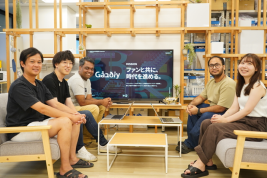
グローバルなファンを増やす 株式会社Gaudiy

G Talent/GitTapでは、グローバル人材の採用を通じて、多くの企業様を支援させていただいております。エンジニアの採用がますます困難になる中、注目されているのが「グローバル採用」です。しかし初めての取り組みで、なかなか導入まで踏み切れない企業様も多いのではないでしょうか。本特集では「グローバル採用の実情」や「活用のための取り組み」を、グローバル採用の先進企業にインタビュー。グローバル採用をご検討中の企業様に、ご参考いただければ幸いです。第14回目となる今回は株式会社Gaudiyの杉村様にお話を伺います。(これまでの記事はこちら)「ファンと共に、時代を進める。」 をミッションに掲げ、 生きがいが連鎖する社会の実現を目指すWeb3スタートアップ―貴社の事業内容について教えてください。Gaudiy(ガウディ)は、「ファンと共に、時代を進める。」 をミッションに掲げ、誰もが “好き" や “夢中" で生きていける新しい経済圏「ファン国家」の実現を目指すWeb3スタートアップです。ファン国家とは、私たちが独自に名付けたもので、共通の“好き”や“夢中”を通じて形成されるコミュニティの中で、人々が共創を通じて生み出す新しい価値の貢献に応じて、なめらかな価値分配が循環していく経済圏を指しています。夢中になれることが新しい仲間とのつながりを生み、コミュニティが人の好奇心や創造性をかき立て、また人がコミュニティを育てる――私たちが目指すのは、そうした「好きなこと」を中心に連鎖するコミュニティの好循環を生み出すことです。ブロックチェーンやAI技術をはじめとする先進的なテクノロジーを駆使しながら、“好き”や“夢中”を価値に変え、生きがいが連鎖する社会を実現するべく、日々、力を注いでいます。現在、Gaudiyは、主にエンターテインメント領域において、「Gaudiy Fanlink(ガウディファンリンク)」、「MyAnimeList(マイアニメリスト)」、「Gaudiy Financial Labs(ガウディフィナンシャルラボ)」の3つの事業を展開しています。1つ目のGaudiy Fanlinkは、IP(知的財産コンテンツ)独自のファンコミュニティ構築を支援する、ファン共創型のコミュニティプラットフォームです。ファンの熱量や貢献を評価・還元するエコシステムを構築することで、IPとファンが共創する世界をつくるための支援を提供させていただいています。2つ目のMyAnimeListは、12億件以上の視聴・読書ビッグデータを有する、世界最大級のアニメ・マンガコミュニティサイトです。世界240の国と地域に1950万人以上の会員がおり、日本のアニメやマンガに関する情報、レビュー、ランキングを閲覧・投稿できるほか、各会員が視聴・購読した作品のリストを管理できます。作品を軸に、グローバルのファン同士がつながりを深め、日本発IPの価値を世界に拡げていくために、このコミュニティサイトの運営を担っています。3つ目のGaudiy Financial Labsは、Web3時代の新しい金融インフラサービスです。既存の金融システムでは評価されづらかった、ファンの熱量や貢献を「経済の価値」に変え、あらゆる価値が循環する、持続的なファン経済圏の創出を目指して、リリースに向けた準備を進めているところです。―外国籍社員を採用するきっかけは何だったのでしょうか?2025年9月現在、社員123名のうち、約10%が外国籍メンバーで、スウェーデン、中国、インド、フィリピンなど、出身国はさまざまです。14名体制のAIチームにおいては外国籍メンバーが半数を占めています。社員約12名に1人が外国籍メンバーですが、意識して外国籍メンバーを採用していたわけではありません。どちらかというと、弊社が求める人材像にマッチしたのが、たまたま海外出身の方だったという感じです。2023年の4月に社内でAIチームが立ち上がったことから、LLM(大規模言語モデル)と生成AIにおけるスキル・経験と仕事に対する情熱をあわせ持つ優秀な人材を積極的に採用するようになりました。その結果として、自然な流れで外国籍メンバーが増えてきたというのが現状です。その中には、マンガやアニメなど、「日本ならではのカルチャーが好き!」という方が多くいます。弊社が展開するエンターテインメント領域の事業と親和性が高く、最初の段階で興味を持ってもらいやすい傾向にあったことも、採用がうまく進んだ一因であると感じています。疑問に思うことを言葉にする外国籍メンバーは、多くの気づきを与えてくれる存在―外国籍社員を採用するメリットはどんな点にありますか?外国籍メンバーは、疑問に思ったことをきちんと言葉にして伝えてくれるので、気づきを得る場面がとても多いです。自分たちが当たり前と思ってやってきたことに対して、「なぜ、するのですか?」と聞かれるたびに、改めて考えさせられます。一例として、オンボーディングを担当している日本人メンバーの話をご紹介したいと思います。弊社の勤務形態は、全社的にリモート、フルフレックスとなっていますが、月1回の出社推奨日を設けています。その日は、可能なかぎり、全メンバーで顔を合わせてミーティングを行った後、懇親会を行う流れになっているのですが、「それは、本当に意味があることなのですか?」と、ある外国籍メンバーから聞かれたのだそうです。日本人同士なら、特に説明をしなくても受け入れてもらえる一方、外国籍メンバーに対しては、出社を推奨する意図や背景などをロジカルに伝えた方が、より納得感をもって参加してもらいやすいと感じるとのことでした。「なぜですか?」と咄嗟に聞かれたことに対して、ロジカルに説明するのは、なかなか難しいものだと自身も実感しています。しかし同時に、そうしたコミュニケーションの中で得る学びも多いです。「じゃあ、次からはこんな説明を追加してみよう」といったアイデアを思いつくこともあれば、制度自体を見直す議論に発展するケースもあります。その意味でも、外国籍メンバーが投げかけてくれる率直な疑問や意見は、とてもありがたいですね。多様性に富むメンバーと共に働くことで、弊社が掲げるビジョンに対しても、自分たちのあるべき姿をより明確に描くことができるようになったと思っています。―その逆に、苦労したことや大変だったことはありますか?AIチームのみ、英語を話せる日本人メンバーが多いので、英語でコミュニケーションを図り、必要に応じて、日本語で話すという感じになっていますが、基本的に、社内公用語は日本語です。それゆえ、日本在住で日本語を話せる方を採用条件のひとつとして設けさせていただいています。日本企業での就業経験が長い方や日本のカルチャーに馴染みのある方、日本語能力試験のN1を取得された方など、採用に至った外国籍メンバーは、日本語でのコミュニケーションが問題なく行える方ばかりです。とはいえ、「込み入った話になると、日本語での聞き取りが難しく感じることがある」、「会話はできるけれど、読み書きは苦手」というメンバーも中にはいます。言語面においては、やはり会社として整備していく必要があるので、試行錯誤を重ねながら、最善策を少しずつ見出しているところです。例えば、毎週開催している全社の定例ミーティングでは、オンラインコミュニケーションツールの字幕機能を活用しています。この機能を使うと、ミーティング中にリアルタイムで英語字幕を表示させることができますが、ツールによっても、その精度に差があるようでした。そこで、外国籍メンバーに協力を仰ぎ、より精度の高いものを選ぶために見比べてもらいました。普段のコミュニケーションには、Slackを使用しています。ワンクリックでメッセージを自動翻訳できる機能を活用することで、スムーズに意思疎通を図ることができています。一方、全社の定例ミーティングで使うアジェンダや資料については、このミーティングの運営を担うメンバーが旗振り役となって、日本語版、英語版の両方を用意するようにしています。各自メンバーが作成したドキュメントについても、日本語で書いたものは英語に翻訳し、英語で書いたものは日本語に翻訳するという風に、翻訳を徹底して行い、必要なメンバーに共有することを呼びかけ、弊社の文化として少しずつ根づかせているところです。また、これは外国籍メンバーに限らず、全メンバーに対して行っていることですが、語学力のスキルアップを自主的に図りたいという希望者には、学習にかかる費用を一部補助する形で会社が支援しています。日本語のスキルアップに関わる外部の講演に参加したいという外国籍メンバーもいれば、「英語は全く話せないけれど、外国籍メンバーともっと柔軟にコミュニケーションを取れるようになりたいので、英語学習プログラムで学びたい」という日本人メンバーもいて、さまざまです。グローバルな視点からの提案、自然に生まれた協力体制―外国籍社員の採用後に得られた効果や変化について教えてください。外国籍メンバーが疑問に思ったことを言葉で伝えてくれるという、先ほどの話にもつながることをひとつ共有させていただこうと思います。Slackに自動翻訳機能が付加される以前は、アメリカ国旗のスタンプを押すと、英語の翻訳文がスレッドに流れるという仕組みを導入していました。すると、インド出身のメンバーから、「英語を使う国は、アメリカに限らないと思う。英語はグローバルな公用語だから、地球儀のアイコンなどに変えた方がいいのでは?」という意見が寄せられました。細かいことかもしれませんが、確かにその通りだと思い、アイコンを変更しました。このように、グローバルな視点から物事を見つめて、自分たちでは気づけなかったことに気づき、提案してもらえるのは非常に貴重なことだと感じています。―G Talentを導入いただいたご感想をお聞かせください。日本在住の外国籍のLLMエンジニア・生成AI関連のエンジニアを採用することになった時、G Talentのコンサルタントの方が、インサイトの仮説検証を一緒に行ってくださり、大変ありがたかったと、私の前任者から聞いております。「日本に来ているということは日本のエンタメに興味があるのではないか?」、「グローバル展開・グローバルメンバーが多いのは刺さるのではないか?」という2つの仮説を立て、検証を行った結果、概ね仮説は正しかったことが分かったそうです。コンサルタントの方が求職者の方々にヒアリングを重ねてくださる中、「Gaudiyの尖った独特のカルチャーやビジョンは敬遠されるのではなく、興味を持ち、聞いてみないと分からないから聞いてみたい」という予想外の反応があり、カジュアル面談にも繋がりやすかったとのことでした。その結果、2ヶ月で4名もの外国籍メンバーの採用が決まり、そのうち3名はG Talentからのご紹介で、内定承諾も100%という素晴らしい結果となりました。現在、この3名を含む計5名の外国籍エンジニアが、G Talent経由でご縁をいただき、入社に至ったメンバーです。この人数は、弊社に在籍する外国籍メンバーの約3割を占めています。2年にも満たない比較的短い期間に、これだけ多くの優秀な人材を採用できたのは、他ならぬコンサルタントの方のおかげです。特にクロージングの段階で、非常に丁寧に伴走していただけるので、大変助かっています。例えば、採用候補者の方からの条件面に関するご要望に対して、応えられる部分と応えられない部分が出てくることがあります。そうした時にコンサルタントの方は、「こんな風にお伝えすれば、納得していただけると思います」とアドバイスしてくださいます。また、「内定承諾を得るためには、こうした情報がもう少しあるといいと思うので、ご準備いただけませんか?」とご提案していただくこともあります。採用候補者の方ごとに、きめ細やかにサポートしてくださるので、ありがたいかぎりです。大切なのは、国籍ではなく、気の合う仲間として働けるかどうか―今後の展望についてお聞かせください。弊社は、創業時よりエンターテインメントの力と先端テクノロジーを掛け合わせ、グローバル市場に向けた新たな価値創出を目指してまいりました。徐々に外国籍メンバーが増え、組織の規模も拡大する中、組織としてもグローバル化を図っていくことは必然的な流れだと思っています。これまでは日本語が話せて、日本のカルチャーにも理解のある外国籍の方に的を絞って、採用活動を行ってきました。しかし、中長期的には、海外在住のフルリモートで働く外国籍メンバーを迎え入れるフェーズが訪れ、さらなる拡大を図っていくことも予想されます。今後は、そうした多様な人材を受け入れられる文化を醸成しながら、Gaudiyの核をぶらすことなく、組織運営を行える体制を築いていきたいと考えています。直近では、オフィス移転を検討中で、出社方針についても議論を重ねているところです。前半でもお伝えしたように、弊社の勤務形態は全社的にリモート、フルフレックスで、各自のライフスタイルに合わせて柔軟に働ける環境が備わっています。その一方、同じ空間で顔を合わせて働く方が、生産性が向上する場合もあるので、さまざまな要素を加味しながら、今後の方針を決めていく予定です。―最後に、外国人人材の採用を検討されている企業の方にメッセージをお願いします。「結局、国籍ではなく、気の合う仲間として働けるかどうかが重要だ」と、外国籍メンバーの一人が言っていました。これを聞いた時、私は深く共感しました。弊社では、アニメやマンガ、ゲームなど、日本のエンターテインメントが好きという共通点のあることが、国籍を越えたチームワークの基盤になっていることを強く感じています。皆さまの企業においても、“気の合う共通の部分”のようなものがあるとすれば、チームとしてうまくやっていくことができるのではないかと思います。自身の経験から申し上げると、働く環境やツールの整備などは、入社した後からでもできることですし、状況に合わせて改善を図ることができます。「外国籍の方だから、難しいのでは?」と気負わずに、まずは共に働く仲間として受け入れる体制を築いていくことに意識を向けることをおすすめしたいです。インタビューを終えて海外ITエンジニアと気が合う働く仲間として重視していることが印象的だった株式会社Gaudiy。組織の中長期的な成長のために、外国籍人材採用を検討している企業様は、ぜひ本記事をご参考いただければ幸いです。G Talent/GitTapでは、企業様のグローバル人材採用をご支援しております。各サービスの詳細は、下記バナーからご覧いただけます。またエンジニア採用の悩み、グローバル採用のコツなどございましたら、お気軽にご相談ください。

その他

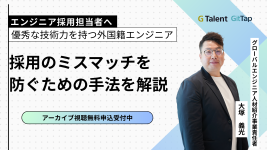
【見逃し配信】外国籍エンジニア採用の基準を明確に。スキルと日本語の最適バランスとは?

「優秀な外国籍エンジニアを採用したいが、日本語の壁が…」「技術力は高いのに、日本語が理由で採用を見送るのは正しいのか?」多くの人事担当者様や開発責任者様が、外国籍ITエンジニアの採用において、この「スキルと日本語のバランス」という課題に直面しています。この課題に具体的な解決策を提示するため、先日開催し大変ご好評をいただいたウェビナー「外国籍ITエンジニア採用『黄金バランス』の見つけ方」のアーカイブ動画を、この度オンデマンドで限定公開いたします。アーカイブ動画視聴のお申し込みなぜ今、外国籍エンジニア採用の「基準」を見直すべきなのか?経済産業省のデータによると、日本では2030年までにIT人材が最大で80万人不足すると予測されています。その一方で、IT業界で働く外国籍人材はこの10年間で約3倍に増加しており、企業の開発力を強化する上で重要な存在となっています。しかし、採用現場では多くの課題が存在します。日本語のコミュニケーション能力の差報連相など、日本独自の文化や価値観との違いビザ取得・更新の煩雑さ生活やキャリア形成の不安からくる定着率の不安定さこうした課題を乗り越え、採用を成功させるための具体的なヒントがこの動画には詰まっています。この動画で学べること:明日から使える「黄金バランス」の作り方本ウェビナーでは、外国籍人材紹介事業の責任者であるビズメイツ株式会社の大塚 義光さんが、豊富な支援実績を元に、採用のミスマッチを防ぎ、成功確率を上げるための具体的な手法を解説します。採用課題の全体像を把握する日本のIT人材不足の現状と、外国籍エンジニア採用におけるコミュニケーション、文化、定着率といった具体的な課題を整理します。ポジションごとに求める日本語レベルを再設定する全ての職種で画一的に高い日本語レベルを求める必要はありません。例えば、PMや顧客折衝のあるシステムエンジニアは高い日本語力が求められますが、SREやデータサイエンティストは技術を重視し、日本語要件を緩和することが可能です。このようにメリハリをつけることで、採用の母集団を大きく広げることができます。外国籍えンジニアの「本音」を理解する技術職のエンジニアは、「なぜ技術力より日本語力が重視されるのか?」「意味が通じるなら細かい文法は問題ないのでは?」と感じています。このギャップを理解し、技術力を正当に評価する姿勢が採用成功の鍵となります。ミスマッチを防ぐ求人票・面接の具体例を知る「一次面接は英語可、最終面接は日本語」「日本語スキル:JLPT N2以上(ビジネス会話・読み書きが可能)」のように、求人票やエージェントへの依頼文で日本語要件を具体的に明記する方法を解説します。アーカイブ動画視聴のお申し込みこんな方におすすめです外国籍エンジニアの採用基準が曖昧で、評価に悩んでいる人事・採用責任者様日本語能力を理由に、優秀な候補者の採用を見送った経験があるCTO・VPoE様開発チームのグローバル化を推進したいが、採用後のコミュニケーションに不安がある方採用コストや定着率に課題を感じている経営者様まとめ:採用の新たな可能性を見つけるために本ウェビナーは、単なる精神論ではなく、職種ごとの日本語必要レベルの判定や、求人票への具体的な記載例など、すぐに実践できるノウハウが中心です。以下のフォームからお申し込みいただければ、2営業日以内に視聴URLをお送りします。ぜひ、貴社の採用戦略のアップデートにお役立てください。アーカイブ動画視聴のお申し込み

その他

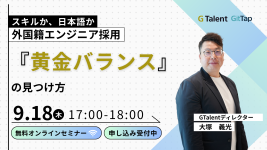
スキルか、日本語か?外国籍エンジニア採用「黄金バランス」の見つけ方

GTalentとGitTapが主催する無料オンラインウェビナーのお知らせです。【イベント概要】「N2以上は必須」「流暢な日本語が話せること」ーー。外国籍エンジニアの採用において、無意識に日本語レベルのハードルを上げていませんか?その結果、本来採用すべき優秀な技術力を持つエンジニアを、書類選考の段階で見送ってしまっているケースが後を絶ちません。本ウェビナーでは、採用担当者や技術マネージャーが陥りがちな「日本語レベルへの過度な期待」という課題に焦点を当てます。なぜ「スキル」を最優先すべきなのかを論理的に解説し、開発現場で本当に必要とされる日本語レベルと、採用候補者のスキルを的確に見抜くための具体的なフレームワークを提示します。感覚的な採用基準を脱却し、データとロジックに基づいた採用戦略を構築するためのヒントが満載です。お申し込みはこちらから【こんな方におすすめ】・外国籍エンジニアの採用基準(特に語学力)が曖昧な方・書類選考で、日本語レベルを理由に候補者を不採用にした経験がある方・採用した外国籍エンジニアとのミスマッチに悩んでいる技術部門のマネージャー・より多様で強力な開発チームを構築したいと考えている採用責任者 【開催概要】開催日時:9月18日(木)17:00~18:00参加費:無料開催形式:オンラインお申し込みはこちらから【登壇者紹介】GTalentディレクター 大塚 義光2017年にコンサルティングファームに入社。2018年にはチームリーダに昇格し、戦略人事としての採用活動、キャリアカウンセリング、SaaS分野のセールスプロモーションを牽引しました。2020年よりマネージャーとして人事部門を統括。国内の製造業・IT業界の人材支援および事業パートナーとの協業を推進しています。事業戦略に沿った人材戦略の策定から組織開発、インパクトのある人事施策の実行までを一貫して得意としています。 【注意事項】・お申し込みいただいた人数が上限になった場合は、応募終了とさせていただきます。・開催人数は20名程度を予定しています。・同業者や営業目的のイベント参加はご遠慮ください。・身元が分からないまたは参加目的が不適切と判断した場合は、運営側からキャンセルさせていただきます。・当イベントの内容およびスケジュールは、予告なく変更となる場合がありますので、予めご了承ください。・ブログやSNS等で当イベントに関する発信を行う際は、公序良俗に反する内容のないよう、ご協力をお願します。・運営の状況によりスケジュール、内容は変更となる場合があります。・性別/性的指向/障害の有無/人種/宗教/年齢/容姿/体格/技術の選択に関わりなく、誰もが気持ちよく参加できるようにご協力ください。・イベント参加時に入力いただいた情報は、以下に基づき扱います。ビズメイツ株式会社 プライバシーポリシーお申し込みはこちらから

Articles in English

Tips for foreigners working as designers in Japane

Designers are required to have different skills depending on the country. If you are a foreigner who wants to change careers and become a designer at a Japanese company, you should start by doing some research to find out what the design situation is like in Japan.In this article, we will introduce tips for working as a designer in Japan and the differences between the characteristics of design in Japan and other countries to foreigners who want to work as designers in Japan. If you are looking for a job as a designer, please use the IT industry job-placement agency “G Talent”, which is a recruitment agency that brings together global companies.Tips for foreigners working as designers in JapanIf you want to work as a designer in Japan, make sure you keep the following seven points in mind. This will help you understand the patterns that are often used or required of designers in Japan.Include necessary information while focusing on convenienceBe careful of the different impressions created by different colorsUse capital letters to emphasizeDesign using a combination of hiragana, katakana and kanjiText can also be written verticallySometimes the text itself is used as an illustrationImportant to be aware of the sense of the seasonInclude necessary information while focusing on convenienceIn Japan, web design emphasizes convenience with the aim of “making it easy for users to find the information they want”. For exampleThe latest update information and event information is posted on the top pageThe menu is simple and easy to understand If users judge that it is easy to find the information they want when they first visit the site, it will be easier to gain their trust.Reference: UI(ユーザーインターフェース)とは?意味やデザインのポイント/DENTSU MACROMILL INSIGHTBe careful about the different impressions created by different colorsPeople's impressions of colors differ depending on the country or region. This is also true even within the same Asian region, and there are colors that have a positive image in Japan but a negative image in other countries. When sending information to users in Japan, it is important to remember the following color images as perceived by Japanese people.Color TypeImpression on Japanese peopleWhiteClean, sacred, bright, goodRedHot, passionate, active, energetic, angryOrangeBright, healthy, warm, funYellowJoy, happiness, attentionGreenNature, healing, calm, healthyBlueSmart, fresh, coolPurpleNoble, mysterious, feminineReference: 色の持つイメージが与える心理的効果とは?チラシデザインの広告効果を高めよう!/販促の大学Use capital letters to emphasizeIn the West, English sentences and words written in capital letters give the impression of being “attention-seeking” and negative, but in Japan, they are often used not to convey a good or bad image, but as a way of emphasizing the parts you want people to read, as a way of making the text easier to read.For example, in Japan, capital letters are often used when publishing company slogans, etc. You also need to be careful about how you use the alphabet.Reference: 大文字と小文字/デザイナーの英語帳Design using a combination of hiragana, katakana and kanjiThere are three types of characters in Japanese: hiragana, katakana and kanji, and words and sentences are written using a combination of these. There are many different ways to combine these characters, so you can create a design by arranging the combination that best matches the image you want to convey. You can also add English words to create a sentence.If you look at web designs that have actually been created for Japanese users, you will see that various character combinations are used to good effect.Reference: 日本のデザインスタイルは、そのままでは海外で通用しない/ぐれこブログText can also be written verticallyCompared to the alphabet, which is not suited to vertical writing, Japanese can be written both horizontally and vertically. In addition, for people whose native language is Japanese, vertical writing is the natural way of seeing things.For non-Japanese designers who use Japanese as a second language, it may seem unfamiliar. To get used to vertical writing, try walking around town and looking at signs written in Japanese, or checking out Japanese websites.Sometimes the text itself is used as an illustrationIn Japan, it is common to emphasize text by illustrating it in advertisements and signs. In particular, Japanese kanji are characters that are easy to illustrate. Kanji are made up of a combination of the “left” radical (on the left), the “right” radical (on the right), the “top” radical (on the top), and the “bottom” radical (on the bottom), but by illustrating some of these, it becomes easier to visually convey the message to the user.For example, if you use an illustration of a fish for the fish radical and an illustration of a tree for the tree radical, it will be easier for users to form an image in their minds before they even think about it.Reference: 偏旁冠脚/goo辞書Important to be aware of the sense of the season Japan is a country where you can clearly feel the differences between spring, summer, autumn and winter. Japanese people and foreigners who are used to living in Japan have a common image of each season. Therefore, it is recommended to incorporate illustrations of seasonal events and designs that evoke a sense of the seasons into web designs for Japanese users, as this will help to create a good impression and make it easier to convey information accurately.SeasonsImpressions received by Japanese peopleSpringCherry blossoms, entrance ceremonies, new life, pinkSummerThe sun, sunflowers, shaved ice, beer, swimming, fireworksAutumnAutumn leaves, persimmons, chestnuts, grapes, saury, sports dayWinterSnow, snowflakes, Christmas, New Year, mandarin orangesReference: 季節や月別の色のイメージとは?デザインに落とし込むコツもご紹介!/mitekakuDifferences between design in Japan and design in other countriesThe internet is now a tool that allows us to easily connect with the world. Even if you are a web designer in Japan, you need to keep in mind that your website will be viewed by users not only in Japan but also in other countries around the world. In this section, we will introduce some of the trends and characteristics commonly seen in design in Japan and other major countries.Characteristics of Japanese designJapanese websites, including the index page, which is the first thing users see, tend to include as much information as possible. This is particularly true of websites that are accessed by a wide range of users, and one of the characteristics of these sites is that they tend to have little white space. However, in Japan, there is a minority of users who view websites without scrolling.On the other hand, there are many websites that have adopted the latest design trends to make their content easier to read, and these sites tend to have a core audience.It is true that many Japanese users want to obtain the information they need as quickly as possible. For this reason, it is important to use access analysis and other tools to analyze which content is needed, and to narrow down the items displayed on each page.Reference: 世界各国のWebデザインと日本のWebデザインの特徴/ManaのWebクリエイターカフェCharacteristics of American designThe United States has been a pioneer in the development of the web industry, and as a web-advanced country where the latest designs are constantly being created, many sites incorporate the latest designs. Specifically, although simple designs that use only images and headline text are generally common, the rationality of being able to easily find links to the items you really need is a feature that is also expressed on the site. Unlike sites for Japan, which emphasize the amount of information, it can be said that they emphasize images.In addition, since originality, humor and impact are highly praised in this country, “vivid colors” and “energy” are also emphasized in design.Reference: 日本とアメリカのデザインの違い/ルートメロン研究所Characteristics of French designEven in France, which is one of the Western countries, there are many minimalist sites that are as simple as American sites and display minimal content, so it can be judged that images are also emphasized here. However, when it comes to color, there seems to be a preference for simplicity and intelligence, such as “adding a theme color to black and white”. There is no need to limit yourself to the tricolor of the French flag (blue, white and red), but by considering these three colors as the basis of your design, you should be able to create a safe and smart site.Reference: フランスと日本のデザインの違い/西方見聞録(旧パリレポート)Characteristics of Saudi Arabian designIn Saudi Arabia, where there are many Muslims in the Arab world, there is a tendency for sites to be designed using images that make a strong first impression. The key is to use images that make a strong impact and make people want to click on them. This is a fundamentally different approach to design from that of Japanese sites, which do not place such importance on impact.Characteristics of Chinese designChina has many things in common with Japan's design, which is also in the Asian sphere, and it seems that web designs reminiscent of busy neon streets and signs are popular. Many sites use more colors than in Japan to pack in information, and the text and fonts are larger, and many pages are longer.In addition, because of the many information restrictions in China, it is difficult to access services and tools that are common overseas, such as Google, YouTube and Instagram. The same is true of Google Maps, so you will need to be creative when creating social networking share buttons and links to maps.Reference: 制作前に知っておきたい、中国国内向けWebサイトの開発・デザインの注意点/DESIGN JOURNALLet's find out some tips for foreigners working as designers in Japan!Web design preferences and characteristics differ depending on the user's country of origin. If you are a foreign designer looking for work in Japan, it is important to focus on designs that Japanese users are familiar with and find easy to use.Japanese people tend to want a lot of information to be visible at a glance on the top page of a website. However, it is not enough to just have a lot of information - if you carefully select the information that is really necessary and post it, it will be easier to find the links and the design will also improve.If you are looking for a job as a designer in Japan, we recommend “G Talent”, a job-placement agency for foreign IT engineers. It also lists many job openings at venture companies and global companies with English-speaking environments, so you can find a job as a designer that suits you.

Articles in English

15 common cultural differences that foreigners experience in Japanese offices

There are significant cultural differences between foreigners and Japanese people, so you may find yourself in situations where you feel a gap in the office scene. Depending on the situation, there are cases where a culture that is considered acceptable in your home country is considered taboo in Japan, so foreigners who want to work in Japan should familiarize themselves with Japanese culture in advance.In this article, we will introduce 15 common cultural differences that foreigners often experience in Japanese offices. If you are looking for a Japanese company that suits you, we recommend IT industry global company recruitment agency "G Talent".Common cultural differences that foreigners experience in Japanese offices 1: Always being greetingWhen you go to work in the morning and meet the other employees, you say “Ohayo gozaimasu” (Good morning), and when you leave work in the evening, you say “Shitsurei shimasu” (Excuse me) or “Osakini shitsurei shimasu” (Pardon me for leaving first), and Japanese people say greetings at every opportunity. Also, because there is a culture of saying “Konnichiwa” (Hello) or bowing even when you just pass someone in the hallway, to foreigners, it may seem like Japanese people are always being greeting.In particular, in Southeast Asian countries such as Thailand and Vietnam, there is no culture of greeting people in the first place, so many people from these countries feel that there is a big gap with the unique Japanese office culture of greeting people. However, because Japanese people also place importance on greetings when doing their work, if you want to work smoothly in Japan, you should also place importance on greetings.Reference: 外国人トラブル5選|文化や風習の違いで起こる/ミャンマー・ユニティCommon cultural differences that foreigners experience in Japanese offices 2:  There is a lot of reporting, contacting and consultationWhen doing their work, Japanese people place importance on what is called reporting, contacting and consultation. This is because, when they report and contact, the entire company can grasp the content of each person's work and the progress of their work, and if they consult immediately when they don't understand something, they can carry on with their work smoothly without worrying unnecessarily.However, in foreign countries, there is no culture of reporting, contacting and consulting. In the United States in particular, there is a belief that “reporting and contacting your boss without a request is a bad thing that wastes your boss' time”, so many people probably don't do reporting, contacting and consulting.However, in Japan, people who do reporting, contacting and consulting are evaluated as “able to work” and “attentive”, so please contact your boss before doing anything, and don't forget to report after finishing your work. Also, if you have any questions, be proactive and consult with your boss.Reference: ここが知りたい米国税務・会計/LighthouseロサンゼルスCommon cultural differences that foreigners experience in Japanese offices 3: Never refusing workIn other countries, each employee has a clearly defined set of tasks to do, so they don't do one task while simultaneously working on another one.However, in Japanese offices, the boundaries between individuals' work are unclear, so there is a tendency to accept requests for other tasks without refusing them even when you are in the middle of something else. In Japan, not refusing a request for work is seen as a sign of excellence, so the fact that people are expected to multitask can be seen as a generation gap between Japan and other countries.Reference: 外国人労働者の文化と価値観の違いによるトラブルとは?具体例と対処法を解説。/RISE for BusinessCommon cultural differences that foreigners experience in Japanese offices 4: Disliking small talkMany foreigners communicate through small talk rather than greetings, but small talk at work can be seen by Japanese people as a sign that you are not concentrating on your work or are slacking off. For this reason, even if you are trying to be friendly, small talk at work is often not appreciated in Japanese offices.If you want to communicate smoothly in Japan, the best way is to have conversations during breaks and exchange greetings frequently.Reference: 日本のグローバル化やダイバーシティはなぜ進まないのか?その理由は日本人の国民性にあった!?/COWELLCommon cultural differences that foreigners experience in Japanese offices 5: There is an unspoken agreementIn Japan, there is a deeply-rooted culture of unspoken agreements, where you read the mood of the situation and judge the other person's feelings. For example, “You must not leave before your boss” and “You must not go against your boss's opinion” are unspoken rules in Japanese society.However, in other countries, there is a culture that is the opposite of Japan's, where you should honestly convey your thoughts to the other person, so the unique Japanese culture of reading the mood of the situation and refraining from speaking or acting may be one of the gaps that is difficult to understand.Common cultural differences that foreigners experience in Japanese offices 6: Don't make your own decisions, ask your bossIn other countries, especially in the US, employees are free to make their own decisions as long as they contribute to the company's success, and those who can make the best decisions for themselves are highly regarded. However, in Japan, it is common practice to consult with your boss or seek their judgment before starting work. If you make your own decisions, you will be negatively evaluated as “not being cooperative” or “self-centered”, so be careful.Reference: 絶対に仕事でやるべきアメリカ🇺🇸で学んだ5つのこと/noteCommon cultural differences that foreigners experience in Japanese offices 7: No tolerance for tardinessAs is well known around the world, Japanese people are extremely punctual. It may be hard to believe, but in Japan, even a one-minute tardiness is almost always unacceptable, so when working in Japan, be sure to be punctual.Incidentally, there is also an unspoken rule in Japan that it is considered late to arrive at work after the start of the working day. For this reason, even if the working day starts at 9:00, it is safer to arrive at work between 8:30 and 8:45.Reference: 「日本人って時間に厳しすぎない?」と面倒くさがられたら…/COURRIERCommon cultural differences that foreigners experience in Japanese offices 8: Lots of overtimeIn other countries, it is considered good to work efficiently within the hours, so when you see someone working overtime, you would evaluate them as someone who is not good at their job. However, in Japan, the more overtime you do, the more you are evaluated as someone who is working hard, and the more you leave on time, the more you are evaluated negatively as someone who is “insensitive for leaving before the boss” or “someone who is cold and doesn't help others with their work”.At present, there are reforms underway in Japan to change attitudes towards overtime work, but the reality is that there are still many companies that require their employees to work overtime. For this reason, foreigners who value efficiency and want to make the most of their private time will probably find that there are significant cultural differences in Japan, where the more time you spend on work, the higher your evaluation will be.Reference: 長時間労働の原因は何なのか?日本人の労働実態と問題点/RELO総務人事タイムズCommon cultural differences that foreigners experience in Japanese offices 9: The blurred line between work and private lifeIn Japan, it is common for people to have dinner or drinks after work or on their days off. This is because many people in Japanese offices think that after-work gatherings are an important time for communication.However, in other countries, people tend to place more importance on their private lives, so it is rare for people to spend time with their colleagues after work. Most people think that communication can be achieved through casual conversation during work, so the fact that there is no clear distinction between work and private life is also a major cultural difference that foreigners feel when they are in Japanese offices.Common cultural differences that foreigners experience in Japanese offices 10: Different food culturesBecause the food cultures of Japan and other countries differ greatly, problems are likely to occur in situations where all employees eat the same meal together, such as welcome and farewell parties. For example, in Japan, you don't often hear of cases where people can't eat certain foods for religious reasons, but in Islam, which is practiced in Asia, North Africa, and the Middle East, it is forbidden to eat pork or alcohol. In particular, with regard to pork, not only the meat but also seasonings such as bouillon and lard are off limits, so there are cases where people cannot eat even a single bite of the meal that is served.Also, while raw fish is used in a variety of dishes in Japan, there are many foreigners who do not like raw fish, so it is important to let them know in advance about the differences in food culture when a meal is being held.Reference: 宗教別・信念/東京都多言語メニュー作成支援ウェブサイトCommon cultural differences that foreigners experience in Japanese offices 11: Rarely firedIn other countries, it is common for employees who have not achieved results to be fired on the spot. However, in Japan, unless they have made a major mistake, employees are not fired.Therefore, from the perspective of foreigners who are used to a system based on ability, they may find it difficult to understand Japanese society, which continues to employ employees who are not performing well.Reference: 「働かないおじさん」を守る解雇規制 「割を食うのは次世代の若者だ」 弁護士が警鐘/弁護士ドットコムニュースCommon cultural differences that foreigners experience in Japanese offices 12: Focusing on the process rather than the resultIn foreign societies, as long as the results are good, the cost and time spent on the process are not questioned. However, in Japanese society, not only the results, but also the cost and time spent on the process are taken into account when evaluating people, so if you spend a lot of money on a budget or spend too much time on a single task, your evaluation is likely to suffer.For this reason, when working in Japan, you also need to focus on building a process that will help you achieve results.Reference: 日本人がアメリカの職場で感じた10の企業文化の違い/btraxCommon cultural differences that foreigners experience in Japanese offices 13: Many companies have a retirement allowance systemIn foreign countries, sudden dismissal and changing jobs is common, so companies almost never pay a retirement allowance when someone leaves. For this reason, foreigners use a defined contribution pension system to manage their assets.In Japan, on the other hand, a retirement allowance is paid by the company at the time of retirement, depending on the number of years of service, so the longer you work for one company, the greater the benefits at the time of retirement. This is another major cultural difference that foreigners may notice in Japanese offices.Common cultural differences that foreigners experience in Japanese offices 14: Hiring people with no experienceOverseas, people are hired based on their skills and creativity, so it is rare to hire people with no experience. However, Japanese offices tend to value people who will continue to work for a long time, rather than focusing on individual skills, so they will first hire people who will not disrupt the harmony of the company, even if they have no experience.In Japan, people think that “individual skills can be honed through training and other means”, so the fact that there is an environment that is easy for people with no experience to work in is a pleasant surprise.Common cultural differences that foreigners experience in Japanese offices 15: “I can do it” is not a definite statementIn Japan, if you say you can do something, you are expected to be able to do it 100% of the time, so you don't say you can do something unless you are 100% sure you can do it. On the other hand, in countries like the US, many people will say they can do a job even if there is only a 30-50% chance of success, and then work to achieve 100% results, so there is a gap in the meaning of the word “can do” between Japan and other countries.For this reason, when you are asked to do a job in Japan, it is better to only say that you can do a job if you can achieve 100% results, to avoid any problems.Reference: 真面目な日本人よりテキトーなイタリア人の方が「仕事がデキる」と断言できる理由/PRESIDENT onlineForeigners who want to work in Japan should be aware of the common cultural differences they will encounter in Japanese officesAs we have seen in this article, foreigners working in Japan will encounter cultural differences in various situations in Japanese offices. What is considered acceptable in their home country may be taboo in Japan, so it is important for foreigners who want to work in Japan to be aware of the cultural differences between Japan and their home country in advance.At global company recruitment agency “G Talent”, we provide total support for those who are worried about the gap between Japan and other countries, from job introductions to recommendations and selection advice for companies, and even salary and other benefits negotiations, so that you can work for a Japanese company with peace of mind. We have a track record of introducing engineers from over 70 countries to over 200 Japanese IT companies, so if you are a foreign IT engineer who wants to work in Japan, start by registering for free.

Articles in English

For Foreigners: Introduce you to the programming languages that pay well!

What should foreigners do to work as IT engineers in Japan and earn a high salary? Since the salary level differs depending on the programming language you learn, it is recommended that you choose a programming language with a high salary.In this article, we will explain programming languages that will allow you to work in Japan and earn a high salary, as well as methods for increasing your salary in Japan. If you want to work at an IT company with a high salary, please use “G Talent”, which is a site where global companies in the IT industry gather.Programming languages with getting high salaries in JapanThe following are the programming languages you should learn in order to earn a high salary as an IT engineer in Japan.GoTypeScriptR languagePythonCPerlC#ScalaJavaScriptGoGo is a new language developed by Google and released in 2009, and it is popular because it is compatible with most operating systems, including Windows, MacOS X, Linux, Android, and iOS. It is a simple, high-performance programming language that is difficult to introduce bugs into. It is a popular language that is attracting a lot of attention, but there are still not many engineers who have mastered Go, so the annual income level is high.Because the grammar is completely different from other languages, there is a disadvantage in that it costs money to learn. However, it is a language that is worth spending that much money on. In Japan, it is being adopted by major companies such as LINE, Mercari, and Gunosy, and it is attracting a lot of attention.There is a shortage of Go engineers, so if you learn Go, your value in the job market will increase. Go engineers are known for their high annual income, so if you are aiming to increase your annual income as an IT engineer, you should definitely learn it.Reference: Trending Programming Languages That Make You The Most Money In Japan/G Talent BlogTypeScriptTypeScript is a programming language that is an extension of JavaScript and is upwardly compatible, and is a language that you should learn if you want to become a web engineer. It is safer to develop in TypeScript than in JavaScript, as it is less prone to bugs, so development efficiency will increase. By learning a programming language that is one step above the norm as a web engineer, you should be able to increase your salary.TypeScript is an extension of JavaScript that is widely used, so it is expected that demand for it will continue to grow. There is also a movement to rewrite systems written in JavaScript in TypeScript, so you can expect to see an increase in work in the future. By learning TypeScript in addition to JavaScript, you can take your career as a web developer to the next level.Reference: フロントエンドの開発で必要な言語一覧!JavaScriptだけでなくTypeScriptのスキルも必要?/転職GUIDER languageR is a programming language that is suitable for fields such as machine learning, statistical analysis, data analysis, data mining, and graphics. It is a language that has long specialized in statistical processing, but it has once again come into the spotlight in recent years due to the rapid development of the AI field.As it can be used in the AI field, it is an indispensable language for data engineers and data analysts. If you learn R, you can work in the AI, machine learning and data analysis fields, which are currently attracting a lot of attention, so we recommend that you learn it if you want to increase your annual income.Another language that specializes in the same AI field is Python. Python is used in the fields of deep learning and machine learning, but R was originally developed for the field of statistical analysis. R is less versatile than Python because it is used for statistical calculations and graph output. Python can also be used for web app development, but R is specialized for statistical calculations.However, there is also the problem that the R language has a high learning cost. On the other hand, however, because it is difficult to learn, if you learn it, your value as a technician will increase. There is also a high possibility of earning a high income in a field that requires the R language, and if you learn it, your range of work will also expand.Reference: R言語とは?できること・特徴はPythonとなにが違う?インストール方法から難易度まで解説/パーソルクロステクノロジーPythonPython is a highly versatile language that is used in fields such as AI, big data, and IoT, and can also be used for web app development. If you learn it, you will be able to aim for a high income at companies that handle AI and machine learning.It is predicted that AI, big data analysis, and machine learning will continue to develop in the future. Therefore, if you are aiming to increase your annual income in this field, we recommend that you learn it.Reference: 【入門】機械学習に役立つPythonの学習方法 | できることやおすすめサイトも紹介/スキルアップAICC is a very major language that has been used for a long time. It is used in a wide range of development, including core system development, software development, and embedded system development, and there are still many systems being developed in C. Therefore, there are many jobs such as changing the specifications of existing systems and maintenance, so it would be useful to learn it.There is also C++, an object-oriented language that extends C. It is a highly versatile language that can be used for web apps, embedded systems, AI development, game development, and more.Reference: C言語の需要と将来性は? 特徴について徹底解説/SAMURAI ENGINEER BlogPerlPerl has been around for a long time, but it is still a popular language that is easy to use. It is a language that is used in the fields of web development and server management. There are still many systems that run on Perl, so if you learn it, you will be able to get work as an engineer. By learning Perl, you can expand the scope of your work and aim to increase your annual income.C#C# is a general-purpose language developed by Microsoft that can be used to develop web apps, smartphone apps, games, etc. It is not the latest language, but there are many existing systems that are currently running in C#, so there are many opportunities to put it to use, and if you learn it, you can also increase your annual income. Please note that it is completely different from C and C++, even though the names are similar.Reference: C#(シーシャープ)とは?5つの特徴とできることを紹介/発注ラウンジScalaScala is a relatively new language, but it is a high-performance language that is compatible with Java. It is highly compatible with Java, and there are many systems developed in Java, so it is highly versatile.Another big attraction is that you can use most of the Java libraries. It also has the characteristics of being fast and having good development efficiency. Because it has so many advantages like this, if you learn it, you can aim to increase your annual income.JavaScriptJavaScript is a programming language that can be used to create dynamic web page movements. If you want to become a web engineer, you can say that it is a language that you must learn.As web content and web apps continue to increase, the demand for JavaScript will also increase. If you want to work as a web engineer, you should definitely learn it.Reference: jQueryへの別れ:現代的な開発のための必須JavaScriptメソッド/QiitaHow can foreign programmers increase their salary in Japan?In order to increase your salary as a foreign programmer in Japan, you should do the followingLearn programming languages with high average annual incomesImprove your programming skillsDon't get too fixated on one programming languageAcquire IT skills and knowledge other than programmingStudy Japanese to a certain extentResearch Japanese business cultureMake the most of being a foreignerChange jobs to a company with good treatmentLearn programming languages with high average annual incomesIt is important to learn programming languages with high average annual incomes. In the world of programming, “popular languages do not necessarily mean high-paying languages”.Languages that are used frequently, languages that are expected to develop in the future, languages that are rare because there are few engineers who know them - languages that meet several of these conditions are the ones that pay well. If there are already many engineers who know the language and the number of programmers who know it is at saturation point, it will be difficult to increase your salary even if you learn it. It is important to carefully check the value of the language in the job market and choose the language you should learn.Reference: バックエンドエンジニアに必要なスキル17選!効率的な勉強方法も紹介/フリーランスのミカタImprove your programming skillsIt is important to not only learn about languages, but also to improve your programming skills. Prepare a development environment at home and try developing and running programs.We also recommend that you upload your smartphone app to the app store and have it used by the general public. Acquire practical skills such as being able to use frameworks, libraries and useful development tools.Reference: プログラマーとはどんな職業?必要なプログラミングスキル・年収を解説/プロクラDon't get too fixated on one programming languageIf you want to increase your salary as an engineer, it's not a good idea to stick too rigidly to one programming language. Each programming language has its own areas of strength. Also, languages that are popular at one time will eventually become outdated. For this reason, get into the habit of learning various languages as needed.Reference: 2つ以上のプログラミング言語を習得することの重要性/綺麗に死ぬITエンジニアAcquire IT skills and knowledge other than programmingIT skills and knowledge other than programming are also necessary. Absorb a wide range of knowledge as needed, such as infrastructure-related knowledge such as server and network environment construction, and knowledge related to IoT development and AI. The knowledge and skills required differ depending on the workplace, so please acquire the knowledge and skills that match the workplace in a flexible manner.Study Japanese to a certain extentIf you can communicate smoothly with others in Japanese, it will make your work easier. If you have any problems at work, you can consult with your colleagues immediately. By improving your Japanese and actively communicating with others after you start work, you will be able to acquire practical Japanese language skills.Reference: 「やさしい日本語」のポイントを整理。外国人と円滑なコミュニケーションをとろう/せとうちResearch Japanese business cultureWe recommend that you do some research into Japanese business culture. For example, you should find out about Japanese manners such as greetings and thanking people, the hierarchical relationships between superiors and subordinates, and the Japanese work culture of doing a lot of overtime. It will be easier to deal with these things if you know about them in advance, rather than being caught out when you start work.Reference: 日本文化の特徴とは?伝統や習慣を学びビジネススキルを高める/TOPPAN BiZMake the most of being a foreignerWhen foreigners are looking for work in Japan, it is also important to make the most of the fact that you are a foreigner. Some Japanese companies are thinking about expanding into the global market.Such companies are looking for people with a global perspective, so being a foreigner can be an advantage. Also, being proficient in a foreign language such as English is also a big advantage.Reference: 英語の能力と年収は比例するってホント?/FUN☆TASTICChange jobs to a company with good treatmentWhen looking for a job, choose a company with good working conditions. It is important to check the conditions of the job offer carefully, including annual income, position, working style, and the ease of taking paid holidays.If you are looking for a company that is recruiting foreigners, we recommend the foreigner-oriented job change agency "G Talent". They handle a large number of IT job offers for foreigners, and you can also receive job change support for foreigners.For foreigners to find high-paying jobs in Japan, choosing the right programming language is importantIn this article, we have explained which programming languages will allow you to find high-paying jobs in Japan once you have mastered them, as well as how to increase your salary in Japan. If you master the languages introduced in this article, you will have a higher chance of increasing your salary in Japan.For those looking for jobs as foreign IT engineers, we recommend G Talent, a job-placement agency for foreign IT engineers. With recruitment support for over 200 companies and a track record of placing engineers from over 70 nationalities, you can receive the job-placement support you need as a foreign IT engineer. There are plenty of IT jobs at companies where you can work in a fair environment regardless of your nationality, so you're sure to find a job that suits you. Let's start with a free registration.