Job Hunting Knowledge

Job Hunting Knowledge

How to Search Jobs for Software Engineers in Japan!

The article summarized how to search jobs for foreign Software engineer in Japan.We hope it’s useful for not only programmers working in Japan but also job seeker who search jobs in Japan from abroad.Job boards for Software engineers in JapanJob board is the most popular job search way in Japan. This part will introduce popular job boards for software engineers in Japan.Job boards with many IT jobs for foreignerDaijob.com  www.daijob.com 20 tweets148 users121 pockets外資系・グローバル企業の転職・求人サイト | [Daijob.com]https://www.daijob.com日本最大級バイリンガル人材向けの外資・グローバル転職サイト「ダイジョブ・ドットコム」。英語を活かせる仕事や海外求人も多数!過去51万人利用、延べ3000社掲載実績。外資系企業からスカウトが届く!  Daijob.com is the No.1 job boards that has the largest foreign register who want to change job in Japan. Their target is not only foreigner but also Japanese who can speak English.You can see posted jobs in both English and Japanese, and also there are many IT engineer jobs here. If you register their scout service, companies and recruitment agencies would contact you.CareerCross  キャリアクロス 1 tweet143 users31 pocketsグローバル求人多数https://www.careercross.com外資系への転職・就職なら「キャリアクロス」。英語求人満載!外資系・グローバル企業で働きたい方や、海外で就職したい方必見の満足度No.1バイリンガル向け転職サイト。  CareerCross is one of the biggest job boards for bilingual speaker in Japan as well as Daijob.com.They are a group of JAC Recruitment which is a famous recruitment agency for middle to higher class, so there are more middle and higher jobs than Daijob.com.You can search job in both English and Japanese on the website and get scout service.LinkedIn www.linkedin.com 28929 tweets881 users3641 pocketsWorld’s Largest Professional Network | LinkedInhttps://www.linkedin.com  As you know, LinkedIn is the largest business social networking service in the world. It’s not as major in Japan as other countries, but it’s used a lot when company hire foreigner in Japan.Therefore, there are many jobs targeting foreigner including IT engineer. Their jobs are written by either Japanese or English. The jobs written by Japanese would target foreign Japanese speakers.TalentHub  TalentHub(タレントハブ) 3 users1 pocket外国人エンジニア採用情報サイトhttps://talenthub.jpApply to jobs in Japan for foreigners, all online. Find work in Japan as a software developer, engineer, or in IT, animation and design.  TalentHub is a job boards for foreign IT engineers in Japan. They have many Vietnamese job seekers and have only IT engineer jobs for foreigner.However, As of March 2020, the number of jobs looks less than other job boards above.GaijinPot  GaijinPot Jobs 2 tweets2 users11 pocketsGaijinPot Jobshttps://jobs.gaijinpot.com/index/index/lang/ja日本最大の外国人向け総合求人サイトガイジンポットジョブズ英語、その他外国語での求人情報多数。英会話講師、通訳・翻訳など語学力を活かした求人情報から、外国人留学生やバイリンガルの日本人の方向けの転職情報まで、幅広い求人情報を網羅  GaijinPot is a famous Japanese web media for foreigner in Japan. Many jobs are on the website, but the most of them are English teacher jobs and IT jobs are no so many.Advantage of using job boardAdvantage of using job board is followings.Job search with your desired criteriaMany jobsA lot of information not only words but also photo and video etc.Disadvantage of using job board and cautionary pointsAs job boards are posted jobs directly by hiring companies, the information tends to be subjective. It might be different from what you expect, because it’s not objective.Therefore, you should ask questions in job interviews in order to confirm what you should know.< Company review websites >We can recommend you some company review websites that are used in Japan to check objective reputations reviewed by employees of the companies.However, any websites are written by Japanese.OpenWorkhttps://www.vorkers.com/転職会議(Tenshoku-kaigi)https://jobtalk.jp/Although there are some companies with few reviews, if the size of the company is bigger, there would be many reviews.However, it would be just information for you because the reviews may not be the fact.Recruitment AgencyRecruitment agency is used as the second biggest job search service in Japan.We’ll introduce some famous recruitment agencies supporting mainly foreign IT engineers in Japan.G Talenthttps://www.gtalent.jp/enOur service, G Talent, is a professional IT recruitment firm in Japan. It’s focused on foreign IT engineers in Japan.There are many IT jobs from global companies to start-up companies and you can get the support with 4 languages, English, Japanese, Chinese and Korean.Both those who have already been working in Japan and those who want to work in Japan from now on can get the service with free.You can apply suitable jobs to you, as there are more than several hundreds jobs recruiting foreign IT engineers in Japan on our website.Robert Half  www.roberthalf.jp 9 users25 pockets人材紹介のスペシャリスト | ロバート・ハーフhttps://www.roberthalf.jp/jaロバート・ハーフは、日本で専門性の高い人材の求人と求職サービスに特化しております。今すぐサービスの詳細をご覧ください。  Robert Half is one of the biggest recruiting firms in the world. They are supporting job search of bilingual Japanese and foreigners in Japan.RGF  www.rgf-professional.jp 8 tweets4 users9 pockets外資系・グローバル企業への転職ならhttps://www.rgf-professional.jp外資系への転職、グローバル企業への転職ならRECRUITのグローバルブランドRGFの日本拠点RGF Professional Recruitment Japanにご相談ください。グローバル人材の転職をチーム体制でサポート。正社員、派遣・契約社員の非公開求人、語学力を活かせる求人多数!  RGF is a group of Recruit Holdings which is the biggest recruiting firms in Japan. They have many jobs with using strong group network.As there are many recruitment companies in Japan other than above, you can use some suitable agencies with you.In case of recruitment agency, you can get many objective information about not only company but also working viza and living.OthersYou can do other job search as followings.Direct application on the company’s recruitment website.Referral through your friends.As there are some companies which doesn’t post jobs on job boards, you can apply to the jobs through the company’s recruitment website if you have a company which you are interested in.However, since company’s recruiting website doesn’t have generally less the information than other job boards, you need to collect information through the job interviews and internet.If you have some friends in Japan, you can rely on them to introduce some available jobs.Generally, it would be better to get deeply information about the company.However, it’s not necessary that the company your friends refer to you is better. In any case, you can proactively collect information on your own.ConclusionThere are other ways to search jobs than what we introduced this time.As we introduced some ways that are generally used well, please try the best way you are suitable as reference.Sincerely hope all foreign IT engineers in Japan can meet a comfortable and suitable working environment.


Job Hunting Knowledge

Attributes of competitive full-stack engineers for Japanese companies

If you are a foreign IT engineer who wants to find a job or change jobs in Japan, there are not only engineers specialized in specific fields of expertise but also “full-stack engineers”, those who have multiple skills.In this article, we will explain the current situation of full-stack engineers in Japan. Such as, what skills are required for foreign employees to work as full-stack engineers in Japan, or what kind of job you will be responsible for and in what kind of company or how much can you earn.Full-Stack Engineers in Japan“Full stack engineer” is the name that has become popular in recent years, but its meaning is almost the same as “multi-engineer”. It is a general term for IT engineers with multiple skills, and does not refer to engineers engaged in specific occupations.More specifically, a full stack engineer is a person who has a wide range of knowledge and skills related to IT system development and can perform various kinds of development by himself/herself. It is a versatile IT engineer who is familiar with infrastructure and security, also familiar with web system development, and can develop iOS and Android applications too.Full-Stack engineers that Japanese companies are looking forOverseas companies, especially English-speaking companies, have established a division of labor for IT engineers, and their evaluation depends on how advanced their skills are in their field of expertise. For this reason, IT engineers with a specialty tend to have higher estimation and salaries rather than full-stack engineers with a wide range of specialties.On the other hand, traditionally Japanese companies have a culture of handling work across job types or departments, and those IT engineers who are capable of doing many types of different jobs, rather than just specialize in one thing, are more treasured. The recruitment policy also reflects the Japanese way of thinking, and Japanese companies welcome full-stack engineers who can do anything by themselves.Job description and income of a Full-Stack engineerThere are many IT engineers with specific skills, but full-stack engineers with multiple skills are rare. For that reason, in Japan, the market value is higher than the typical IT engineers, and the salary and income tend to be higher.These are statistics just for reference, but according to the Ministry of Economy, Trade and Industry’s “Survey of IT-related industry salary, etc.” (August 2017), the average annual salary of Japanese engineers was 5.92 million yen. Based on the results of this survey, the average annual income of a full-stack engineer can be expected to be between 6 and 10 million yen.Skills in Demand for Full-Stack EngineersThere are various types of IT engineers in the world, but a full-stack engineer is an engineer who can fulfill many roles by herself/himself. For that reason, the knowledge and skills required are extensive. It depends on the company you work in and the project you are working on, but you should consider that the following knowledge and skills are required.・Knowledge and skills as an Infrastructure engineerKnowledge and skills to design, build and operate infrastructure such as networks, servers and databases.・Knowledge and skill as a web engineerKnowledge and skills as a front-end engineer and back-end engineer involved in the design, development and operation of websites and web services.・Knowledge and skills as an Application EngineerKnowledge and skills for designing, developing, and testing application systems such as business systems, web apps, and smartphone apps.・Programming skills as a programmerProgramming skills using each programming language. PHP, Ruby, Go, Python, Java, C #, JavaScript, etc. are major programming languages, but if you call yourself a full-stack engineer, you should not only learn one language, ideally, you should be able to develop a system in multiple languages.“All skills are average level” is that enough!?For full-stack engineers, there is the impression that it is a super engineer who can do anything, but there is also a negative image and is that what they do is too wide and superficial and that everything is halfway. Certainly, they tend to have an average level, if they cover many fields.To be active as a full-stack engineer, it is essential to have a wide range of IT knowledge and skills, and it is also important to be specialized in a field that no one can beat you. Even in the IT industry, where the transition is fast, the trend of six months ago is said to be old. Among them, the ability to adapt to the trend may be the most important, such as identifying areas where needs will increase in the future while constantly feeling changes in demand, and making efforts to grow your skills.Build Your Ideal Career as a Full-Stack Engineer!Full-stack engineers in large companiesAs mentioned above, full-stack engineers are engineers who work in a wide range of tasks, but in actual system development sites, it is common that multiple engineers with different specialized fields are engaged in their duties. Especially in large companies, it is better to think that there are few cases where full-stack engineers handle all fields and processes because the division of labor of engineers has been established.That doesn’t mean that large companies don’t have a full-stack engineer position. Using a wide range of knowledge and skills as a full-stack engineer, it is possible to play an active role as a development manager. Of course, in order to become a manager, management ability to supervise multiple engineers with different roles is essential.Full-stack engineer in start-ups and venture companiesStart-up venture companies are highly demanding for full-stack engineers. Many startups and venture companies are developing IT systems with limited funds. That’s why a full-stack engineer allows companies to have an excellent productivity with a small number of people. In extreme cases, a single full-stack engineer can do it from start to finish, which is more cost-effective than developing multiple engineers with different specialties.Of course, full-stack engineers working at start-up ventures are more responsible, but it is attractive to be able to engage in the entire project with great discretion.Full-stack engineers also have advantages as freelancers (independence and entrepreneurship).If you are an engineer who wants to work as a freelancer in the future or an engineer who is thinking of starting a business, experience as a full-stack engineer will become advantageous.If you become independent as a freelancer or start a business, naturally, a full-stack engineer with a wide range of knowledge and skills will be able to accept more orders. You can also hold multiple projects, so you can aim to increase your income while choosing your own job.Besides, full-stack engineers who can develop in multiple programming languages can make course corrections easier. This is the same as the two-sword style of the baseball player Shohei Ohtani who can play an active role as a batter when he cannot throw as a pitcher. Even if one programming language declines, a full stack engineer who can develop in another language should have a low risk of losing your job.ConclusionA full-stack engineer is an engineer who has a lot of knowledge and skills, but of course, no one has a lot of knowledge and skills from the beginning. The correct way of thinking is that only those who have worked hard as IT engineers and who have continued to improve their skills will eventually be able to become skilled full-stack engineers.Foreign IT engineers must not only improve their skills as engineers, but also clear the language barrier. It is not easy for a foreign IT engineer to become a full stack engineer in a Japanese company, but making efforts to become a full stack engineer will surely be a future asset. We encourage you to improve your knowledge and skills and walk towards your ideal career.

Job Hunting Knowledge

What Kind of AI Engineers Does Japanese Companies Want?

Currently, AI engineers are the first on the list of most demanded engineers around the world. In Japan, the battle for talented AI engineers has begun, regardless of the size of the company, and of course foreigners are also targeted.This article summarizes the job description, salary level, and necessary skills for foreign IT engineers seeking a place to work as an AI engineer in Japan. Please make use of it to prepare for job-hunting in Japan.AI Engineers in JapanAI engineers job descriptionAI engineers are professionals who develop systems that use AI (artificial intelligence) and analyze data accumulated in AI. AI engineers are still new positions, so the names may differ depending on the industry or company. In terms of recruitment guidelines, you may see names such as machine learning engineer and data scientist, but they can all be regarded as a kind of AI engineer.To put it simply, machine learning engineers develop systems using AI, so you can say they are, “AI construction experts”. A data scientist analyzes the data learned by AI and improves the system. In other words, it is like an “expert who uses AI”.What’s the difference between AI engineers from overseas and Japan?There is no big difference between an overseas or Japan role as an AI engineer. Basically, the work of AI engineers is to think about how to process data and how to use it in business, and to construct and verify an optimal AI system.What is the income of AI engineers?Compared to general IT engineers, AI engineers with advanced expertise have a higher annual income level, which goes from around 6 million to 12 million yen, depending on their ability and experience. In particular, the demand for engineers with practical experience in AI development is high, and there are many great positions that exceed 10 million yen in annual income.It is said that AI-related technologies in Japan are falling behind compared to overseas, but potential AI Unicorn led by AI Unicorn “Preferred Networks” have been born one after another in Japan for the past few years. There are many AI-related startups that have succeeded in raising large-scale funds, and many companies are hiring AI engineers with high treatment. Companies such as Sony, Toshiba, and Toyota that represent Japan are also investing heavily in AI human resources.In this way, a number of Japanese companies are starting to focus on business development using AI to strengthen their competitiveness, and actions toward the acquisition of AI engineers are active. There are many opportunities for foreign AI engineers in Japan.Now is the time to start your career as an AI engineer in Japan!According to the Ministry of Economy, Trade and Industry’s “Survey on Supply and Demand for IT Human Resources” (March 2019), there is a shortage of 34,000 AI engineers in Japan in 2018. Looking ahead, we expect AI demand growth to be “average”, and if we do not take into account productivity increases, we will have a shortage of 97,000 AI engineers in 2025 and 145,000 AI engineers in 2030.Unless the gap between supply and demand for AI engineers is filled, the competition for human resources should continue, and naturally, foreign AI engineers are also the target. In this situation, it is now a good time for a foreigner to find a job at a Japanese company as an AI engineer.Skills Required of AI EngineersCompared to general IT engineers, AI engineers require a high level of expertise. To be active as an AI engineer, at least the following knowledge and skills will be indispensable.Deep understanding of AI including machine learning and deep learningOf course, the most important thing is to understand AI. If you do not understand the essence and concepts of AI, like what is AI and what can be done with AI, you will not be able to work as an AI engineer.A general IT engineer has a strong image of building a system according to specifications, but an AI engineer is different. Rather than work as instructed, it is the AI engineer who participates from the upstream process of the project and makes a plan about how to solve it by using AI.If an AI engineer does not understand the characteristics of AI deeply, there is a high risk that the project will fail, and you may end up with a system that is completely useless.. To avoid this, it is important to know the essence of AI and understand the basics of machine learning and deep learning.Programming skillsProgramming skills are required in order to develop systems using AI. Currently, the most popular programming language for AI development is “Python”. Python is an easy-to-use language for AI development, and has a rich library of machine learning and deep learning. As an AI engineer, programming skills in Python and skills to master Python libraries are indispensable.Other programming languages often used for AI development besides Python include C ++, Lisp, and Julia.Mathematics knowledgeTo understand AI and machine learning algorithms, mathematical knowledge like differentiation, linear algebra, vectors, matrices, and probabilities is required. In addition, parameter adjustment is repeated to improve the accuracy of the AI model, but understanding mathematics is indispensable because the parameters are also based on mathematical expressions.Knowledge of database operationTo predict the future by referring to a huge amount of past data, and to find the optimal solution from this big data is AI’s job. But the data given to AI is important in order to obtain a highly accurate output. In order to handle the data given to AI efficiently, it is desirable to have knowledge of database applications, like MySQL and NoSQL.Follow Your Ideal CareerAI engineers in large companiesAs an AI engineer, if you are involved in a big project while earning a stable and high income, you should aim to find a job in a large company. Large companies such as Toshiba, Panasonic, NEC, Toyota, and three megabanks are focusing on acquiring AI engineers both in Japan and overseas. Large companies have not only AI engineers but also excellent IT engineers, so if you want to improve yourself in a high-level environment, you should try to find a job at a major company.AI engineer in a startup or a venture companyAs mentioned above, AI-related startup companies have been launched one after another in Japan. Employing or changing to an AI startup venture can be an attractive option. Of course, startups and ventures may not reach the salary you want because some companies don’t have abundant funds. However, the experience of joining and starting up a business from the beginning of the company’s founding should have a significant positive impact on the career development of AI engineers.ConclusionIn order to strengthen Japan’s competitiveness, the government has formulated an “AI Strategy” to train 250,000 human resources who can master AI each year. Although there is a shortage of AI engineers, human resources will definitely increase in the future. If that is the case, the skills and experiences of individual AI engineers will become more powerful.Whatever job method you choose, whatever kind of company you work for, if you are an AI engineer who will be chosen in the following 5 or 10 years, it is important to accumulate knowledge and improve your skills every day.

Job Hunting Knowledge

[Job Hunting] What Kind of Back-End Engineers Japanese Companies Want?

In the future, when IT will become more and more common, back-end engineers are attracting attention as highly promising occupations. Now that most Japanese companies have websites, there is a growing need for back-end engineers who can manage systems and servers, from servers and databases, to building websites and web services.Therefore, this time, I will explain the job description and required skills that are expected from back-end engineers.Back-end Engineers in JapanCurrently, an increasing number of Japanese companies are improving their corporate image by improving the quality of their websites. Therefore, the needs of front-end engineers who develop UIs (user interfaces) including designs that are visible to users are rising. However, even if only the surface looks good, the user will leave. Therefore, there is also a growing need for back-end engineers from companies that feel the need to develop parts that are not visible to users.The specific work of a back-end engineer is to build a server that receives and processes information input by the user from the front-end. When a client requests to create a website, is important to understand the request and then select the optimal hardware and OS, build a server, and develop a system that runs on it. At the same time, security on the server side is also required. The back-end engineer’s work extends to system construction. Especially when new software or version upgrades are made, the environment of the system is adjusted and constructed.Differences between Japan and overseasThe need for IT technology at an early stage had been understood in foreign countries, but Japan has finally understood the need of IT technology. Due to such changes in the times, more and more Japanese companies are employing back-end engineers.However, compared to overseas countries, in Japan is still not seen as high social status and high income is not yet been established. However, as Japanese companies are accelerating the adoption of general engineers, including back-end engineers, we look forward to improving their status and raising their salary base.Skills Required for Back-end EngineersBecause the back-end supports the foundation of the system, back-end engineers are required to have various skills. Languages are a must, so let’s aim to acquire skills related to project management.1.Language skillsAs long as you are an engineer, you naturally need language skills. For example, many companies have employed interpreter languages such as Ruby, PHP, Python, etc. that not only save time and effort of compiling by converting source code sequentially but also fast program execution speed. At the same time, it is also effective to learn Struts, Spring, Rails, Laravel, etc. as framework languages that frame frequently used processing parts.It’s also a good idea to keep the basic language of web page creation, such as HTML / CSS and JavaScript. Although these languages are in the field of front-end engineers, it is not uncommon to work with front-end engineers in the field, so it is useful to learn them.In recent years, Go language has become a trend because it enables efficient and speedy development. It is useful to learn the Go language because it can be used for general purposes based on requests.Furthermore, there is a tendency for talent who can use Java in companies related to smartphone payment services, which have been in increasing demand in recent years. Based on the trend of cashless payment, if you master Java, you may be able to work in any company.2.Listening Comprehension SkillsOne of the skills required for back-end engineers is the ability to listen to client requests.Some clients may only have a vague image and would only want to create a web page. Even if you start the project in such situation, it is obvious that trouble will occur. That’s why you have to listen carefully to what they want to make a web page for and what goals they want to achieve with the web page.In addition, there are limits to the specifications that can be made depending on the delivery date and cost, but running the project without a proper understanding of each other can be a major problem. Sometimes you may need skills to explain in plain language to someone who does not have enough engineering knowledge.3.Progress Management AbilityBack-end engineers are also required to manage the progress of the entire project and prevent delays.In particular, engineers tend to misunderstand their work speed and tend to put out a schedule that cannot be realized without a little effort. It may not be impossible if you increase overtime, but if such a situation continues, you will wreck your health and be forced to leave. As a result, the project itself can get stuck.First, before starting development, identify the tasks that each person should perform and assemble a specific schedule. At the same time, it is important to encourage people to report progress frequently and create an atmosphere where they can immediately consult if there are any concerns.Annual Income and Future Potential of Back-end EngineersAs demand for websites and web services continues to increase, the work of engineers as a whole will not disappear. In particular, work such as service improvement and maintenance will continue semi-permanently, including the occurrence of deficiencies and prevention of security problems.Also, back-end work tends to be more difficult than front-end languages, and because it has a wide range of work, there is a lot of knowledge to remember, and there is a widespread impression that there are high barriers to entry for those who want to learn it from completely inexperience. This means that if you look at it differently, you have fewer rivals. Given the small number of back-end engineers in the market, it will certainly be an advantage if you accumulate skills and experience.However, many companies are now moving from servers to the cloud, and it is also true that automation is progressing through technological innovation in programming languages. Against this backdrop, it is expected that back-end engineers in the future, might want to only make things according to specifications or conveying their point of view and ideas. In order not to be so, it is essential to become a back-end engineer with added value of plus alpha as well as chasing the latest technology every day.The average annual income of back-end engineers is about 4 million yen, which is relatively high among engineers. The reason for this is that, as mentioned above, the skills and knowledge required in addition to programming are diverse in order to prevent the occurrence of defects.Let’s Aim to Become a Back-end Engineer with Added ValueBackend engineers are responsible for supporting critical parts of systems and websites. Although it is expected to play an active role in various companies in the future, now with cloud computing and program automation it is difficult to affirm that there is an absolute future in this field.However, that is because the value of a back-end engineers who can only do what they are told declines. The future of back-end engineers who can actively look for service improvements and move forward to find and fulfill requests from clients will be bright. For that reason, it is also effective to gain the knowledge and skills of the front end to increase the added value. So, why don’t you improve your skills to raise your value so that you can be in great demand to any Japanese company?

Job Hunting Knowledge

What Kind of Front-End Engineers Japanese Companies Want

An Internet society in where most companies all around the world have their own websites, Japan is no exception, and it is natural in Japan too for companies to have their own websites. Under such circumstances, the number of Japanese companies that hire engineers and create full-time Web pages is increasing.Until now, web designers have typically been responsible for designing and constructing HTML. However, in recent years in Japan, high-quality Web pages can lead to an improvement in the image of the company, so a system that divides which person is in charge of each process, has become quite normal.One position in the website creation structure is “front-end engineer”, who is in charge of building web pages based on designs created by web designers. In this article, we will explain the skills and work content required for front-end engineers, who are needed more and more by Japanese companies.Front-end Engineers in JapanFront engineer refers to the engineer involved in the front-end development of websites and apps that users see and touch directly. The content of the work is diverse, but based on the design mainly handled by the web designer, for coding normally is used HTML, CSS, JavaScript (jQuery), PHP, etc., and then to build and customize WordPress.There is profession similar to a front engineer, which is a code, but in Japan it is said that there are many engineers who draw a career plan aiming to be a front engineer after experiencing coding first and then being able to reproduce the image of the web designer on the web. There is great expectation from Japanese companies for front engineers, those who can take into account the viewpoints of clients and users and design and configure easy-to-use sites.Differences in environments between Japan and overseasIn the United States, you can start your career as an engineer by studying specialized knowledge at universities and graduate schools and earning a degree. However, in Japan there are many engineers who can start from no knowledge and skills and learn while working. Therefore, compared to the United States, which has a high social status and average annual income, the status and annual income are not so high in Japan.In recent years, the importance of IT technology has also been understood in Japan, and an increasing number of Japanese companies highly value engineers in general, including front engineers. The background is that the IT industry is becoming more active every year, and the needs of IT engineers are increasing.Required Skills and Annual Income for Front-end EngineersSince front-end engineers are required to create web pages, many people may think that knowledge and skills in languages such as HTML, JavaScript, and CSS are indispensable. Of course, the more languages you can use, the wider the range of representation and the more you will be able to respond to client requests. In addition to that, “framework”, “communication skills”, and “UI (user interface) comprehension” are also required.FrameworkTo be active as a front engineer, mastering the framework is an important point. In particular, if frameworks such as Vue.js, Angular, and React.js can be used, not only will work be made more efficient, but it will be easier to manage because it allows you to write unified code. It also leads to prevention of problems, so those who feel that their knowledge is still insufficient need to learn them soon.Communication abilityCommunication skills are the essential skills of front engineers. The reason is that it is difficult for clients to give instructions when creating Web pages that are easy for users to use. For this reason, front-end engineers are required to communicate with clients, in addition to listening to requests, sometimes engineers will need to make proposals from themselves. Also, the client is not the only person with whom they communicate. In-house communication is also important, such as web designers in charge of design and engineers in charge of system construction. Rather than concentrating only on your own work, you need the ability to proceed with the creation of Web pages while looking at the whole picture and to actively communicating.UI (User Interface) comprehensionAs I mentioned earlier, in recent years, in Japan the idea that a high-quality Web page can lead to an image of a company is expanding. However, while the design is attractive, some users may find it complicated to operate. Therefore, what is needed is UI (user interface) design skills from the user’s point of view in order to build Web pages that are easy for users to use. Recently, not only personal computers but also users accessing web pages from smartphones are increasing. In other words, you need the ability to understand the interface for your device.Annual income for front-end engineersAlthough there are variations in age and years of experience, it is said that the annual income of front-end engineers is about 3.8 million yen. Although it is a relatively low amount in the IT industry, the needs in Japan are increasing year by year, so as you gain experience and gain skills, revenue will increase steadily.Differences Between Major Companies and Venture CompaniesThe career path for front-end engineers can be either the management side, such as a development manager, or the on-site side, as engineer.If you are aiming for management, you will need management skills and knowledge, and the progress management of team members. And if you’re aiming for the field side, it’s a good idea to collect the latest information every day and make efforts to learn as new languages appear.In addition, front-end engineers often have careers while changing jobs. Let’s compare the differences in environments when changing jobs to a major company or a venture company.Changing jobs to a major companyIf the company size is large, the scope of work is divided into departments and occupations. For this reason, it is not uncommon for the number of people involved to be large and the meetings to be repeated. Therefore, people who are slow to make decisions and want to work with speed will find it difficult to work.However, because the work to be done is clearly divided by the division of labor, the time is not restrained more than necessary. You will have time after work, so you can cultivate your skills and knowledge through reference books and programming schools.Many large companies have already established work methods and tools to use based on their experience in various scale projects. On the other hand, because of the large scale of the company, it may not progress. For example, there are many cases where it takes time to approve the upper management even when trying to introduce new tools to improve operational efficiency. In such environment, the wide range of projects allows you to increase your experience and learn how to deal with problems.Changing jobs to a venture companyVenture companies are inferior to major companies in terms of funding and resources, but they are more flexible. In most environments it is easy to let people know your opinions, like introducing new tools because there are few resources, and using a new tool will increase business efficiency. Perfect for people who want to speak more and more to improve their work.In addition, major Japanese companies have long-standing Japanese philosophy, and there are still companies based on seniority. In such a case, if you have little experience, it may be difficult to improve your career abruptly. However, in ventures there are many relatively young members, including representatives, and it is possible to be promoted if your abilities are high.Venture companies can also actively challenge what they want to do. For those who are greedy to gain experience, we recommend a career change. Even those who are considering to start a business in the future, will later have the experience of a venture company where they can learn all about corporate management.People who wants to study a little more as an engineer should change jobs to major companies, and those who want to improve their career based on their skills should change jobs to a venture company.There is future for Front-end EngineersRegardless of the industry or scale, Japanese companies that focus on their websites will definitely produce many web pages in the future. And because the design and tool updates are repeated, of course, the web page needs to be fine-tuned each time. It is important to keep updating yourself so that any company can work without problems while meeting the growing needs of front-end engineers. Aiming to become an high skilled front engineer, why not start by identifying your career plan?

Job Hunting Knowledge

Job Interview Manners- Tips for Foreigners for a Successful Job Search

There are plenty of manners for job interviews in Japan that even make Japanese nervous. Now you’ve finally received a job interview proposition, so it is essential to learn the Japanese etiquette for your interview. In this section, we will explain in detail some of the most important interview manners, like courtesy and etiquette which are a symbol of Japanese culture. This will come in hand to those foreign engineers who are planning to change jobs soon.Tips for a Successful Job InterviewIn Japan, companies hiring foreigners are increasing year by year, and the number of foreign workers has reached the highest record with 1,460,463 foreigners in 2019. (Source: * Ministry of Health,Labor and Welfare “Summary of Status of Employment Status of Foreigners”). However, there are still few achievements in Japan. The interviewer might be worried about if you can adapt to Japanese culture and their corporate culture, so be sure to tell him why you applied for the company.Also, in Japanese job interviews, you need to be careful about your clothes. The point is whether there is a sense of “cleanliness”. Basically, wearing a suit is seen as the rule. Be careful not to add too much perfume. Also, being prepared is an important first step to a successful interview, so make sure to bring your ID, seal (inkan), emergency contact information, and to previously investigate how to get to the interview location.Step 1: Reception and Waiting RoomThe first important thing on the day of the interview is to give yourself plenty of time. Ensuring sufficient time to arrive at the interview venue will not only prevent late arrivals, but also will allow you to make practice what you are going to say, like your motivation, self-appeal, and application guidelines. Besides, it is possible to avoid train delays and to react in case you forget to bring something.In Japan, being 5 minutes before a job interview is part of the etiquetteJapanese people are very strict about time. Even if you arrive a little after the meeting time, you will leave a bad impression of being a loose person. Therefore, you should arrive at the interview venue at least 5 minutes in advance. At this time, it is safe to check your final appearance.As well is important to note that, even that it is important to have enough time, arriving too early it is also a violation of manners. If you have a lot of spare time before the interview, wait in the vicinity before entering the venue.Don’t be late! In case you are, contact them immediatelyAs a major premise, late arrival is strictly prohibited. If you are inevitably late because you are not feeling well, be sure to call the emergency contact information and recruiter. Even if there is a delay in transportation, it is a good idea to contact immediately and obtain a delay certificate from the station staff just in case. It is also very important as a member of society to be able to be flexible and react to any of this kind of situations.Manners at the Reception room and InterviewWhen you arrive at the job interview venue, take off your coat at the entrance. Don’t forget to turn off the power of devices that emit sound, such as smartphones. At the reception desk, communicate the appointed time, the reason for visiting the company, your name and the name of the person in charge, then wait until the person in charge comes. If your company does not have a receptionist or has a telephone (extension) to call the person in charge, you can tell to a nearby employee “I’m sorry to interrupt your work ” and ask them to let the person in charge know that you have come to the job interview. There are cases where even before the interview, you are being evaluated by your answers and posture at the time of reception, so it is important to be ready and to think as the job interview has already begun.In the Waiting room, wait quietly until you are calledAlthough it is not in all Japanese companies, you may be passed to a waiting room or to a chair in an aisle before the job interview. Sometimes, it is possible that they are also interviewing other candidates, so don’t touch the smartphone, eat or drink while you wait quietly to be called.Step 2: When Entering the Interview RoomWhen you are guided from the reception desk or waiting room to the interview room, try to enter the room slowly without being rushed. At this time, if you are not calm, you will leave a negative image, so take a deep breath and be calm.Knock the door before entering the roomWhen your name is called by the interviewer, lightly knock the door three times (note that if you do it 2 times, this is the number of knocks when checking the toilet). As well, depending on the company, there are cases where the interviewer enters the room first, and there are cases where the interviewer enters after the candidate. In the latter case, attendant will tell you that the person in charge will come later, so don’t miss it.。Enter the room after the interviewer says “Douzo (please)”Do not open the door immediately after knocking. Slowly open the door after you hear the word “please”. If there is no response from the interview room at the first knock, knock again and wait for their reaction. If you still don’t get a response, say “I’m sorry” and open the door.Close the door quietly after entering the roomWhen entering the interview room, instead of going straight to the seat, turn your body toward the door as soon as you enter, and close it gently while holding the inner door knob. Be careful not to close the door with your hands behind because that would be a breach of manners.Seat close to the doorwayIn the Japanese business scene, there are seat positions called upper and lower seats which are very important. The upper seat refers to the backmost seat from the doorway, and the lower seat refers to the seat closest to the doorway. The same applies for the interview scene. If the interviewer enters in advance, you can sit in the seat you were instructed, but if the interviewer enters the room later, stand next to the lower seat and wait. If you are assigned a seat from the information desk or have been instructed to sit and wait, follow their instructions.Don’t forget to greet and bowWhen you enter the room, stand next to the chair and give your name looking to the front, and say “Thank you for your time today”, then in the case of men, they should bow with their hands on the sides and women with their hands in the front. If the interviewer enters the room later, get up and greet in the same way.Step 3: During the Job InterviewDo not sit down immediately after the greeting. Sit down on the chair after the interviewer tells you to do so. If you are given a business card during the greeting, pick it up with both hands, carefully read the content, and place it carefully on the left If there are multiple interviewers, the rule is to place business cards in the order in which they are sitting. Also, if you want to take notes during the interview, it is a good idea to store your notebook and writing utensils in a convenient location in your bag. If you are told to bring application documents, you will be asked to submit them, so prepare them in advance.Keep your back straight and correct your postureYou can also see your posture during the interview. If you keep your back straight and place your hands lightly on your lap, you will get a good impression. There are many people who tend to look down when they are nervous, and they often turn their eyes away, so be sure to keep your eyes on the interviewer and answer.Answer clearly with a cheerful expressionIdeally, you should relax your shoulders and smile gently. Let’s be careful not to become too expressionless. Of course, it is strictly forbidden to laugh out loud with familiar words and laughter. When responding to questions from interviewers, it is important to listen to the other person’s story to the end and answer in a clear tone. If you don’t understand or can’t hear something, be sure to tell it.Step 4: When Leaving the RoomIf the interviewer tells you that the interview is over, thank with a “Thank you for your time today,” while bowing sitting in the chair. After that, you can stand up with your writing utensils and documents in your bag. If you have received a business card, you can say “I’ll keep your business card”.Always bow when leavingWhen you’re ready to go home, stand next to the chair and make a bow. After moving to the front of the door, turn your head to the interviewer, say “Excuse me” and open the door again. Make sure to close the door quietly until the end without rushing to leave early.Interview is finished until you can’t see the venue anymoreDo not lose composure after leaving the interview hall, so avoid touching your smartphone or taking off your jacket until you leave the building. Also, depending on the company, there are cases where the interviewer or the information desk sees you off to the exit of the interview room or to the elevator hall, so when you arrive at the exit or elevator, you should say “excuse me” once more. In the case of an elevator, a very polite impression will be given if you keep your head down until the door closes.ConclusionA job interview that normally makes people nervous, above that if you do it in a foreign country, it’s difficult to avoid feeling uneasy. Even after telling you some of the interview manners that are unique to Japan so far, not many people reading this article are 100% Japanese, so it’s okay if you can’t do everything perfectly. We hope you can use the Japanese interview manner guide introduced here as a safeguard. The important thing is whether you can make preparations and show that you are a valuable person for the company you are interviewing. If that effort and sincerity reach the interviewer, you will surely get a good result.

Job Hunting Knowledge

What Kind of Data Scientists Are Japanese Companies Looking For?

Due to the development of information technology, companies around the world are steadily placing importance on information. It is because they’ve realized that identifying valuable information from a vast amount of information and utilizing it in business situations will lead to growth.Along with this, the demand for “Data Scientists” who analyze a large amount of data and collect useful information is increasing rapidly. Also, it has been selected as United States’ best job for the third consecutive year, so from now on there will be great expectations on data scientists.This time, we will introduce the job description and necessary skills for data scientists, which has attracted attention both in Japan and overseas.Japan’s Data ScientistsData scientists work in a wide variety of industries. But what they have in common is that it is a profession to solve business problems with advanced data analysis technology.Big data analyzed by data scientists is held and collected by companies. With the evolution of technology, it has become possible to collect information that could not be learned before, and to manage a large amount of data that had been abandoned, so it became possible for each company to collect a huge amount of data.Data scientists who gather these vast amounts of inconsistent data and gain insights into company performance have become an important occupation in today’s world where data is being valued.For example, based on the purchase history of consumers, analyzing data that summarizes age, gender, and what kind of product was purchased and at what time can provide useful information for marketing.A beverage manufacturer installed an eye tracker, a device that can track an individual’s line of sight in a vending machine, and after analyzing the purchaser’s line of sight they found out that the looks gathered in the lower part of it. Up until now, it was believed that the products should be placed following the “Z-law” on the shelves of the vending machines, but data overturned the “Z-law” of moving the line of sight of the beverages from the upper left place to the bottom of the vending machine to increase sales. It can be said that this is also an example of how big data has led to corporate performance.While the needs of data scientists are increasing year by year, according to the “Survey Report on Latest Trends and Future Estimates of IT Human Resources” published by the Ministry of Economy, Trade and Industry, it is predicted that there will be a shortage of human resources related to “big data” or “IoT intelligence” of about 48,000 people.Against this background, there are data science programs at universities in the United States. Although the average annual income of a person working as a data scientist in the United States is 10 million yen, it seems that the number of data scientists cannot be secured unless efforts are made to create a place for development.In Japan, the Ministry of Internal Affairs and Communications opened an online course called “Data Science Exercises for Working People” in May 2019, and started creating opportunities to learn practical data analysis methods. As it can be seen from these efforts, there is an urgent need to develop data scientists in many countries.Required skills and IncomeWhen you hear about the skills required for data scientists, many people may imagine that is about “IT skills to collect and analyze data”. Of course, skills to handle data are indispensable, but in addition to that, business skills to make use of data in business and statistical analysis skills to make predictions from analysis results are also required.◆IT skillsFor data scientists, SQL, the language for manipulating data is an essential skill. The ability to use SQL means that you can do everything from data extraction to analysis yourself, saving you the trouble of asking engineers. And knowledge of R, Ruby, Python, etc. is also important in order to process the data in a form that can actually be used.◆Statistical Analysis SkillsIn order to collect and analyze appropriate data, knowledge and skills related to statistics are required. There is an “Statistics official certification” that tests your ability for statistics, making it ideal for acquiring knowledge and skills for performing statistics.◆Business skillsEven if you analyze data and perform statistics, there is no point if we don’t lead business issues to solutions. You need to be able to understand the challenges faced by companies businessmen, in areas like marketing, sales, and finance, and to think about ways to logically solve them.Furthermore, when sharing the results of data analysis obtained internally, there is a possibility that the other party may not understand even if you try to explain it using specialized knowledge and words. In that case, presentation skills and writing skills that make it easy to understand are essential.Many data scientists read specialized books and study to acquire qualifications every day to learn in a wide range of fields. By constantly learning the latest technologies and knowledge, it will lead to hints for solutions.The average annual income of data scientists is said to be at least about 6 million yean a year or more, depending on the size of the company, the length of the service, and the type of work. Compared to other occupations, it is expensive, and as the number of companies that value data increases, the annual income is expected to increase further.Let’s Follow Your Ideal CareerLarge companies and venture companies differ in their work content and environment when working as data scientists. Some say, “I joined the company as a data scientist, but what I was actually entrusted with was to check the operation of the program and work without being a data scientist.” By knowing the characteristics of each, let’s be aware of it to avoid differences with your career map.◆Large companiesLarge corporations tend to have an “environment to nurture people”. This is a characteristic of a large company that has a large number of employees and can provide careful feedback about the work you do. Also, being involved in large-scale operations because it is a large company is a privilege.◆Venture companiesVenture companies involved in AI solutions are experiencing a rapid increase in the needs of data scientists. The adoption of data scientists is aggressive and the difficulty is low.Venture companies do not have as many opportunities to engage in large projects as large companies. Also, if you are a new graduate who has no work experience as a data scientist, or if you change jobs from another industry, there is a possibility that the training environment is not prepared.However, venture companies are characterized by a great deal of discretion given to them. Ventures are suitable for those who want to have great responsibility and also think that they want to do various operations on their own.Some have said that “the rise of AI will eliminate the need for data scientists in the future”. Although there is a possibility that data collection will be left to AI, there is no change in the concern about the shortage of data scientists. With the development of IT technology, the importance of data will increase further in the future.That is why there is a future where information gathering will coexist with AI and analysis of the obtained data will coexist with human beings by dividing the field of expertise. Data scientists will continue to be active throughout the world.Let’s Realize How Bright the Future is a Data Scientist!A data scientist with great expectations both in Japan and overseas. It is no exaggeration to say that it is an advanced profession because of the wide variety of skills and knowledge required.One of the things that makes attractive to data scientists is that they can solve all the challenges and lead many companies to a better direction. Why don’t you consider changing jobs based on future possibilities?

Job Hunting Knowledge

How to write a Resume in Japan -The Perfect Guide for Foreigners-

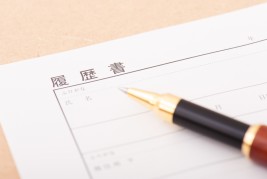
“It’s difficult to write a resume in Japanese” “I don’t know how to write it because it’s my first time” “How important is a resume?” There may be many foreigners who think this way.In Japan, the resume is the standard for passing before continuing to the interview. That’s why you need to write your resume in correct Japanese, while following Japanese business manners.A resume can be called the first barrier. But, if you learn how to write it properly, anyone can create a high-quality resume.This article is for foreigners who do not know how to write resumes, such as basic information like name, address, education/work history, license/qualifications, motivation, hobbies / special skills, etc. Let’s carefully explain how to write a resume.If you are a foreigner who has trouble writing a Japanese resume, please use this text as a reference. Let’s aim to create a resume that makes people think: “I want to meet this person!”.Resume Writing RulesBefore you start writing your resume, there are writing rules that you should know first. The two most important rules are:①If you make a mistake, write a new resume.②Do not re-use resumes with the same content.In case of making a mistake in a handwritten resume, do not attempt to correct the mistake by crossing it out or using whiteout. Since it will give a bad impression, it’s better to rewrite it.You can avoid these mistakes by first drafting with a pencil and then writing above it with a black ballpoint pen. Recently, an increasing number of companies accept resumes created on computers. However, it is important to understand that there are still many companies to which resumes should be handwritten.It is also important not to re-use the same resume. People who work at companies are professionals at reviewing resumes. For this reason, if you use the same resume that was also used for another company, it won’t seem solid and will make difficult to communicate your motivation to join the company. Create a resume for each company. That is a vital point to pass the document screening.There are other writing rules. It is important to be careful with Japanese polite sentence closer, “masu” (-ます), “-desu” (-です), and to make sure that all the items are filled in and that there are no typographical mistakes or omissions.If you register on a career change website or to a career change service, you can rest assured that a reliable agent will check your resume.How to write a resume -basic information-Let’s understand how to write a resume while valuing the rules for writing a resume. First, I will explain how to write basic information on resumes.①DateEnter the date you will submit your resume, not the date you wrote your resume. In case of mailing the application, enter the mailing date. Please fill in the date of the interview if you are taking it to an interview. Also, let’s make compatible the year writing into either the Japanese calendar ex. 「令和X年」 or the Western calendar ex. 「20XX年」.②NameAlthough it is a name, write your name in the place where “氏名” is written. Make sure to leave a space between the last name and the name. In the furigana above the name field, enter “Hiragana” or “Katakana” according to your resume.To identify which one to write, use Hiragana if the word “Furigana” is written in Hiragana, and Katakana if the word “Furigana” is written in Katakana. In Japan, the family name is written in front and the first name is written behind.③Birth date and ageWrite it according to the calendar type that is written on the date of ①, “Japanese calendar” or “Western calendar”. Enter your current age at the time you submit or mail your resume.④Address and contact informationEnter the address without omitting zip code, prefecture, address, building name, and room number. Please fill in the Furigana correctly. If the contact address is the same as the address, enter “same as above”. If you would like to write another contact, do not omit it.⑤Phone number/email addressf you do not have a fixed phone, enter the mobile phone number only. Please enter your web e-mail address, not the mobile phone e-mail address. The company will contact you with the information listed here, so be sure not to make any mistakes.⑥PhotoMany foreigners may be wondering where to shoot. It is common to take photos for resumes at ID photo booths installed at train stations and photo studios.In that case, it is basic to shoot it with a black or blue suit and no hat. Paste the front photo (bust-up photo) taken within 3 months to your resume. When pasting, cut it into a size of 3cm wide x 4cm long, and paste it with glue.How to write a resume -Education History and Work History-①Education historyFirst of all, “Education History” is clearly stated in the center of the first line. The educational background will be written from the second line, the general rule is to write from the previous academic background.The final educational background is not “the last school you graduated” but “the highest educational institution”. For example, if you graduate from a university and enter a vocational school, the university has a higher standard as an educational institution, so you should write first “university” as previous academic background.The school name must be an official name. Please write properly department, major, major subject, etc. Enrollment and graduation years must be displayed the same as the date (Japanese or Western calendar). If you dropped out of school, indicate “dropped out”, and if you are currently in school, state “expected graduation”.②Work historyWrite a line below the academic background and specify “work history” in the center. In the order of the company where you worked, enter “year of hire, company name, type of industry, number of employees, concise job description” and “year of leave/reason for retirement”.If the reason for retirement is for personal reasons, specify “retirement due to personal reasons”, and if you retire due to dismissal, state “retirement due to company circumstances”. Also, if you are currently working, you have to state “Present”. Finally, write “End” in the last line.How to write a resume -Licenses and Certifications-“License/Qualification” is in principle the official name. Also, it is necessary to indicate the year of acquisition of each one correctly. It’s important to make sure to state at the top the license or qualification that can be used in the company you want to apply. If you have not acquired any, specify “None”.How to write a resume -Motivation/Reasons for application-In the resume, the “Motivation” field is the one that can promote yourself the most. It is important not to write a reason that you can use to apply to any company. You should investigate the company you want to apply, and to concretely write what kind of experience you have had, your skills, and what you want to do after joining the company.<Example sentence>I have a large experience in system design that goes from infrastructure to application. I hope that by making use of the know-how I have cultivated so far; I would be able to help you to promote global business development. I can speak English and Japanese. I want to drive the business to further accelerate your global expansion.<Advice>I’ll explain the difference between “Kisha” and “Onsha”, both meaning is “your company”.Kisha (貴社): Use this when writing resumes or emails.Onsha (御社): Use for interviews and business talks.Although it is a small detail, by remembering this, it can give a good impression by using it properly.How to write a resume -Hobbies/Special skills-Hobbies and special skills may become a topic in conversations with interviewers. For this reason, avoid “nothing in particular” or to leave it in blank. If your hobbies and special skills are related to your work, it will lead to appeal. Please try to include specific details. Also, please note that hobbies and feats that give negative impressions of gambling and crimes are better to avoid.<Example sentence>My hobby is futsal. I participate in a team with Japanese friends. I communicate in Japanese while enjoying playing the game. One of my special skills is DIY. I like to assemble things, to move my hands and make various things using my head. I often use and find useful this construction skill in system development situations.How to write a resume -Personal aspirations, Commuting, Marital Status-①Personal aspirationsClarify the desired job type. It is a rule of principle to state that your workplace, salary, and treatment can be according to the company regulations.②CommutingSpecify the commute time to the company and your nearest station. As a general rule, commuting time should be 90 minutes or less. If you live in a remote area or are coming to Japan, it is necessary to state that you will be able to commute without problem after joining the company. “最寄り駅” means the closest station from home.③Marital StatusForeigners who are married will circle “Yes” in the marital status field. If you are single, please circle “No”.Write a high-quality resume and work for a Japanese company of your choice!Many foreigners are reluctant to Japan’s resume. However, if you learn how to write it properly, you can create a resume that will interest companies.Let’s create a high-quality resume, by keeping correct Japanese expressions and Japanese business manners. As long as you write politely, you will have the chance to work for a Japanese company of your choice.

Job Hunting Knowledge

Pros and Cons of Working in Japan- A Must-see for Foreign Engineers!

While the IT market is expanding globally with the emergence of new technologies such as AI and IoT, the shortage of IT engineers has become a serious issue in Japan. To solve this shortage of IT engineers, the Japanese government and companies are considering using foreign engineers’ abilities. In this article, we will explain the reasons of why foreign engineers are needed in Japan and the advantages and disadvantages of working in Japan.Why foreign engineers are needed in JapanIn recent years, many innovative IT technologies such as AI, IoT, blockchain and robots have appeared. Meanwhile, the demand for IT engineers is expanding as a business leader in response to the so-called “4th Industrial Revolution”. Despite this, the current situation is the lack of IT engineers in Japan.Japan’s shortage of IT engineers has become serious.Japan is aging with a declining birthrate and declining population at a much faster rate than other developed countries. While the demand for IT engineers is increasing, the number of new employees is decreasing, and the shortage of IT engineers will become more serious as the labor force decreases.According to a survey conducted by the Ministry of Economy, Trade and Industry, there is about 170,000 shortage of IT personnel (*) in 2015, compared to about 900,000. In the future, the gap between supply and demand will continue to widen, and by 2030 it is predicted that there will be a shortage of about 410,000 (optimistic) to about 790,000 (pessimistic) IT human resources. In particular, the information security field will have a shortage of 193,000 in 2020, and the AI, IoT, and big data fields will have a shortage of 48,000 people in 2020.Source:Ministry of Economy, Trade, Industry “Survey results on latest trends and future estimates of IT human resources”※“IT human resources” refers to “human resources belonging to the information system department of IT companies and user companies”The acquisition of foreign engineers is progressing.A simple way to solve the shortage of IT engineers in Japan is to increase the supply. For this reason, there is an active movement toward the acquisition of new engineers. Acquisition of female engineers and senior engineers are also progressing, but as mentioned above, there is a limit to increasing the supply of IT engineers only in Japan, where population decline is inevitable. Now, the acquisition of foreign engineers is progressing.More companies are actively hiring foreign engineers!Japan’s leading IT company “Rakuten” uses English as its official language and actively recruiting foreign engineers. Most of the members of the freeware app for instant communication “LINE” are foreign engineers; the company is established in Kyoto where the development base (LINE KYOTO) is located. It was reported that nearly 80% of the approximately 1,000 applicants were foreigners. In the e-commerce company app “Mercari”, nearly 90% of the 50 newly hired engineers were foreigners.In addition to these large companies, more and more companies are hiring foreign engineers in SMEs and venture companies.“Points-based System for Highly-Skilled Foreign Professionals ” to receive preferential treatment for immigrationIn Japan, the “Points-based System for Highly-Skilled Foreign Professionals” has started in 2012. The purpose of this system is to bring in talented people from overseas and revitalize Japan. By satisfying certain requirements, you can receive preferential treatment for immigration; IT talent like engineers are also eligible. The advanced human resource point system makes it easy for talented foreign engineers to work in Japan, and the number of given certifications is increasing year by year.>> Click here for details of the advanced human resources point systemNumber of foreign engineers working in JapanSource:Graph created based on the notification of foreign employment status (Ministry of Health, Labor and Welfare)According to a survey by the Ministry of Health, Labor and Welfare, the number of foreign workers working in the information and communications industry in Japan is increasing year by year. In 2018, it was 57,620, an increase of about 5,000 compared to the previous year (52,038). Compared to 2008 (18,030 people), it has increased over three times.In terms of nationality, China has the largest number, followed by Korea, Vietnam, the United States, and the Philippines.Pros of working in Japan for foreign engineersAdvantage 01: Employment is stable.Although it is said that Japan’s particular employment practice of “lifetime employment” has collapsed, long-term employment practices remain in Japanese companies. Besides, there are few cases in which employees are dismissed at Japanese companies; unless there are serious violations of laws or contracts. The fact that employment is stable can be said to be a great advantage for foreign engineers who want to commit to the company for a long time.Advantage 02: Education system is in order.Many Japanese companies conduct extensive employee training on the premise of long-term employment. The contents of work and work processes are made into manuals, and Japanese companies are characterized by extensive training and OJT. For foreign engineers who want to utilize the learned skills and know-how acquired in Japan in their home countries, Japanese companies with a well-developed educational system are attractive.Advantage 03: Earn more money than in your home country.Many foreign engineers work in Japan to send money back to their home countries. Engineers’ salary levels vary from country to country, so it’s hard to say, but if Japanese salary levels are higher than your home country, working for a Japanese company should be a good choice.Advantage 04: Public medical insurance is fulfilling.As a general rule, foreigners working in Japan must pay insurance premiums and take out public medical insurance in the same way as Japanese. As a result, you can receive the same medical services as Japanese. Japan’s public health insurance system (universal public healthcare) is at the top level in the world. There are many countries where there is no system for public medical insurance or in many countries where the system has not yet matured, so there are many foreigners who feel that it is easy to use the full public medical insurance.Advantage 05: There are many attractive things: Culture, Security, and Infrastructure.In recent years, an increasing number of foreigners are interested in Japanese culture, manga, anime, Japanese food and traditional crafts. Many foreigners have the perception of “safety”, “good infrastructure”, “clean cities”, “friendly people” about Japan. Many foreign engineers choose to work in Japan to live in their favorite country.Cons of working in Japan for foreign engineersDisadvantage 01: Possible long working hours.For many years, long working hours have become normal in many Japanese companies, especially in the IT industry. While recent work style reforms have made working hours more appropriate, there are companies unable to reduce working hours. Foreign engineers may feel dissatisfied with overtime, low salaries or not having enough private time.Disadvantage 02: Some companies lack cross-cultural understanding.In Japan, the phrase “When in Rome, do as the Romans do” is used. This is one way of thinking, but if you go too far, both workers and employers may not be able to respect the differences between their cultures and lifestyles and may become a problem. When working in Japan, the point is whether you choose a company with a system that can accept different cultures.ConclusionJapanese companies, mainly in the IT industry, are working to hire foreign engineers to increase their competitiveness. Increasing numbers of companies are promoting the internationalization of the internal environment to accept foreign engineers. In the future, the environment where foreign engineers can work easily will improve, and the field where foreign engineers can play an active role will expand more and more.Big events in Japan like the 2019 Rugby World Cup, the 2020 Tokyo Olympic and Paralympic Games and the 2025 Osaka World Expo, are continuing to be held, and now Japan is attracting worldwide attention. Now that the whole country is showing great excitement, it is the best time for foreigners to work in Japan. If you like Japan and have aspirations to expand your career as an engineer, why don’t you try challenging to find a job or change your job in Japan?

Career Development

IT skills in demand in Japan

There is a serious shortage of IT engineers in Japan. Engineers needed the most include cyber security, machine learning and cloud engineers. For international IT engineers who wish to work in Japan, there are more opportunities in these sectors.Moreover, language requirements and cultural etiquette are less important in these sectors. Learn IT skills in demand, and land a job that offers attractive working conditions and pays well. Read this article in Japanese. IT skills in demand in Japan in 2022 Cyber security The demand for cyber security engineers is significantly increasing. In 2021, the domestic market value was 1,135.7 billion yen with a growth rate of 13.4%. The growth rate is projected to increase, given the acceleration of remote work and the current social conditions. If you are a security engineer, you are likely to have many job opportunities in Japan.   Useful certifications for security engineersRegistered Information Security Specialist Examination: A qualification to prove your expertise in information security, offered by IPA. After the qualification is obtained, you are eligible to apply for a national certificate for Registered Information Security Specialist.CISSP: A qualification to prove your expertise in information security, offered by (ISC)², International Information Systems Security Certification Consortium. Cloud As more and more internet services shift to cloud, the demand for cloud engineers is increasing. The market value of cloud computing was 2,875 billion yen in 2020 with a growth rate of 22%. In addition, the demand for public clouds, such as SaaS and IaaS, is especially high.More than half of the Japanese companies that provide cloud services use AWS. If you are an AWS engineer, you have many job opportunities in Japan.   Useful certifications for cloud engineersAWS certifications: A certificate to validate cloud expertise. AWS offers several levels: associate, professional and speciality. There are also certificates for those who are specialized in the fields such as network, data and machine learning.Google Certified Professional: A certificate to prove your expertise in Google cloud platform. Machine Learning The use of AI in services and products is now commonplace. The sales in automation services and personalised services are increasing rapidly.In 2019, the market growth rate of machine learning was 95%. As the use of machine learning will increase in the future, machine learning engineers will have many job opportunities in Japan as well. Useful certifications for machine learning engineersDeep Learning for ENGINEER: This is a certificate to validiate your knowledge and implementions skills in deep learning. It is offered by the Japan Deep Learning Association (JDLA). *The exam is available only in Japanese.Python 3 Certified Data Analyst Examination: A certificate to prove your advanced knowledge and skills in deep learning.  5G The market growth rate of 5G is projected to be 80.3% between 2020 to 2027. It is a field that is expected to create many job opportunities in the near future. Jobs related to 5G include embedded engineers, network engineers and IoT engineers. To work with 5G, the knowledge and skills in the development of embedded software and network are required.The article below explains the details of the 5G market in Japan and skills you need to be an engineer who works with 5G.5G market in Japan and skills you need to be an engineer who works with 5G Programming languages and developer tools in demand in Japan According to the research conducted by GitTap, the skills that are most in demand among Japanese companies are AWS, Python and JavaScript (January, 2022).AWS is a cloud computing service offered by Amazon. In Japan, more than half of the companies that provide cloud services use AWS. The market of cloud computing is expanding and the demand for AWS engineers is projected to increase. The article below explains programming languages in demand in Japan in detail. The programming languages in demand in Japan Summary International IT engineers have many job opportunities in Japan since there is a serious shortage of IT engineers. This is especially the case in some fields such as cyber security, cloud and AI. The following  jobs are some of the examples of jobs that are in demand in Japan. Python engineer Job Summary:Implement mathematical models, develop optimization algorithms, conduct software testing while working closely with professors. Salary:7M yen~ Learn More about This Job Automation engineer Job Summary:Develop and maintain automation platforms. Develop new automation products. Salary:7M yen~ Learn More about This Job CTO Job Summary:Chief Technology Officer for a financial system Salary: 8M yen~ Learn More about This Job GitTap is a job matching platform for highly skilled international IT engineers. The platform has many senior level jobs, which leads the average salary range of the advertised jobs to be 6-12M yen. There are also many remote positions available. The platform allows you to find a job efficiently by not only applying for positions but also getting scouted and conducting informational interviews. It is free to use, please feel free to register. Browse Jobs on GitTap G Talent is an employment agency for international IT engineers who wish to work in Japan. Bilingual consultants will assist you to land your dream job! To learn more about the service, please click the link below. Learn more about G Talent