If you are planning to stay abroad for a long period of time or work overseas, you will probably find the visa application process complicated if you are not familiar with it. If you make any mistakes, you could end up overstaying or working illegally, which could have negative consequences for you.
In this article, we will explain the visas that IT engineers need to work in Japan. If you are thinking of finding a job in Japan or need to change your visa to find a job, please refer to this article. Global IT company recruitment agency “G Talent” can provide you with not only job hunting support but also visa support.
Contents
- 1 What is the difference between a visa and a status of residence?
- 2 Work visas for foreign IT engineers to work in Japan
- 3 How to apply for a work visa for IT engineers in Japan
- 4 Who applies for a work visa for IT engineers in Japan?
- 5 Documents Required for Applying for a Work Visa for IT Engineers in Japan
- 6 The time it takes to obtain a work visa for IT engineers in Japan
- 7 IT engineers should make sure to obtain a “work visa” in order to work in Japan!
What is the difference between a visa and a status of residence?
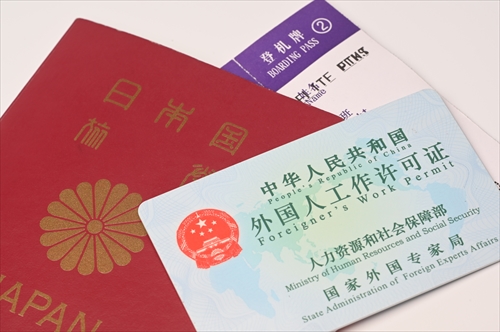
Although some companies use the terms visa and status of residence interchangeably, they are technically different. If you mix them up, it could be to your disadvantage when looking for a job, so it's important to understand the difference between them.
In this section, we will explain the difference between a visa and a status of residence. Let's check again by comparing it with the visa or status of residence you have.
What is a visa?
A visa is a “document that permits entry into Japan” issued by a Japanese embassy or consulate abroad. It is issued after the applicant has submitted the necessary documents to a Japanese embassy or consulate abroad and, as a result of an examination, has been judged to be a foreign national whose passport is valid and who poses no obstacle to entry into Japan.
Reference: 出入国在留管理庁/きっずるーむ法務省
What is a status of residence?

A status of residence is a qualification that foreign nationals who intend to enter Japan must have in order to prove that they have no problems with the activities they plan to carry out in Japan and that they meet the conditions for doing so. The Immigration Bureau of the Ministry of Justice in Japan manages this, and there are currently 38 types of status of residence. A “residence card” is a card that proves your status of residence.
In addition, some companies refer to the status of residence as a “work visa”. The term “work visa” is a common name for the status of residence, and it is safe to assume that the two refer to the same thing.
Reference: 在留資格とは/東京入管・永住、帰化申請サポート室
Work visas for foreign IT engineers to work in Japan

In order to stay in Japan legally, you need to obtain a “residence qualification (work visa)” issued by Japan. The visa for working as an IT engineer is sometimes called an “engineer visa”. This article explains the work visa for foreign IT engineers working in Japan.
Requirements for obtaining a work visa “Engineer/Specialist in Humanities/International Services”
In order to work as an IT engineer in Japan, foreigners generally need to obtain a “Engineer/Specialist in Humanities/International Services” visa. In order to obtain a “Engineer/Specialist in Humanities/International Services” visa in Japan, you need to meet the following conditions
- You must have graduated from a university that offers courses related to the skills and knowledge required for the job you intend to do.
The university you graduated from can be in Japan or overseas. Also, graduates of Japanese vocational schools who have a “Diploma” degree also fall under this category. - You must have at least 10 years of work experience in the field you are intending to work in
Even if you do not meet the first criterion, you can still obtain a “Engineer/Specialist in Humanities/International Services” visa if you have at least 10 years of work experience. The 10-year period also includes the time spent studying specialist knowledge such as information processing at schools in Japan or overseas. However, the period of compulsory education in Japan is not included, and part-time work by international students is also not covered. - Those who have passed an examination or obtained a qualification related to information processing as specified in the public notice
[Examinations in Japan]
(a) The Information Processing Security Support Specialist Examination administered by the Minister of Economy, Trade and Industry based on the Act on the Promotion of Information Processing (Act No. 90 of 1970)
(b) The following Information Processing Engineer Examinations administered by the Minister of Economy, Trade and Industry based on the Act on the Promotion of Information Processing
- (1) IT Strategist Examination
- (2) System Architect Examination
- (3) Project Manager Examination
- (4) Network Specialist Examination
- (5) Database Specialist Examination
- (6) Embedded Systems Specialist Examination
- (7) IT Service Manager Examination
- (8) System Auditor Examination
- (9) Applied Information Technology Engineer Examination
- (10) Fundamental Information Technology Engineer Examination
- (11) Information Security Management Examination
(c) The following information processing engineer examinations administered by the Minister of International Trade and Industry or the Minister of Economy, Trade and Industry
- (1) First-class Information Processing Engineer Certification Examination
- (2) Second-class Information Processing Engineer Certification Examination
- (3) First-class Information Processing Engineer Examination
- (4) Second-class Information Processing Engineer Examination
- (5) Special Information Processing Engineer Examination
- (6) Information Processing System Audit Engineer Examination
- (7) Online Information Processing Engineer Examination
- (8) Network Specialist Examination
- (9) System Operation and Management Engineer Examination
- (10) Production Engineer Examination
- (11) Database Specialist Examination
- (12) Microcomputer Applied Systems Engineer Examination
- (13) Systems Analyst Examination
- (14) Systems Auditor Examination
- (15) Application Engineer Examination
- (16) Project Manager Examination
- (17) Advanced System Administrator Examination
- (18) Software Development Engineer Examination
- (19) Technical Engineer (Network) Examination
- (20) Technical Engineer (Database) Examination
- (21) Technical Engineer (System Administration) Examination
- (22) Technical Engineer (Embedded Systems) Examination
- (23) Technical Engineer (Information Security) Examination
- (24) Information Security Administrator Examination
- (25) Information Security Specialist Examination
[Examinations in China]
(a) The following examinations administered by the Education and Examination Center of the Ministry of Industry and Information Technology of China
- (1) Systems Analyst
- (2) Information System Project Manager
- (3) System Architect
- (4) Software Design Engineer
- (5) Network Engineer
- (6) Database System Engineer
- (7) Programmer
(b) The following examinations administered by the Electronic Education Center of the Ministry of Information Industry of China or the Electronic Education and Examination Center of the Ministry of Industry and Information Technology of China
- (1) System Analyst
- (2) Senior Programmer
- (3) System Analyst
- (4) Software Design Engineer
- (5) Network Engineer
- (6) Database System Engineer
- (7) Programmer
[Examinations in the Philippines]
(a) The following examinations administered by the Philippine National Information Technology Standards Foundation (PhilNITS)
- (1) Fundamental Information Technology Engineer Examination
- (2) Applied Information Technology Engineer Examination
(b) Fundamental Information Technology Engineer Examination conducted by the Japan-Philippines Information Technology Standards Examination Foundation (JITSE Phil)
[Examinations in Vietnam]
(a) The following examinations conducted by the High-Tech Incubation Training Center (HITC)
- (1) Fundamental Information Technology Engineer Examination
- (2) Applied Information Technology Engineer Examination
(b) The following examinations conducted by the Vietnam Information Technology Examination and Training Support Center or the Vietnam Training and Examination Center
- (1) Fundamental Information Technology Engineer Examination
- (2) Software Development Engineer Examination
- (3) Applied Information Technology Engineer Examination
[Examinations administered by the Myanmar Computer Federation (MCF) in Myanmar]
(a) Fundamental Information Technology Engineer Examination
(b) Applied Information Technology Engineer Examination
[Examinations administered by the Industrial Technology and Information Promotion Agency (III) in Taiwan]
(a) Software Design and Development IT Expert Examination
(b) Network communication professional (network communication IT expert) test
(c) Information security management professional (information system security IT expert) test
[Examinations administered by the Multimedia Technology Promotion Agency (METEOR) in Malaysia]
Fundamental information technology professional test
[Examinations in Thailand]
(a) The following examinations administered by the National Science and Technology Development Agency (NSTDA)
- (1) Fundamental Information Technology Engineer Examination
- (2) Applied Information Technology Engineer Examination
(b) Fundamental Information Technology Engineer Examination administered by the National Electronics and Computer Technology Center (NECTEC)
[Examinations administered by the Mongolian National IT Park (NITP) in Mongolia]
(a) Fundamental Information Technology Engineer Examination
(b) Applied Information Technology Engineer Examination
[Examinations administered by the Bangladesh Computer Council (BCC) in Bangladesh]
(a) Fundamental Information Technology Engineer Examination
(b) Applied Information Technology Engineer Examination
[Examinations administered by the Singapore Computer Society (SCS) in Singapore]
Certified IT Project Manager (CITPM)
[Examinations administered by the Korea Human Resources Corporation in South Korea]
(a) Engineer Information Processing
(b) Industrial Engineer Information Processing
Reference: IT技術者の在留資格/行政書士みなと国際事務所
How to apply for a work visa for IT engineers in Japan

In order to work in Japan as an IT engineer, you will need a legal visa and qualifications for long-term residence and employment. If you have already found a place to work, make sure you apply in plenty of time so that your stay and employment will not be adversely affected.
We will explain in detail how to apply for a visa for those who are about to enter Japan and those who have already entered Japan.
The procedure for applying for a new work visa for IT engineers
The procedure for IT engineers applying for a status of residence (work visa) is as follows for those who are about to enter Japan.
- Applying for a Certificate of Eligibility
In order to apply for a work visa, you will need to submit a document called a “Certificate of Eligibility”. You can apply for this at the local immigration office in Japan, so ask a member of staff at the company you are planning to work for to apply on your behalf. - Examination and issuance by the Immigration Bureau
If there are no problems with the details of the application and it is judged that the applicant is suitable for landing in Japan and working, a Certificate of Eligibility will be issued. Even if the application is not approved, there is no way to appeal. - Apply for a visa at a Japanese embassy or consulate
Gather the Certificate of Eligibility and the necessary documents for applying for a visa, and apply for a visa at a Japanese embassy or consulate. The necessary documents are listed below, so please check them.
Reference: 手続きの流れは? 必要な申請書類は?/出入国在留管理庁
The procedure for IT engineers applying to change their status of residence to a work visa
Those who have already entered Japan and are seeking to extend their period of stay should follow the procedure below.
- Apply for a change of status of residence or extension of period of stay
Apply at the local immigration office. For either application, you will need to submit a “point calculation chart” and “documents proving your points” related to the activity you intend to carry out. If necessary, ask your employer or prospective employer to issue the necessary documents for your application. - Examination and permission for change or extension at the Immigration Bureau
The points for examination are as follows.
- The activity you intend to perform is that of a highly-skilled foreign professional
- The points calculation result is 70 points or more
- Your status of residence is good
If the points calculation result is less than 70 points, you will be denied even if you meet the other requirements.
Reference: 在留期間更新許可申請 /出入国在留管理庁
Who applies for a work visa for IT engineers in Japan?

Even if you have already found a job in Japan, you will not be able to work in Japan unless you have a visa and residence status. However, some people may be worried about whether they will be able to handle the complicated procedures on their own.
Here, we will explain who can apply for a residence status (work visa) to work as an IT engineer in Japan.
The applicant
As a general rule, the applicant him/herself will carry out the application, change and renewal procedures for the residence status. As the procedures are complicated, if you are worried about unfamiliar application procedures, it is a good idea to make use of a service that provides support for changing jobs or finding employment. Alternatively, we also recommend looking for jobs that provide application support.
The agents
If the applicant is overseas or unable to apply for the visa due to unavoidable circumstances, the applicant's employer, a lawyer, a government-certified administrative scrivener, a relative or a roommate can submit the application documents on their behalf.
However, proxy applications require the approval of the director of the regional immigration bureau, so not just anyone can do it.
Reference: 出入国審査・在留審査Q&A/出入国在留管理庁
Documents Required for Applying for a Work Visa for IT Engineers in Japan

The following documents are required for applying for the status of residence (work visa) necessary for working as an IT engineer in Japan.
- Passport
- One visa application form (two visa application forms for Russian, CIS, and Georgian nationals)
- One photograph (two photographs for Russian, CIS, and Georgian nationals)
- Certificate of eligibility for status of residence (original and copy)
Chinese nationals should also prepare the following documents
- A copy of the family register
- Temporary residence permit or certificate of residence (if you do not have a registered domicile in the jurisdiction of the Japanese embassy or consulate-general where you are applying)
*Depending on your nationality, there may be other documents required in addition to the above, so be sure to check the website of the relevant consulate-general.
Reference: Visas / Ministry of Foreign Affairs of Japan
The time it takes to obtain a work visa for IT engineers in Japan

It takes 1 to 3 months to process the “Certificate of Eligibility” required for applying for a status of residence (work visa). In order to start work on time, you should apply well in advance, while keeping in touch with the company.
Also, the Certificate of Eligibility is valid for 3 months from the date of issue. Once you have received the Certificate of Eligibility, you should immediately go to the Japanese embassy or consulate to apply for your visa.
Reference: 在留資格認定証明書とは?申請から入国までの流れを解説/ビザプロ
IT engineers should make sure to obtain a “work visa” in order to work in Japan!

Even if you have managed to secure a job in Japan, if there is a problem with your visa, you may not be able to enter the country, let alone work. In order to work in Japan, make sure to obtain the correct status of residence (work visa) and be careful not to work illegally.
If you are thinking about changing jobs or finding a job in Japan, we recommend using "G Talent", a job-changing platform for foreign engineers. 40% of the jobs listed on the site pay 8 million yen or more per year, so you can find a job that suits you.
You can also receive visa support, so if you have any concerns after reading this article, please feel free to use the service. If you are interested, start by registering for free.