
A resume is an important document that not only provides basic information about yourself, but also allows you to appeal your personality, including your reasons for applying for the job and your skills. In this article, we will explain the points that foreign nationals should be aware of when creating a resume in order to work in Japan. If you are writing a resume for the first time, or if you want to know how to write a better resume, please refer to this article.
If you are working in Japan for the first time, you will want to receive various kinds of support, not just for your resume but also for interviews and other things. Global IT company recruitment agency “G Talent” provides various kinds of support, including not only resumes but also interview preparation and visas.
Contents
- 1 The minimum rules you should understand before actually writing your resume
- 1.1 Absolutely follow the rules written in the company's application requirements
- 1.2 Use a resume format that allows you to highlight your strengths
- 1.3 Keep a record of the content of the CVs you send to each company
- 1.4 Don't use the same old resume over and over again
- 1.5 Be careful of mistakes in Japanese
- 1.6 Eliminate mistakes by reviewing before sending
- 2 Detailed explanations for each section! How to write a resume
- 3 Checkpoints before submitting your resume
- 4 The way to write a resume in Japan is unique! Make sure you understand it and write it carefully
The minimum rules you should understand before actually writing your resume
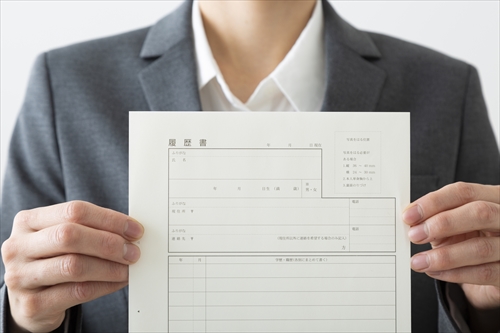
In Japan, there are detailed business manners for how to write and send a resume. Even if you are a foreigner, following Japanese manners will give you a good impression. From here, we will explain in detail how to write a resume in Japan.
Absolutely follow the rules written in the company's application requirements
Each company may have its own specific rules for how to submit a resume and what format to use. Basically, it doesn't matter whether you handwrite or use a PC to create your resume, but if the company has specific requirements, be sure to follow them. Also, be careful not to miss any of the details written in the application requirements.
Reference: 就活は学校指定の履歴書を使わないとダメ?応募書類のマナーを解説/career ticket
There are two difference rules for creating a resume by hand or on a PC.
Rules for creating a resume by hand
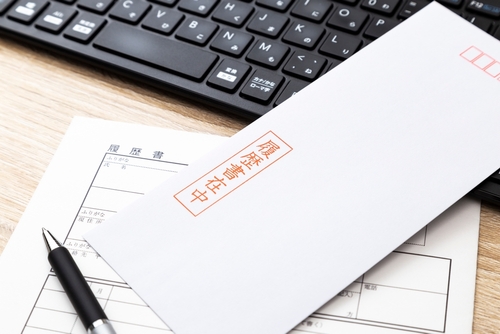
When you are creating your resume by hand, the use of pencils, mechanical pencils, and erasable ballpoint pens is not allowed. Use a black or blue pen or ballpoint pen to fill it in.
Also, if you make a mistake, don't use correction fluid or correction tape - even if it's a bit of a hassle, rewrite it from the beginning. Some hiring managers get a picture of the person from the handwritten resume, so it's a good idea to write it carefully, being careful not to make any mistakes or omissions.
Reference: 履歴書の書き方マニュアル完全版! 履歴書の見本(サンプル)・作成方法/マイナビ転職
Rules for creating a resume on a PC
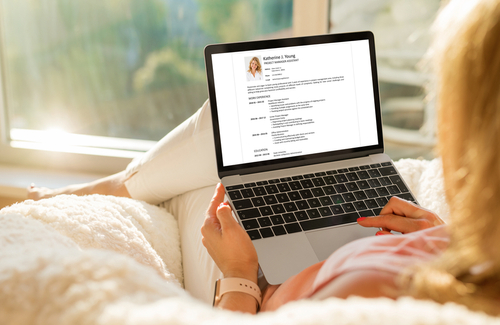
If you are creating your resume on a PC, it is a good idea to download a Japanese resume format or template from the internet. If you are creating your own original resume, you should be careful as the person in charge of hiring may think you are deleting items that are your “weak points”. Even if you are not using a resume format or template, it is a good idea to create your resume in a way that resembles the resumes commonly used in Japan.
Reference: 【6種類】履歴書テンプレートのダウンロード(Word、Excel、PDF)/マイナビ転職
Use a resume format that allows you to highlight your strengths

We recommend using a resume format that allows you to highlight your strengths. For example, if you have a short work history, you should choose a resume with fewer sections for education and work experience, while if you want to highlight your skills, you should choose one with more sections for qualifications and skills.
However, if the application requirements specify the format of the resume, be sure to follow them. If you submit a resume that ignores the specifications, it will give the impression that you are unable to follow the rules.
Reference: 履歴書テンプレートの選び方とダウンロード(Word形式・Excel形式・PDF形式)/リクルートエージェント
Keep a record of the content of the CVs you send to each company

As the content you include in your CV will differ depending on the company you are applying to, if you are applying to multiple companies, keep a record of the content of the CVs you send to each company. At interviews, you will be asked about the content of your CV, so if you forget what you wrote, there is a possibility that inconsistencies will arise. If it is a handwritten CV, make a copy or take a photo of it, and if you created it on a PC, be sure to save it.
Reference: 企業に提出した履歴書や職務経歴書って返却してもらえる?/Geekly Media
Don't use the same old resume over and over again
Even if you are applying to multiple companies, you should create a new resume for each company. An old resume or one with bland content will not catch the attention of the hiring manager. To create a resume that the hiring manager will find attractive, you need to understand the type of person the company is looking for and highlight your career history in a way that will appeal to them.
Be careful of mistakes in Japanese

It can be difficult to write a resume in a foreign language you are not used to, but if you are going to work in Japan, you need to be careful about making mistakes in Japanese. In some cases, just changing one character can change the meaning, so after you have filled in your resume, go through it again to check for mistakes.
Also, refrain from using abbreviations that are common in everyday life. If there are any words you don't understand, be sure to look them up before filling them in.
Reference: 履歴書の言葉遣いは重要!就活で注意すべき敬語の使い方を徹底解説!/ハタラクティブ
Eliminate mistakes by reviewing before sending
If there are any mistakes in the content of your resume, the way you send it, or the specified format, it will give the impression to the person in charge of hiring that you are likely to make mistakes in your work too. After you have finished preparing your resume, be sure to review it to make sure there are no mistakes. The points you should review before sending are summarized at the end of this article, so please make use of them.
Detailed explanations for each section! How to write a resume
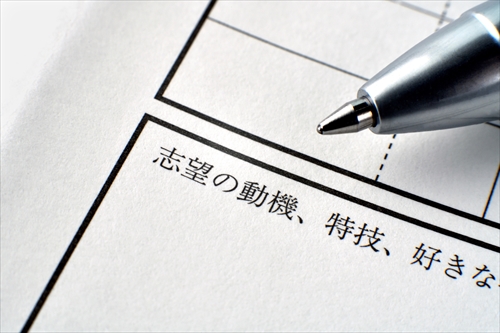
Before you start writing your resume, let's first go over the “rules of writing” that you should know. The two most important rules are as follows.
- If you make a mistake, rewrite it on a new resume
- Change your motivation for applying and selling points for each company
We will explain each of these in detail. In order to pass the initial screening process, make sure to write your resume carefully.
Basic Information
- Date
The date on your resume should be the date you submit your resume, not the date you wrote it. If you are sending it by post, write the date you post it. Also, make sure that the dates in your resume are either in the Japanese or Western calendar. - Name
Write your name in the section marked 'Name', and write how to read your name in the section marked 'Furigana (or Furigana)'. If it says 'Furigana', write it in hiragana, and if it says 'Furigana', write it in katakana. - Date of birth / Age
Enter your date of birth in accordance with the Japanese or Western calendar you have used to write the date. Enter your age at the time you submit or post your resume. - Address / Contact details
Enter your address in full, including the postal code, prefecture, house number, building name and room number. Also make sure to enter the furigana (phonetic reading) of your address correctly. If your contact details are the same as your address, write “same as above”, and if you have a different contact address, write it in full. - Telephone number and email address
If you don't have a landline at home, it's fine to use only your mobile phone number. For your email address, write your PC email address, not your mobile phone address. Make sure you get this right, as the company will be contacting you using the information you provide here. - Photo
Prepare a close-up photo of your face taken within the last three months, wearing a black or dark blue suit and no hat. Cut the photo to 3 cm wide by 4 cm tall and paste it on the resume. It is common to take a photo for your resume at a studio, or use a photo booth at a station or convenience store.
Reference: 基本情報欄の正しい書き方/doda
Education and Work Experience Sections
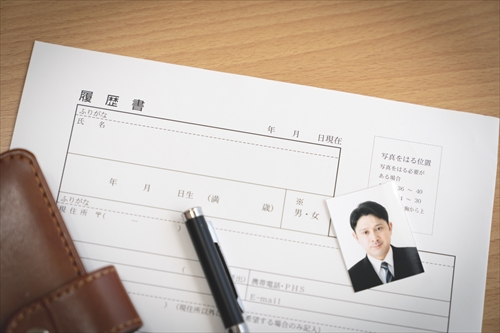
Be honest and accurate when writing your education and work experience on your resume.
- Education
To make a clear distinction between your education and work experience, write “Education” in the center of the first line, and in principle, start from the education level immediately before your final education level. The final education level is not the “last school you graduated from”, but the “highest educational institution”. In other words, if you went to a vocational school after graduating from university, your final academic background would be “university”.
Also, be sure to write the full name of the school, and include the faculty, department and course of study. For the dates of entry and graduation, use either the Japanese or Western calendar, whichever you have been using so far. If you have dropped out of school, write “dropped out”, and if you are still enrolled, write “expected to graduate”.
- Work Experience
Leave a line under your educational history and write “Work Experience” in the center. Then, in order, write the companies you have worked for, including the year you joined, the company name, the type of business, the number of employees, a brief description of your job, and the year you left and the reason for leaving.
If you are leaving for personal reasons, write “Resigning for personal reasons”, and if you have been dismissed, write “Resigning for company reasons”. If you are currently looking for a new job while still employed, write “To date”, and finish off with “End”.
Reference: 履歴書の学歴・職歴欄の正しい記入法/doda
Licenses and qualifications section

Be sure to write the official name in the Licenses and Qualifications section. Also, make sure to write the year you obtained the qualification correctly, and check the expiry date of the qualification. If you have any licenses or qualifications that you can make use of at the company you are applying to, write them at the top of the list, and if you do not have any licenses or qualifications, write “None in particular”.
Reference: 履歴書の免許・資格欄の正しい書き方/doda
Motivation for Applying Section

The section in your resume where you can most effectively appeal to a company is the 'motivation for applying' section. Rather than writing something bland that could be used for any company, do some research on the company you are applying to and write something specific about how you can contribute to the company, while also highlighting your strengths.
[Example sentence]
I have gained experience in consistent system design, from infrastructure to applications. I have applied for this position because I believe that I can help your company, which is expanding its business globally, by making use of the know-how I have cultivated up to now. As I can speak both English and Japanese, I would like to drive your company's business forward so that it can further accelerate its global expansion.
[Tips]
貴社(your company): used for writing in things like resumes and emails
御社(your company): used for speaking in things like interviews and business meetings
If you can use the correct form for each situation, you will make a good impression on the person in charge of hiring.
Reference: 志望動機・志望理由の書き方【82職種の例文付き】/doda
Hobbies and Special Skills Section

Hobbies and special skills can sometimes become topics of conversation with the person in charge of hiring. For this reason, avoid writing “none in particular” or leaving the section blank. Also, avoid writing about hobbies or special skills that could give a negative impression.
[Example]
My hobby is futsal. I enjoy playing in matches while taking care to communicate in Japanese with my Japanese friends on the team. My special skill is DIY. I like to put things together, so I use my hands and my head to make all sorts of things. This assembling and making process is also often used in system development, so it is useful.
If your hobbies and special skills are related to your work, they will help you to make a good impression. Try to include specific details.
Reference: 履歴書の趣味・特技欄の正しい書き方と内容/doda
Personal Preferences, Commuting, Spouse Section
- Personal Preferences
The job you are hoping to get should be written in the Personal Preferences section. As a general rule, the place of work, salary, and benefits should be written in the Personal Preferences section as “I will follow your company's rules”. - Commuting
The commuting time to the company and the nearest station to your home should be written. As a general rule, the commuting time should be within 90 minutes. If you live far away or are planning to move to Japan, you should also state that you will not have any problems with commuting or moving after joining the company. - Spouse/Duty to Support Spouse Section
If you are married, circle the “Yes” box in the Spouse section. Depending on your situation, you should also circle “Yes/No” for the “Duty to Support Spouse” box. If you are single, circle “No” for both boxes.
Checkpoints before submitting your resume

Once you have finished writing everything, go back over your resume and carefully check the following points.
- Are there any omissions or blank spaces?
- Have you attached a photo that was taken within the last three months?
- Are there any spelling or grammatical errors?
- Have you written furigana for your name and address?
- Are the years (Japanese and Western) on your resume consistent?
If you find any mistakes or errors, it will take time, but rewrite your resume.
Reference: 履歴書に「空欄」があっても大丈夫?/リクルートエージェント
The way to write a resume in Japan is unique! Make sure you understand it and write it carefully

There are many foreigners who are put off by the detailed rules for writing a resume that are unique to Japan. However, even if you are a foreigner, if you can submit a resume that follows the rules properly, you will make a good impression on the company's hiring manager. Let's learn how to write a resume and be able to create a resume that will interest many companies.
If you are thinking about changing jobs or finding a new job in Japan, we recommend using "G Talent". This is a job-hunting platform for foreign engineers, and 40% of the jobs listed on the site offer an annual salary of 8 million yen or more.
If you want to earn a stable income in Japan or make use of your career experience in Japan, this is a service that is highly worthwhile. If you are interested, register for free and receive job offers from companies.