
Japan has a different culture to many other countries, so it may be a difficult environment for foreigners to work in. However, the number of foreigners working in Japan has been increasing in recent years, and it is true that some foreigners find it easier to work here than in their own countries. In this article, we will explain the current situation regarding the employment of foreigners in Japan, the points that foreigners find easy to work with, and the future prospects for foreign employees.
Please check out the advantages and disadvantages that foreigners find appealing about Japanese companies, as well as the characteristics of Japanese companies that are easy for foreigners to work for. If you are looking for a job in Japan that places importance on work-life balance, please use High Career's job-placement agency for foreign nationals, "G Talent'".
Contents
- 1 The current situation of foreign employment in Japan
- 2 Points where foreigners feel that it is easy to work in Japan
- 3 Points that make it difficult for foreigners to work in Japan
- 4 Will it become easier for foreigners to work in Japan from now on?
- 5 If you want to find a job in Japan that is easy to work in, we recommend working for a global company!
The current situation of foreign employment in Japan

First of all, we have summarized the current situation of foreign employment in Japan into three points.
- Demand for foreign worker is increasing
- The employment situation of foreigners in Japan
- About the new residence status "Specified Skills Employment"
Demand for foreign workers is increasing
In Japan, the birthrate is declining and the population is aging, and the working population is decreasing, so the demand for foreign workers in Japanese companies is increasing. In particular, in the IT industry, the demand for engineers and other workers is increasing rapidly due to the promotion of DX, but the number of Japanese IT workers is decreasing. Compared to Japanese people, many foreign workers are more knowledgeable about IT, and they are more likely to be valued by various companies.
Reference: 日本のIT人材不足の実態とは?/SMS DataTech
The employment situation of foreigners in Japan
According to the Ministry of Health, Labour and Welfare's report on the employment of foreigners, the number of foreign workers in fiscal 2019 was approximately 1.66 million. This is the largest number since the reporting obligation was introduced, and it has increased by about three times in 10 years from approximately 560,000 in 2009. As Japan's working population declines, we can expect to see the number of foreign workers increase even further. As the accuracy of AI-based translation apps also improves, we can expect to see more companies that place an emphasis on making it easier for foreign workers to work in Japan.
Reference: 「外国人雇用状況」の届出状況まとめ【本文】/厚生労働省
About the new residence status “Specified Skills Employment”

In order to work in Japan, foreign nationals need to have a work-related visa status. There are several types of visa status, and in 2019, a new visa status called “Specified Skills Employment” was approved. Specified Skills Employment is divided into “Type 1” and “Type 2”, and the details are as follows.
| Specified skills | Type 1 | Type 2 |
| Period of stay | Up to 5 years | No limit |
| Family residence status | Not granted | Granted |
| Required skills | Above a certain level | Skilled level |
| Required Japanese language ability | Daily conversation level | None in particular |
| Types of work that can be obtained | 14 types of work | 2 types of work |
With the addition of the two types of employment for specified skills to the list of residence statuses, it has become even easier for foreigners to work in Japan. It is expected that the number of foreigners who want to work in Japan will increase even further from now on.
Reference: 【3月最新】外国人労働者受け入れ問題とは?メリットやデメリット、受け入れ方法も解説/ウィルオブ採用ジャーナル
Points where foreigners feel that it is easy to work in Japan

The following four points can be cited as points where foreigners feel that it is easy to work in Japan.
- Employment is stable
- Insurance and welfare benefits are well-developed
- Able to learn high-level skills
- The country is safe and secure
Employment is stable
As many Japanese companies have a system of lifetime employment, there is almost no risk of being unfairly dismissed if you are employed as a full-time worker. Even if you are employed on a non-regular basis, the contract period is generally adhered to. The fact that employment is stable and future salaries are easy to predict is a major attraction of working in Japan.
Reference: 「『日本型雇用」を考える』~国際比較、問題点、そして未来~」(視点・論点)/NHK
Insurance and welfare benefits are well-developed

Many companies in Japan have well-developed welfare benefits, including health insurance and employment insurance. Even if you are a foreigner, you can join a health insurance scheme if you work in Japan. You can receive a high-level health check-up once a year, and you can also reduce the cost of visiting a medical institution when you are sick or injured.
The content and quality of welfare benefits other than insurance differ depending on the company, but commuting allowances, housing allowances, maternity leave and congratulatory/condolence leave are common. Some companies have unique welfare benefits, so you can also get an idea of how easy it is to work at a company by looking at the content of its welfare benefits.
Reference: Common & Unique Employee Benefits in Japan
Able to learn high-level skills

Japanese technology and services such as “Omotenashi” and “Made in Japan” are highly regarded around the world. One of the appeals of working in Japan is that you can learn high-level skills and services that you can't learn in your own country. As we will discuss later, salaries in Japan may be lower than in other countries, but it is also true that there are many foreigners who work in Japan in order to gain experiences that can only be gained in Japan.
Reference: 日本の技術力が世界的にすごい本当の理由/Freshtrax
The country is safe and secure
Japan is famous as a country with particularly good public safety. It is strictly prohibited to carry guns or drugs, and the risk of being involved in a violent incident is significantly lower than in other countries, which is one of the reasons why it is easy to work here. The political situation is also stable, so you and your family can live in peace in Japan. There are also benefits to working in a country with good public safety, such as being able to concentrate on your work.
Points that make it difficult for foreigners to work in Japan

Although Japan is a country where many foreigners feel comfortable working, there are also some who find it difficult to work here for the following reasons
- Difficulty communicating
- Low salary levels and treatment
- Long working hours
- Unique culture and customs
- Complex procedures
Difficulty communicating
Although it is common for people of different nationalities to use English to communicate with each other, there are not many Japanese people who can speak English, so you may have difficulty communicating. In many cases, you will need to use Japanese in order to communicate smoothly in Japan. If you work for a global company, there may be many people who can use English, but you can expect to have particular difficulties in your daily life.
Reference: 日本人の英語力、非英語圏で87位に後退:スイスの教育機関2023年調査/nippon.com
Low salary levels and treatment

In recent years, the salary levels in Japan have been stagnant to the extent that some Japanese people have even gone to work in the US and Australia. For this reason, some foreigners may find it difficult to work in Japan due to the low salary levels and poor working conditions. However, there are also people who earn higher salaries in Japan than in their home countries. For these people, there are significant differences depending on their home country, as they find it easier to work in Japan.
Reference: 日本人の若者が海外に出稼ぎへ 増加の裏側にある労働問題/NHK
Long working hours

The tendency for working hours to be long is another of the reasons why it is difficult to work for Japanese companies. In Japan, many people die from overwork due to long working hours, and this is a problem that frequently arises. As overtime and working on days off tend to be common, and the amount of time you can spend on your private life tends to be small, those who plan to work in Japan in the future need to be careful about the length of their working hours.
Reference: 長時間労働の原因は何なのか?日本人の労働実態と問題点/RELO総務人事タイムズ
Unique culture and customs
Japan also has a unique culture and customs in the workplace. For example, the system of “seniority by length of service” is still firmly rooted in common sense, and there is a tendency to evaluate people based on their age and how long they have been with the company, rather than on their simple skills or performance. For those who have worked for companies overseas, where there is a tendency towards a merit-based system, it may be easy to feel that the gap makes it difficult to work.
There are also other unique aspects of Japanese culture, such as 'punctuality' and 'unspoken rules'. In Japan, it is more important to be punctual than to have a high quality or accurate work, and it is also important to take into account the feelings of the other person. People who are strong-willed and push their opinions through may be avoided as people who disrupt teamwork.
Complex procedures
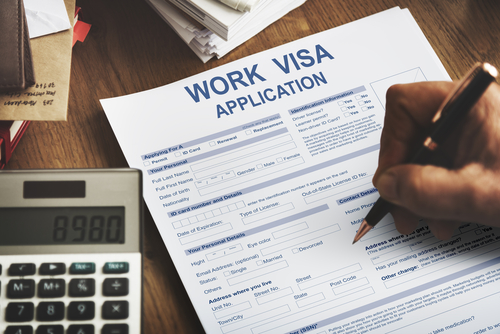
In order for a foreigner to work in a Japanese company, it is essential to obtain a work visa. From the time of application to the time of obtaining a work visa, it takes approximately 1 to 3 months, and the procedures are also complicated. Depending on the type of job or industry, there is a possibility that the application for a work visa will be rejected, and in that case, it will not be possible to work in Japan.
From the company's point of view, in order to employ a foreigner, they need to check their status of residence, and if the status of residence and the type of work or industry do not match, they will have to go through the trouble of changing the status of residence. For this reason, companies that are not used to hiring foreigners may decide not to hire them just because they are foreigners.
Reference: 就労や長期滞在を目的とする場合/外務省
Will it become easier for foreigners to work in Japan from now on?

There are several reasons why it is difficult to work in Japan, but it is expected that it will become easier for foreigners to work in Japan from now on. The following three reasons can be cited.
- The government is promoting work style reform
- Globalization is becoming an urgent issue
- Major changes have been brought about after the COVID-19 pandemic
The government is promoting work style reform
The Japanese government is currently promoting work style reform. In Japan today, there are a number of issues related to work styles, such as the “decrease in the working age population due to the declining birthrate and aging population” and “the diversification of the needs of workers, such as balancing work with childcare and nursing care”. In order to resolve these various issues, work style reform is being promoted in various ways, including legal revisions. As a result, the following improvements in work conditions are expected in Japan in the future.
- Long working hours: Improvement through shorter working hours
- Low paid holiday rate: Improvement through diversification of work styles
- Disparity in treatment: Improvement in treatment of women, senior citizens and non-regular employees
- Delay in globalization: Active acceptance of human resources and know-how from overseas
As the amount of time spent working decreases and the rate of paid leave taken increases, the way Japanese companies work will become more similar to that of overseas companies, making it easier to work. Along with improvements in the treatment of women and senior workers, we can also expect to see improvements in the working conditions for foreign workers. Many companies are now moving towards globalization, and the environment is being prepared to make it easier for foreigners to integrate with Japanese companies.
Reference: 「働き方改革」の実現に向けて/厚生労働省
Globalization is becoming an urgent issue

Globalization is becoming an urgent issue for many Japanese companies. The wave of Japan's declining birthrate and aging population, which is said to be set to accelerate further, cannot be stopped, and there is a need to look overseas for new customers. An increasing number of companies are now putting their company's future on the line to expand overseas, and foreigners are an easy resource to make use of for these companies.
In the IT industry in particular, the latest data and research results are often provided in English, and foreign nationals with language skills and knowledge are in demand by many companies. By finding employment or changing jobs at a company that is rapidly advancing globalization, you will be seen as a reliable, ready-to-work employee, and you will be able to work hand in hand with other foreign employees in the same situation.
Reference: 4年で12万人増、外国人エンジニア採用に注目が集まる理由を解説!/xseeds Hub
Major changes have been brought about after the COVID-19 pandemic

The way Japanese companies work has changed significantly as a result of the COVID-19 pandemic, as follows.
| Before the COVID-19 | After the COVID-19 | |
| Working style | Commuting to work | Working from home |
| Working hours | Management by time card | Introduction of IT systems |
| Meeting | On-site | Online |
The world has changed from a time when it was normal to commute to work on time by packed train, to a world where teleworking and staggered work hours are more easily accepted. Online meetings using Zoom and other services are now the norm for meetings. The common sense of Japanese companies is becoming more similar to that of familiar overseas companies, and an environment is being created where it will be easier for foreigners to feel comfortable working in the future.
Reference: コロナを通してどう変化した?働き方の多様化に伴う職空間の変化を知ろう!/コンキャリ
If you want to find a job in Japan that is easy to work in, we recommend working for a global company!

In Japanese companies, demand for foreign nationals is expected to increase even further in the future. The advantage of working for a Japanese company is that foreign nationals can experience the ease of working there, such as stable employment, insurance, and the richness of welfare benefits. There is also the possibility that you may find it difficult to work due to the uniqueness of the culture and customs, but as Japan promotes work style reform, these problems are gradually disappearing.
If you are looking for a comfortable place to work in Japan, we recommend finding employment at a global company. Not only are global companies taking the initiative in work style reform, but they also have many foreign staff and staff who are understanding of foreigners, so you are likely to find it easy to work there.
For people who are looking for a global company that suits you, we recommend “G Talent”, a foreign IT engineer job-placement agency that specializes in global companies. G Talent has matched engineers from over 70 different nationalities with Japanese companies, and you can find a company with a good working environment. We also provide support for learning Japanese and obtaining visas, so please feel free to contact us if you are worried about your language skills or are planning to expand into Japan.