
In recent years, work style reforms have been accelerating in Japan. In the past, the Japanese work style was characterized by “lifetime employment” and “8-hour working days”. However, issues such as low productivity and a lag in globalization have been pointed out, and work style reforms to correct these problems are accelerating. In this article, we will explain the Japanese work style up to now, the issues that have emerged from this, the content of the work style reforms that will be needed, and the disadvantages and risks of these reforms.
If you are looking for a work style that suits you, please use the job change agent "G Talent", which brings together companies that are adopting new work styles. As only global companies are registered, you can find companies with a variety of work styles.
Contents
- 1 The work style in Japan up until now
- 2 Issues revealed by the way people have worked in Japan up to now
- 3 What kind of work style reforms will be required in Japan from now on?
- 4 The COVID-19 pandemic has brought about major changes in the way people work in Japan
- 5 There are also disadvantages and risks to the way we work in the future
- 6 In the future, Japan will need to reform its working style to keep up with the changing times
The work style in Japan up until now

The following three were the standard work styles in Japan up until now.
- Lifetime employment
- 8 hours working per day
- 2 days off per week
First, let's look at the basics of the working styles that have been considered common sense in Japan up until now.
Lifetime employment
Lifetime employment is a system in which companies employ people they have formally hired until retirement age. Because employment until retirement age is guaranteed, employees can earn a stable income until they retire. On the other hand, the disadvantage is that it is difficult for the principle of competition to work, and young, talented employees cannot fully play an active role, so productivity tends to be low.
Reference: 終身雇用制度の現状(メリット・デメリット)から見る人事制度と、これからの在り方について/ライフワークス
8 hours working per day

In Japan, the Labor Standards Act stipulates that employees must not work more than eight hours a day or 40 hours a week. However, depending on the “overtime work agreement” set by the labor union, overtime work exceeding the statutory working hours is permitted, so there are many companies where employees must work more than eight hours a day.
Reference: 労働時間・休日/厚生労働省
2 days off per week

In Japan, it is common for people to be given two days off per week, and many companies are closed on Saturdays and Sundays. There are two types of two-day weekend system: the “complete two-day weekend system” and the “two-day weekend system”. The complete two-day weekend system guarantees that employees are given two days off every week, but the two-day weekend system is a system that guarantees employees are given two days off at least once a month, so be careful.
Reference: 「週休二日制」と「完全週休二日制」って違うの?ポイントを解説/はたらくぞドットコム
Issues revealed by the way people have worked in Japan up to now

The way people have worked in Japan up to now, as introduced above, has revealed the following issues.
- Low productivity
- Long hours of work
- Low rate of paid leave
- Shortage of manpower
- Disparity in treatment
- Slow progress towards globalization
Low productivity
One of the biggest issues with the way people have been working in Japan is the low level of productivity. According to a report by the Japan Productivity Center, Japan's labor productivity in fiscal 2020 was ranked 23rd out of 38 OECD member countries. This is only around 40% of the level of Ireland, which ranked first. In particular, the lifetime employment system means that companies have to continue to employ low-productivity employees, and this is thought to be a factor in the low level of productivity.
Reference: 国際的にみた日本の時間当たり労働生産性/公益財団法人日本生産性本部
Long hours of work
In workplaces where employees have to work on days off or where overtime is common, the amount of time spent working will naturally increase. This is often the cause of death from overwork, and it is not uncommon for cases to end up in court between the bereaved family and the company. Long working hours also reduce the amount of contribution you make to the company. In order to work efficiently, long working hours are one of the major problems.
Low rate of paid leave
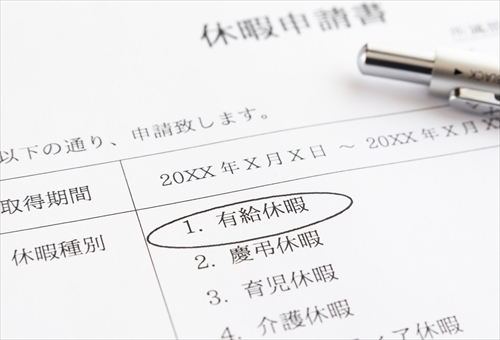
Many people who work for Japanese companies are famous for not taking paid leave. According to statistics from a major travel company in 2019, the rate of paid leave in Japan was 50%, the lowest of the 19 countries surveyed. In the same survey, the paid holiday take-up rate in Germany, Spain and Singapore was 100%. If you can't take paid holidays, you can't enjoy your private life or refresh yourself by getting away from work. Moderate holidays are essential for efficient work, so the low paid holiday take-up rate is also an issue for Japanese companies.
Reference: なぜ日本が最下位?上司の理解、人手不足…「有給取得」世界19カ国比較/TRiP EDiTOR
Shortage of manpower

In Japan, where the birthrate is declining and the population is aging, many companies are facing the problem of a lack of manpower. Recently, the promotion of DX is also causing a shortage of manpower. Since system development is a highly specialized job, the IT industry is struggling to secure personnel with high skills.
Reference: 人手不足が深刻化する日本|現状と原因、企業が実施したい6つの対策/人材アセスメントラボ
Disparity in treatment

In Japanese companies, disparities in treatment, including in terms of money, should not be overlooked. The disparity between men and women is particularly serious, with the wage gap between men and women in Japan at a high level of 24.5%, compared to the 10% level in Western countries. There is also a significant disparity in treatment between regular employees and non-regular employees.
Reference: 「世界でワースト2位」日本の男女賃金格差が全然埋まらない理由2つ/PRESIDENT online
Slow progress towards globalization

Globalization can increase the chances of creating new businesses and the possibility of cost reductions, but many Japanese companies are lagging behind in terms of globalization. According to JETRO (Japan External Trade Organization), around 35% of Japanese companies have overseas bases, which is well below the majority. As the population of Japan is expected to decline further from now on, globalization will be essential for the growth of companies in the future.
Reference: 企業のグローバル化の課題解決方法とは?/顧問バンク
What kind of work style reforms will be required in Japan from now on?
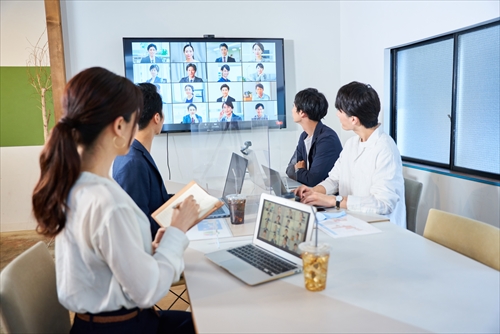
In order to resolve the issues introduced above, the following kinds of work style reforms will be required in Japan from now on.
- Shortening working hours
- Diversifying ways of working
- Stabilization of employment for women and senior citizens
- Improvement of treatment for non-regular employees
- Generalization of changing jobs and having a second job
- Proactive acceptance of overseas human resources and know-how
Shortening working hours
The benefit of shortening working hours is that it creates an environment where employees can concentrate more easily, which in turn leads to increased productivity. If working hours are reduced, employees will have more time for their private lives. This will also lead to increased motivation at work, and we can expect a synergistic effect on work.
Reference: 労働時間の短縮によるチーム生産性の向上/独立行政法人経済産業研究所
Diversifying ways of working

Companies are being asked to diversify the ways they work, for example by introducing flexible working hours and adopting a free-address system. Teleworking and remote working also received a lot of attention during the COVID-19 pandemic. If a workplace allows you to work outside the office, it will be easier for people living far away, including overseas, to work.
Furthermore, the concept of workcation, which combines work and vacation, is also becoming more widespread. By introducing workcation, it will become easier to work in combination with paid holidays, and employee satisfaction will also improve. It can also be used as a selling point in recruitment activities, and it can also have the effect of making it easier to attract talented people.
Reference: ワーケーションとは?基礎知識や事例、導入のポイントをご紹介!/ワークフロー総研
Stabilization of employment for women and senior citizens

Japanese companies are often criticized for lacking in terms of gender equality. By providing support for childbirth and childcare, and appointing talented women to management positions, you can make the most of the potential of the human resources you have in your company. As the proportion of the senior population increases due to the declining birthrate and aging population, it is also an important issue to make effective use of the senior population.
Reference: 女性の管理職昇進意欲を高める鍵は「管理職への両立支援」/パーソル総合研究所
Improvement of treatment for non-regular employees

There is also a need to improve the treatment of non-regular employees, such as contract workers, temporary staff, and part-time workers. If the treatment of non-regular employees remains poor, the number of people who are unable to get married or have children due to financial concerns will increase, and the declining birthrate and aging population will accelerate even further. It is thought that giving fair evaluations to talented people will raise the motivation of non-regular employees and improve productivity.
Reference: 非正規雇用とは?特徴を分かりやすく解説!デメリット・メリットを紹介/キャリチェン
Generalization of changing jobs and having a second job
In the past, the culture of lifetime employment and seniority-based promotion that was common in Japanese companies meant that the principle of competition did not work, and this did not lead to improvements in productivity. By changing the common wisdom of the past and making changing jobs more common, it will become easier to advance your career. As a result, companies will find it easier to secure high-quality human resources, and employees will find it easier to improve their working conditions.
In addition, recently, more and more companies are lifting the ban on second jobs. The “20 million yen problem for retirement” has also become a hot topic, and many people living in Japan must be worried about their future and retirement finances. As a result, there is a growing demand for an environment that allows people to work a second job, and there is also a need for flexibility to meet these demands.
Proactive acceptance of overseas human resources and know-how

Japan is falling far behind, particularly in the IT field. In order to catch up, we must actively recruit people with practical experience in IT-advanced countries and people with specialized education. Companies that have a global environment where Japanese and foreign people work together can be expected to succeed and grow.
Reference: 27カ国中最下位…日本がIT人材足りない根本理由/東洋経済オンライン
The COVID-19 pandemic has brought about major changes in the way people work in Japan

The COVID-19 has brought about various changes in the way people work in Japan, as follows.
| Before the COVID-19 | After the COVID-19 | |
| Working style | Commuting to work | Working from home |
| Working hour | Management using time cards | Introduction of IT systems |
| Meetings | On-site | Online |
Although the changes brought about by the COVID-19 pandemic are not exactly a cause for celebration, if we look at them positively, we could say that the COVID-19 has advanced the way Japanese companies work and think. Many Japanese companies have made major changes to their policies in the post-COVID-19 era, and the environment is becoming more comfortable for foreigners who are worried about adapting to Japanese culture.
Reference: 新型コロナが進展させた働き方の変化/名城大学
There are also disadvantages and risks to the way we work in the future

The way we work in the future, which will be improved by work style reform, is not all good. The disadvantages and risks of the way we work in the future are as follows.
- Increased costs
- Increased burden on management
- Thinning of communication
Increased costs
There is a possibility that costs will increase due to work style reform. For example, if you introduce IT tools such as a system for managing when employees leave work, you will have to expect to spend money on implementation and training. As the first step in evolving into a progressive company, you will need to invest a certain amount of money.
Reference: 働き方改革6つの課題とは?4つの解決策まで徹底解説/PROFFIT
Increased burden on management

Some people say that the burden on managers has increased as a result of the work style reforms. For example, if the places where subordinates work become scattered due to the diversification of work styles, attendance management will become more laborious. The increase in the rate of paid leave taken may cause work to be shifted to managers.
In particular, for those working under the “advanced professional system”, they will be excluded from regulations such as working hours and holidays, and will also need to work in a way that is similar to discretionary labor. In order to prepare for this increased burden, measures such as the moderate use of outsourcing and giving more discretion to staff below management level are necessary.
Reference: 働き方改革で管理職の負担増?しわ寄せを防ぐための取り組みとは?/ワークスタイル情報空間
Thinning of communication
As teleworking increases, it is possible that communication will become more thin. It is also true that some people are concerned that the opportunity for so-called “drinking communication” will be lost. On the other hand, there are more and more young Japanese people who think of work and private life as separate, and this generation may be more accepting of thinning communication.
In the future, Japan will need to reform its working style to keep up with the changing times

In the past, the mainstay of Japanese working practices was “lifetime employment” and “8-hour working days”, but issues such as low productivity and long hours of work became problems. In response to this, many companies are promoting working practice reforms, and Japan's unique bad culture is disappearing. For those who grew up overseas or are foreign nationals, Japanese companies will become more comfortable places to work in the future.
If you want to work for a company that is adopting a new way of working, we recommend the foreign IT engineer specialist recruitment agency “G Talent”. G Talent has been involved in recruitment support for over 200 companies, and as it attracts global companies, you can find jobs that adopt a variety of ways of working. If you are interested in changing jobs to a Japanese company, please use the completely free “G Talent”.