
Even if you are a foreigner, it is possible to change jobs for a second time in Japan. However, when changing jobs for a second time, you need to be careful about various things, such as visa status and other application procedures.
In this article, we will explain the points that foreigners need to be careful about when changing jobs for a second time, the process of changing jobs for a second time, and the necessary procedures. For job hunting for a second job change, we recommend the global company-focused job change agency “G Talent”.
Contents
- 1 Is it possible for foreigners to change jobs for a second time in Japan?
- 2 Selling points by age that foreigners should be aware of when changing jobs for the second time
- 3 6 points to keep in mind for changing jobs for the second time in Japan
- 3.1 Continue working at your current job while looking for a new job
- 3.2 Choose your new job carefully
- 3.3 A short job-hopping period is likely to be a disadvantage
- 3.4 A long period of unemployment is likely to be a disadvantage
- 3.5 Japanese language skills are often required in Japanese companies
- 3.6 Communicate your reasons for leaving in a positive way
- 4 The process of changing jobs for a foreigner in Japan for the second time
- 5 If you are a foreigner changing jobs for the second time in Japan, here are some recommended ways to find a job
- 6 Necessary procedures for foreigners changing jobs for the second time in Japan
- 7 Let's make your second job change in Japan a success by keeping in mind the important points!
Is it possible for foreigners to change jobs for a second time in Japan?

It is possible for foreigners to change jobs for a second time in Japan. Although many people may think that lifetime employment and seniority-based promotion are common in Japan, in recent years, there has been an increase in the number of people changing jobs for a second time or more. The job-changing market is active and the number of people changing jobs is increasing, and because there is a continuing shortage of manpower in Japan, foreign labor is needed.
In fact, it is possible to use your foreign language skills and strong communication abilities to your advantage when looking for a new job. Let's understand the flow of the job-hunting process in Japan and the way companies think, and proceed with your job-hunting activities to your advantage.
Reference: 日本で転職したい外国人が知っておくべき日本の転職活動の流れと注意点[グローバル2]/Fellowship
Selling points by age that foreigners should be aware of when changing jobs for the second time
When foreigners change jobs in Japan, the points that appeal to employers will differ depending on your age.
For 20s: Youth and flexibility are your weapons

If you are changing jobs for the second time in your 20s, youth and flexibility are your weapons. Being young makes it easier to adapt to the workplace, and being flexible means that you can be expected to follow the instructions of your superiors and senior employees. Companies need young talent who can be trained and quickly adapt to the workplace. For this reason, if you are in your 20s, you will be more likely to be hired if you can use your youth and flexibility as a weapon.
Reference: 20代は若さを武器にチャレンジ。PRフリーランスとして幅広く活躍する大鋸佳輝/U-29
For 30s: Skills and experience are your weapons

When you reach your 30s, your skills and experience become important. Rather than being trained from scratch like you were in your 20s, you are expected to be able to make an immediate impact in the workplace. For this reason, you should highlight the skills and work experience you have gained from your past experiences. Even if you don't have any skills or experience that you can directly highlight, you can still highlight your communication skills, leadership experience, language skills, etc.
Reference: 転職に求められるスキルとキャリア|年代別に解説/LHH転職エージェント
6 points to keep in mind for changing jobs for the second time in Japan

The 6 points to keep in mind when changing jobs for the second time in Japan are as follows.
- Continue working at your current job while looking for a new job
- Choose your next job carefully
- A short job-changing span is likely to be a disadvantage
- A long period of unemployment is likely to be a disadvantage
- Japanese language skills are often required by Japanese companies
- Communicate your reasons for leaving in a positive way
Continue working at your current job while looking for a new job
If you quit your job, your income will stop, so you will feel a sense of urgency to find a new job quickly. As a result, you may end up choosing a job with poor conditions, and you will often not be able to make a good career change.
For this reason, we recommend that you basically do not quit your current job, but instead look for a job with good conditions while maintaining a relaxed state of mind.
Reference: 働きながら転職活動するのは無理?メリット・デメリットや成功のコツを紹介/ハタラクティブ
Choose your new job carefully

Choose your next job carefully. If you change jobs too easily and the working conditions or relationships with the people at your new job don't suit you, you may end up changing jobs again soon after. If you change jobs too many times, you may be seen as someone who can't last long in a job. Carefully consider things like job content, salary level, and commuting time, and choose a job that suits you.
Reference: 転職回数が多いと不利になる?転職は何回までOKなのか解説/コエテコキャリア
A short job-hopping period is likely to be a disadvantage

If you change jobs repeatedly over a short period of time, this will be obvious from your resume. When companies see a resume like this, they tend to be wary that there is something wrong with you that prevents you from staying in a job for long periods of time. Also, repeatedly changing jobs has the disadvantage that you won't be able to gain experience or acquire skills, so choose a job that suits you carefully.
Reference: 1年未満の転職は不利になる?退職したほうがいい人の特徴・転職を成功させるコツを解説/R-Stone
A long period of unemployment is likely to be a disadvantage

If you have a long period of time without working, there is a possibility that companies will think that there is something wrong with you and avoid you, which can be a disadvantage. For this reason, try to avoid having long periods of time without working.
If you quit your job before starting your job search, you will have a gap in your employment history. In some cases, it is not a problem to have a gap in your employment history, but it is not always the case, so we recommend that you try to avoid quitting your job before starting your job search.
Reference: 転職活動において「無職期間」は不利なのか?採用担当者の見解を解説。/ミライのお仕事
Japanese language skills are often required in Japanese companies
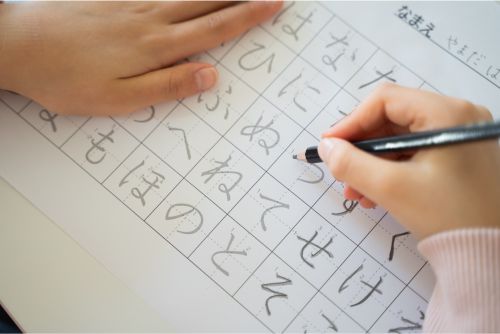
Japanese companies often require Japanese language skills for work. For this reason, you will need to brush up on your Japanese reading, writing and conversational skills.
It is also a good idea to get a certain level of score in the Japanese Language Proficiency Test (JLPT), the BJT Business Japanese Proficiency Test, the Standard Business Japanese Test, etc. Attending a Japanese language school is also a recommended way to improve your Japanese language skills.
Reference: 日本語能力試験(JLPT)とBJTビジネス日本語能力テスト/外国人の日本語レベルのチェックの仕方/MTIC
Communicate your reasons for leaving in a positive way

Reasons for leaving are often asked about in job interviews, but even if your reasons are negative, it is recommended that you communicate them in a positive way. For example, if your salary was too low, you could say that you wanted to increase your salary, or if your working conditions were too bad, such as not being able to take holidays, you could say that you wanted to change the way you worked.
Also, if you changed jobs because of poor human relations, it is better not to say so directly. Even if you do say something, express it positively, such as by saying that you wanted to change to a workplace where communication was good and it was easy to express your opinions.
Reference: 転職面接で「退職理由」をポジティブに言い換えるには?/JAC Recruitment
The process of changing jobs for a foreigner in Japan for the second time

The process of changing jobs for a foreigner in Japan for the second time is as follows
- Clarify your reasons for changing jobs and make a list of your desired conditions
- Find a potential new employer that matches your desired conditions
- Apply to the potential new employer and go through the application process and interviews
- Once you have received a job offer, inform your current employer of your intention to resign
- Complete the handover process at your current employer and resign
- Start working at your new employer
The first step, “clarifying your reasons for changing jobs”, is surprisingly important. If you don't have a clear idea of your objectives, you won't be able to decide on your desired conditions or find a new job. By first clearly deciding on your reasons for changing jobs, you will be able to make your job-hunting activities more concrete.
Reference: 転職の目的を明確化する理由は?メリットや起こり得るリスクを解説/R-Stone
If you are a foreigner changing jobs for the second time in Japan, here are some recommended ways to find a job

- Make use of job-hunting websites and agencies for foreigners
- Make use of job-hunting websites and agencies specializing in the type of job you want
Make use of job-hunting websites and agencies for foreigners
Make use of job-hunting websites and agencies for foreigners. If you are a foreigner looking for a new job, websites and agencies specializing in helping foreigners find new jobs are perfect for you. They have experience in helping foreigners find new jobs, and can provide support for foreigners, so they are very useful when looking for a new job.
The most recommended is the job-placement agency for foreign IT engineers, “G Talent”. It has a wealth of experience in helping foreigners find new jobs, and it also provides support for foreigners looking for new jobs. It has a wealth of jobs for foreigners, so you are sure to find the perfect job.
Make use of job-hunting websites and agencies that specialize in the type of job you want
There are various types of job hunting websites and job hunting agents. There are those that are specific to certain industries, such as IT or medical, those that are specific to certain job types, such as sales, and those that are compatible with all industries and job types, so you need to choose the right type for you.
By using job hunting websites and agents that specialize in your desired job type or industry, you will find it easier to find a job that suits you.
Necessary procedures for foreigners changing jobs for the second time in Japan

This page summarizes the procedures that foreigners need to follow when changing jobs for the second time in Japan. Please refer to it while checking each item so that you don't forget any of the procedures when changing jobs.
- Application for permission to change status of residence
- Notification procedures for affiliated organizations, etc.
- Social insurance procedures
- Resident tax procedures
- Submission of withholding tax certificates
Application for permission to change status of residence
In order for a foreign national to work in Japan, they need to have a status of residence called a work visa. There are several types of status of residence, each with a defined scope of activities. When changing jobs, there is a possibility that the scope of activities will change, so it may be necessary to change the status of residence to one that matches the work at the new company.
It is difficult for applicants to judge whether the type of residence status is appropriate for the new job, so it is recommended that you apply for a certificate of eligibility when changing jobs. If you apply, you can have your new job's work content and residence status checked. Although applying for a certificate of eligibility is not a mandatory procedure when changing jobs, it is a good idea to apply for one to prevent any discrepancies between your new job and your residence status.
Reference: 転職したい/外国人雇用・就労VISAサポートセンター
Notification procedures for affiliated organizations, etc.

If you are a “long-term resident” whose status of residence is based on employment or marriage, you will need to complete notification procedures for affiliated organizations, etc. when changing jobs. Notify the Director-General of the Immigration Services Agency. You can also submit notifications online via the “Immigration Services Agency Electronic Notification System”.
Reference: 所属機関等に関する届出・所属機関による届出Q&A/出入国在留管理庁
Social insurance procedures

If you were enrolled in your company's social insurance, this will change when you change jobs. Your company will generally handle the social insurance procedures, but there are some things you will need to do yourself, such as returning your health insurance card and receiving your pension book from your previous employer and submitting it to your new employer.
If you do not join the social insurance system at your new company and instead join the National Pension Plan or National Health Insurance, you will need to take care of the necessary procedures yourself. Check with the local government office in your area.
Reference: 【社労士監修】転職・退職時の保険証切り替え手続きとは?/リクルートダイレクトスカウト
Resident tax procedures
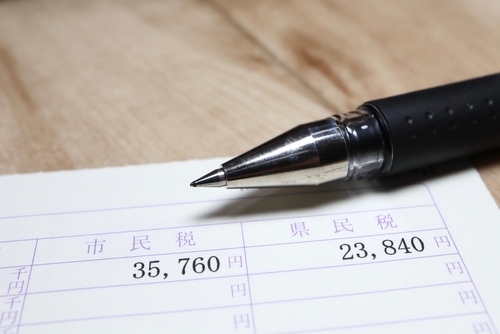
If you had your resident tax deducted from your salary and paid, you will need to decide how you will pay your resident tax from the day you change jobs until the end of the year. Normally, you will continue to pay it at your new workplace, but you should consult with your previous workplace and your new workplace about what to do. If you have not decided on your next workplace by the end of the year, you will need to pay it yourself, so check with the local government office in your area.
Reference: 転職後の住民税の手続きまとめ/Money Forward
Submission of withholding tax certificates

When you resign from your previous workplace, you will receive a Certificate of Withholding Tax from your employer. You may need this certificate for various procedures, so be sure to receive it.
Reference: 外国人社員の書類退職手続きとは?|人事向け/ミャンマー・ユニティー
Let's make your second job change in Japan a success by keeping in mind the important points!

In this article, we have explained the important points to keep in mind when changing jobs for the second time, the process of changing jobs for the second time for foreigners, and the necessary procedures. If you keep in mind the important points to make your job change activities more favorable, you will be able to find a good job.
For those looking for IT engineer jobs for foreigners, we recommend G Talent, a job-placement agency for foreign IT engineers. This is a job-placement site for foreign engineers living in Japan, and it has helped over 200 companies recruit and placed over 70 nationalities of engineers. There are a wide range of IT jobs at companies where you can work in a fair environment regardless of your nationality, so you are sure to find a job that suits you. If you are interested, why not start with a free registration?